

What Is a Torpedo Level and Why Does It Matter for Shelf Installation?
A torpedo level is a compact, elongated spirit level typically 9 to 24 inches long. It contains a sealed tube with liquid and a bubble that indicates whether a surface is perfectly horizontal or vertical. Using one correctly ensures your shelves hang straight, preventing items from sliding off and creating an unprofessional appearance. Proper leveling is essential for both aesthetics and functionality in any home or workspace. This tool is indispensable for DIY projects and professional installations alike.

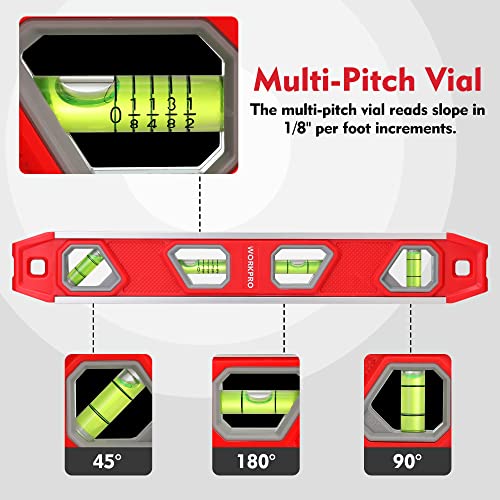
WORKPRO 12 Inch Magnetic Torpedo Level
- VERSATILE VIALS - The 12" Torpedo Level has 4 vials for quick and accurate readings: Vertical, Horizontal, 45 Angle, and Multi-Pitch Vial. The multi-pitch vial reads slope in 1/8'' per foot increments
- MAGNETIC - The leveler has a strong holding magnetic edge. Magnetic force is greater than 2 lbs for hand-free convenience
- DURABILITY - Shock-absorbing structure holds up to daily use. Aluminum frame reinforced construction for durability and strength
- ACCURACY - This torpedo level comes with 4 bubble vials and provides maximum accuracy of 0.001-inch/ ft. (1mm/M)
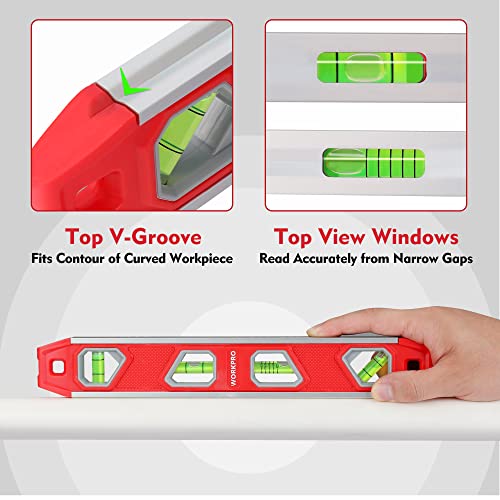
- PRACTICALITY - Top view holes for easy reading. V-groove bottom fits the contour of curved workpiece. Hanging holes for easy reach and storage. It features a tapered design that fits in a tool pouch or pocket



As an Amazon Associate we earn from qualifying purchases. Product prices and availability are accurate as of the date/time indicated.
Torpedo levels are called “torpedo” because of their streamlined, tapered shape that resembles a torpedo. Unlike larger spirit levels, they fit easily into tight spaces and corners. The compact design makes them ideal for shelf work where precision matters but space is limited. Most torpedo levels cost between 15 and 50 dollars, making them affordable for any toolbox. They remain one of the most reliable tools for checking horizontal and vertical alignment.
Key Takeaway: A torpedo level is a compact, affordable tool essential for hanging level shelves and ensuring professional-looking installations.
How Do You Position a Torpedo Level on Your Shelf Correctly?
Positioning your torpedo level correctly is the foundation of accurate shelf installation. Place the level on top of the shelf bracket or the shelf itself, never on the wall alone. The level must rest flat and fully contact the surface to give an accurate reading. Ensure the level is not tilted or angled—it should sit naturally without you forcing it into position. Even slight tilting can produce false readings and result in crooked shelves.
Always position the level lengthwise along the shelf, running parallel to where the shelf will extend. This orientation allows the horizontal bubble vial to measure the entire shelf’s levelness. If you only check a small section, you might miss dips or high spots along the shelf’s length. For shelves longer than your level, check multiple points: the center, left side, and right side. This ensures consistent levelness across the entire shelf.
Checking Both Horizontal and Vertical Alignment
Most torpedo levels have two bubble vials: one for horizontal (level) and one for vertical (plumb). The horizontal vial runs lengthwise and checks if the shelf is flat. The vertical vial runs perpendicular and checks if brackets are plumb (perfectly vertical). For shelf installation, you primarily need the horizontal vial, but checking vertical alignment on brackets prevents future problems. Both readings should show the bubble centered between the lines for perfect alignment.
When checking vertical alignment on wall studs or brackets, rotate the level 90 degrees and place it against the bracket’s face. The bubble should settle in the center of the vertical vial. This confirms your shelf support is truly vertical, not leaning inward or outward. Proper vertical alignment prevents shelves from gradually tilting over time.
- Place the level lengthwise on the shelf surface for horizontal checks.
- Ensure the level sits flat without tilting or forcing it into position.
- Check multiple points along long shelves for consistent levelness.
- Rotate the level 90 degrees to verify bracket verticality.
- Center the bubble in both horizontal and vertical vials for accuracy.
Key Takeaway: Correct positioning means placing the level flat on the shelf lengthwise and checking both horizontal and vertical alignment at multiple points.
What Are Common Mistakes When Using a Torpedo Level for Shelves?
One frequent mistake is relying on a single reading instead of checking multiple locations. Walls are often uneven, and shelves may have slight curves. Testing only one spot can miss high or low areas that affect the final result. Always check at least three points: left end, center, and right end. This comprehensive approach catches alignment issues before final installation.
Another common error is placing the level on an uneven surface before the shelf is secured. If you check the level before tightening all brackets, the shelf may shift as you secure it. Always position all brackets and tighten fasteners before making final level checks. Additionally, never rest the level on the wall itself—always on the shelf or bracket. The wall’s irregularities will give false readings that compromise your installation.
Many people also forget to account for the level’s own accuracy. Older or damaged levels can give inaccurate readings. Before starting, test your level on a known flat surface to verify it’s working correctly. If the bubble doesn’t center on a truly flat surface, the level needs replacement. Investing in a quality torpedo level prevents frustration and ensures reliable results.
- Never rely on a single level check—test multiple points along the shelf.
- Tighten all fasteners before making final level verification.
- Always place the level on the shelf or bracket, never just the wall.
- Test your level’s accuracy on a known flat surface before use.
- Replace damaged or unreliable levels immediately.
Key Takeaway: Avoid single-point checks, premature verification, wall-only placement, and using inaccurate levels for professional results.
How Do You Adjust Shelves When the Torpedo Level Shows They’re Not Level?
When your torpedo level reveals a shelf isn’t level, you have several adjustment options. If the bubble is off to one side, one end of the shelf is higher than the other. Identify which end needs adjustment and loosen the fasteners on that side slightly. Then gradually raise or lower the shelf until the bubble centers in the vial. Tighten fasteners incrementally while rechecking with the level after each adjustment.
For wall-mounted shelves, the problem often lies with bracket placement or wall irregularities. If one bracket sits higher than the other, the shelf will tilt accordingly. Use shims—thin wedges of wood or plastic—under the lower bracket to raise it. Shims allow fine adjustments without drilling new holes. Place shims between the bracket and the wall, testing with your level after each addition until perfectly level.
Working with Uneven Walls
Walls are rarely perfectly flat, especially in older homes. If your wall slopes or has bumps, you may need multiple shims at different points. Start with the bracket that’s lowest or furthest from the wall. Add shims incrementally, checking with your torpedo level frequently. Once one bracket is level, check the other bracket’s alignment and adjust similarly. This patient approach ensures both brackets are properly aligned despite wall irregularities.
In some cases, you might need to drill additional holes if existing holes don’t align with studs at the proper level. Mark new hole locations based on your level readings, then drill and secure with appropriate wall anchors or studs. Always verify levelness after any adjustment before considering the installation complete. Patience during adjustment prevents costly mistakes and ensures shelves stay level long-term.
Key Takeaway: Adjust shelves by loosening fasteners and using shims under lower brackets, rechecking with your torpedo level after each change.
What Are the Practical Steps for Hanging Level Shelves Using a Torpedo Level?
Installing level shelves requires a systematic approach. Start by marking your desired shelf height on the wall using a pencil. Measure from the floor or another reference point to ensure consistent height. Then use your torpedo level to draw a horizontal line at that height across the wall. This line guides bracket placement and ensures initial alignment before fastening.
Step-by-Step Installation Process
- Mark your desired shelf height on the wall with a pencil.
- Use the torpedo level to draw a horizontal guideline across the wall.
- Locate wall studs using a stud finder for secure fastening.
- Position brackets on the guideline, aligned with studs when possible.
- Drill pilot holes and insert fasteners, but don’t fully tighten yet.
- Place the shelf on the brackets and check with the torpedo level.
- Adjust brackets up or down using shims until the level bubble centers.
- Fully tighten all fasteners once the shelf reads perfectly level.
- Recheck one final time with the torpedo level to confirm accuracy.
- Test the shelf’s stability by gently pushing on it before loading items.
Before hanging anything, ensure your torpedo level is clean and the bubble moves freely. Dust or debris inside the vial can cause inaccurate readings. Wipe the level with a soft cloth and verify it on a known flat surface. Once confirmed accurate, follow the steps above methodically. Rushing through any step increases the chance of installation errors that require rework.
After tightening all fasteners, place your torpedo level on the shelf one more time. The bubble should be perfectly centered in the horizontal vial. If it’s not, loosen fasteners again and make minor adjustments. This final verification prevents the frustration of discovering crooked shelves after you’ve started loading them with items. Professional installers always perform this final check as standard practice.
Key Takeaway: Follow a systematic process: mark height, draw a guideline, position brackets, check with the level, adjust with shims, tighten fasteners, and verify one final time.
How Do You Maintain Your Torpedo Level for Accurate Readings?
Proper maintenance extends your torpedo level’s lifespan and ensures consistent accuracy. Store the level in a protective case or pouch to prevent damage to the bubble vials. Avoid dropping it or exposing it to extreme temperature changes, which can affect the liquid inside the vials. Keep the level away from moisture and humidity when possible. Clean the glass vials regularly with a soft, dry cloth to remove dust and debris.
Check your level’s accuracy periodically, especially if you notice inconsistent readings. Place it on a surface you know is perfectly level—like a precision machinist’s surface plate—and see if the bubble centers correctly. If it doesn’t, the level needs professional recalibration or replacement. For serious DIYers and professionals, investing in a quality torpedo level with a warranty ensures years of reliable service. Budget-friendly levels may need replacement more frequently.
- Store the level in a protective case when not in use.
- Avoid dropping, extreme temperatures, and moisture exposure.
- Clean glass vials regularly with a soft, dry cloth.
- Test accuracy periodically on a known flat surface.
- Replace levels that show inaccurate readings consistently.
Key Takeaway: Maintain your torpedo level by storing it safely, keeping it clean, testing accuracy regularly, and replacing it when readings become unreliable.
What Related Skills Complement Using a Torpedo Level for Shelf Installation?
Mastering the torpedo level works best alongside other essential DIY skills. Learning to read a tape measure in fractions ensures accurate shelf height and spacing measurements. Understanding how to drive a nail without bending it helps with secure fastening. These complementary skills create professional-quality shelf installations.
If you’re working with adjustable shelves or hardware, knowing how to use hex keys on furniture assembly proves invaluable. For wall preparation, learning to cut wood with a hand saw straight allows you to create custom shelf supports. Combining these skills creates a comprehensive approach to shelf hanging that produces excellent results.
Key Takeaway: Pair torpedo level skills with tape measure reading, nail driving, and basic carpentry to achieve professional shelf installation results.
Recommended Products

DURATECH 3-Piece Magnetic Level Set with 0°/30°/45°/90° Bubbles
- HIGH-VISIBILITY BUBBLES FOR EASY READING: The 8" level and 6.25" torpedo level feature four high-visibility bubbles (0°/30°/45°/90°). The 2.5" torpedo level has a 90° high-visibility bubble. Large hexagonal and top-view vial windows make it easy to read from three angles (front, back, and top). The fluorescent yellow-green vials highlight the bubble edges, enhancing contrast and improving readability.
- PROFESSIONAL TOOLS: Features a durable aluminum alloy frame for strength and longevity. The V-groove base provides legitimate stability on round stock and pipes. A convenient thumb screw design frees up your hands, allowing for secure attachment to pipes or thin objects to measure angles during bending. The shock-absorbing structure holds up to daily use. This multi-purpose level is ideal for household furnishings, woodworking, and carpentry, making it perfect for a wide range of decoration and home improvement projects.
- POWERFUL MAGNETISM: Powerful rare-earth magnets prevent the level from falling during use. The 8" level features four N35 rare-earth magnets on its base, generating a magnetic force greater than 9.92 lb (4.5 kg). The 6.25" model also features four N35 magnets, while the 2.5" torpedo level features two. This ensures secure contact on metal surfaces for safe, hands-free operation.
- ACCURATE SAE AND METRIC SCALES: The vials provide a maximum accuracy of 0.0005" per inch (0.5mm/m). Combined with precise SAE and metric scales, this allows for exceptionally precise project completion. The DURATECH level is suited for a wide variety of work scenarios and meets all daily needs.
- EASY TO CARRY AND STORE: Get three versatile levels for a single purchase. All models feature a compact profile and a hanging hole for convenient storage and portability. 2.5" Level: 2.5" L x 1.45" W x 0.67" H | 2.65 oz. 6.25" Level: 6.25" L x 1.45" W x 0.67" H | 5.47 oz. 8" Level: 8" L x 1.45" W x 0.67" H | 7.58 oz.


As an Amazon Associate we earn from qualifying purchases. Product prices and availability are accurate as of the date/time indicated.

Klein Tools 935AB4V Magnetic Torpedo and Conduit Level, 6-Inch
- PATENTED MAGNET TRACK: Level features a patented magnet track that prevents powerful Rare-Earth magnets from falling out during use
- THUMB SCREW ATTACHMENT: Thumb screw allows for easy attachment of the level to conduit, enabling measurement of angles while bending
- EASY-TO-READ VIALS: Large, high-visibility vials at 4 angles (level, 90, 45, and 30 degrees) ensure easy and accurate readings
- TOP-VIEW VIAL WINDOWS: Large top-view vial windows provide convenient readability from multiple angles
- HIGH-VISIBILITY ORANGE BODY: Professional-grade billet aluminum body in high-visibility orange is easily visible on conduit and at the jobsite
- V-GROOVE DESIGN: The level's V-groove is designed to fit the contour of round surfaces like conduit and pipe more securely
- TAPERED NOSE: The level's tapered nose makes it easy to push into pockets, ensuring convenient storage and accessibility


As an Amazon Associate we earn from qualifying purchases. Product prices and availability are accurate as of the date/time indicated.
Frequently Asked Questions
Can I use a smartphone level app instead of a torpedo level?
Smartphone level apps work in emergencies but lack the precision of physical torpedo levels. Apps depend on your phone’s accelerometer, which can be less accurate than mechanical bubble vials. For permanent shelf installation, invest in a real torpedo level. The small cost difference justifies the reliability and accuracy you gain. Professional installers never rely solely on app-based leveling for important projects.
How long should a torpedo level last?
Quality torpedo levels last 10-20 years with proper care and storage. Budget models may need replacement within 3-5 years. Factors like storage conditions, frequency of use, and manufacturing quality affect lifespan. Periodic accuracy testing helps you know when replacement is necessary. Investing in a reputable brand ensures longer service life and consistent performance.
What’s the difference between a torpedo level and a longer spirit level?
Torpedo levels are compact (9-24 inches) and fit tight spaces, while longer spirit levels (24-48+ inches) provide greater accuracy over longer distances. Torpedo levels are ideal for shelf work, while longer levels suit floor and countertop installations. For shelf hanging, a torpedo level is perfectly adequate. Longer levels are overkill for most residential shelf projects.
Do I need to check both horizontal and vertical alignment for floating shelves?
Yes, both matter for floating shelves. Horizontal alignment ensures items don’t slide off. Vertical alignment on brackets prevents them from leaning forward or backward. Check the bracket’s vertical alignment before installing the shelf. Then verify horizontal alignment once the shelf is in place. This two-step verification ensures your floating shelf is truly level and secure.
What should I do if my wall is severely uneven?
Severely uneven walls require multiple shims at various points along each bracket. You might also consider using adjustable leveling feet designed for uneven surfaces. In extreme cases, you could install furring strips—thin wooden strips—to create a level surface for brackets. Professional installers sometimes use these techniques for older homes with significantly warped walls.
Can a torpedo level measure angles or slopes?
Standard torpedo levels measure only horizontal and vertical alignment, not angles. If you need to measure slopes or angles, you need a digital angle finder or adjustable torpedo level with angle capability. For shelf installation, you only need horizontal and vertical readings, so a standard torpedo level is sufficient.
Is Using a Torpedo Level for Shelves Worth the Effort?
Absolutely. Using a torpedo level for shelf installation ensures professional results that last for years. The small investment in time and a quality level pays dividends in shelf stability and appearance. Crooked shelves look unprofessional and risk damaging items stored on them. Straight shelves enhance any room’s aesthetic appeal and function properly. Whether you’re a beginner or experienced DIYer, mastering the torpedo level is a fundamental skill that improves all your projects.
The process is straightforward once you understand the basics: position correctly, check multiple points, adjust as needed, and verify before finishing. Avoid common mistakes like single-point checks and premature verification. Maintain your level properly to ensure years of accurate readings. With these practices, you’ll hang level shelves consistently and confidently. Your future self will appreciate the effort when items stay exactly where you placed them and shelves remain perfectly straight for years to come.
Key Takeaway: A torpedo level is an essential, affordable tool that guarantees professional-quality shelf installations when used correctly with proper technique and maintenance.



Write Your Review
No reviews yet. Be the first to share your experience!