

What Is the Difference Between a Claw Hammer and a Ball Peen Hammer?
A claw hammer features a flat striking face on one end and a curved claw on the other, designed for driving and removing nails in woodworking and general construction. A ball peen hammer has a flat striking face paired with a rounded, ball-shaped end, engineered for metalworking tasks like shaping metal and setting rivets. The claw hammer dominates carpentry and framing work, while the ball peen hammer is essential in metalworking shops and automotive repair. Understanding these differences helps you select the right tool for your specific project. Each hammer’s design reflects its intended purpose and delivers superior results when used correctly. Choosing the wrong hammer can lead to damaged materials, poor results, and safety risks.
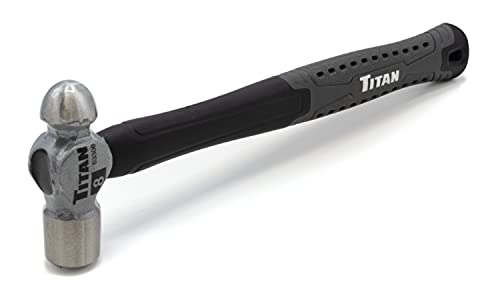
Titan 63308 8oz Ball Pein Hammer, Forged Steel Head, 11" Shock Absorbing Fiberglass Handle with Textured Rubber Grip
- Ball pein hammer (8 ounce / 1/2 pound) with a comfortable, textured cushion grip
- Great for peening rivets and striking chisels and punches
- Useful for shaping light duty unhardened metals
- Shock absorbing fiberglass handle
- Overall Length: 11.1 inches, Handle Length: 10 inches


As an Amazon Associate we earn from qualifying purchases. Product prices and availability are accurate as of the date/time indicated.
These tools have served craftspeople for generations. The claw hammer evolved from basic driving tools into the versatile nail-removal instrument we know today. The ball peen hammer’s origins trace back to blacksmithing traditions. Both remain fundamental in modern workshops across 2026. Knowing when to use each tool separates amateur work from professional-quality results. This guide explores their design differences, applications, and practical selection criteria.
Key Takeaway: Claw hammers excel at driving and removing nails in woodworking, while ball peen hammers are purpose-built for metalworking and shaping tasks.
How Does the Head Design Differ Between These Two Hammers?
The head design fundamentally separates these two tools. A claw hammer’s head includes a flat, slightly beveled striking surface and a curved claw that hooks under nail heads. The claw’s curve allows leverage for nail extraction without damaging surrounding wood. Ball peen hammers feature a completely different geometry—a flat face mirrors the claw hammer’s striking surface, but the opposite end tapers into a smooth, rounded ball.
The ball shape serves metalworking purposes exclusively. It allows metalworkers to shape, bend, and form metal without leaving sharp edges or marks. The rounded surface distributes impact force evenly across curved surfaces. This design prevents the flat face from creating unwanted impressions on delicate metalwork. Weight distribution also differs significantly between these tools.
Head Composition and Weight Specifications
Both hammer types use steel heads, but their weight distribution varies considerably. Claw hammers typically weigh 16 ounces for general carpentry work, with 20-ounce and 24-ounce versions for framing. Ball peen hammers range from 4 ounces for jewelry work to 48 ounces for heavy industrial metalworking. The weight concentration differs too—claw hammers balance weight toward the striking face, while ball peen hammers distribute weight more evenly between both ends.
- Claw hammer weights: 7 to 24 ounces for woodworking applications.
- Ball peen hammer weights: 4 to 48 ounces depending on metalworking specialty.
- Claw hammer head length: typically 4 to 5 inches overall.
- Ball peen hammer head length: 3 to 4 inches with rounded ball end.
- Both use tempered steel for durability and impact resistance.
Key Takeaway: Claw hammer heads emphasize the striking face with a removable claw, while ball peen heads feature a symmetrical design with a functional rounded end.
What Are the Primary Uses for Each Hammer Type?
Claw hammers dominate woodworking, framing, general construction, and home repair projects. Carpenters use them to drive nails into wood framing, drywall, and trim work throughout residential and commercial construction. The claw enables quick nail removal when mistakes occur or demolition is needed. Homeowners rely on claw hammers for hanging pictures, building decks, and assembling furniture. General contractors keep claw hammers on every job site. Their versatility makes them the most common hammer type in American households.
Ball peen hammers serve metalworking, automotive repair, jewelry making, and industrial fabrication. Blacksmiths and metalworkers use them to shape, bend, and form metal stock. Automotive technicians employ ball peen hammers for removing dents and adjusting metal components. Jewelers use smaller versions for detailed metalwork. These specialized applications require the ball end’s unique impact characteristics. Unlike claw hammers, ball peen hammers rarely appear in typical household toolboxes.
Specific Applications and Project Types
- Claw hammer: driving nails, removing nails, framing walls, hanging drywall.
- Claw hammer: demolition work, trim installation, furniture assembly, picture hanging.
- Ball peen hammer: shaping metal bars, setting rivets, removing dents, jewelry work.
- Ball peen hammer: automotive bodywork, blacksmithing, metal fabrication, toolmaking.
- Claw hammer: primary tool for 90% of residential construction and repair tasks.
The striking face on both hammers drives fasteners, but their secondary ends determine their true purpose. For nail-related work, the claw hammer’s removal capability is irreplaceable. For metal shaping, the ball peen hammer’s rounded end delivers precisely controlled impacts. Attempting to use a ball peen hammer for nail work wastes effort and produces poor results. Similarly, using a claw hammer on metalwork risks damaging the tool and creating substandard work.
Key Takeaway: Claw hammers handle all nail-related carpentry and construction tasks, while ball peen hammers specialize exclusively in metalworking and metal shaping applications.
How Do You Choose the Right Hammer for Your Project?
Selecting the correct hammer depends on your project type and materials. Ask yourself: Am I working with nails and wood, or shaping metal? If nails are involved, a claw hammer is your answer. If you’re metalworking, fabricating, or performing automotive repair, a ball peen hammer is essential. Project scale also matters—small trim work calls for a lighter 7-ounce claw hammer, while framing demands a heavier 20-ounce version. Metalworking weight selection depends on the metal type and thickness you’re shaping.
Consider your experience level and physical strength. Heavier hammers deliver more striking force but require greater control and stamina. Lighter hammers reduce fatigue during extended use. Professional carpenters often own multiple claw hammer weights for different tasks. Metalworkers similarly maintain several ball peen hammer sizes. Budget constraints might limit you to one primary hammer initially, so choose based on your most frequent projects.
Selection Criteria and Decision Matrix
- Choose claw hammer for: woodworking, carpentry, general home repair, nail removal.
- Choose ball peen hammer for: metalworking, metal shaping, automotive repair, fabrication.
- Claw hammer weight selection: 7-16 ounces for trim, 16-20 ounces for general carpentry, 20-24 ounces for framing.
- Ball peen hammer weight selection: 4-8 ounces for jewelry, 12-24 ounces for general metalwork, 32-48 ounces for heavy fabrication.
- Handle material: wood (traditional), fiberglass (durable), or steel (indestructible but heavier).
Test the hammer’s balance in your hand before purchasing. The weight should feel comfortable, not exhausting. Grip the handle at its end and swing gently—the hammer should feel like an extension of your arm. Poor balance leads to inaccurate strikes and wasted energy. Quality construction matters significantly; cheap hammers develop loose heads and crack handles quickly. Invest in reputable brands known for durability and performance. Your hammer choice affects both your work quality and personal safety.
Key Takeaway: Match your hammer to your project type—claw for carpentry and nails, ball peen for metalworking and shaping.
What Are the Safety Considerations for Each Hammer?
Proper hammer usage prevents injuries and extends tool life. Claw hammers pose risks when the claw slips during nail removal, potentially striking your hand or nearby objects. Always maintain firm footing and stable body position. Wear safety glasses to protect against flying nail fragments. Never swing a hammer while tired or distracted. Inspect the hammer head regularly for cracks or looseness that could cause it to separate during use. Replace worn handles immediately—a loose head is a serious hazard.
Ball peen hammers present different safety challenges. The rounded ball end can glance off angled surfaces unpredictably. Always secure your workpiece firmly in a vise or clamp before striking. Wear eye protection against metal fragments and sparks. The higher impact forces in metalworking require proper stance and grip strength. Never use a ball peen hammer for tasks beyond its design—attempting to remove nails or drive fasteners risks head damage and personal injury. Metalworking demands focus and deliberate strikes; rushing leads to accidents.
Essential Safety Practices
- Inspect hammer heads and handles before each use for cracks or looseness.
- Wear safety glasses when using either hammer type.
- Maintain firm footing and stable body position during all striking.
- Keep bystanders at least 6 feet away from your work area.
- Never use a hammer while tired, distracted, or under the influence.
- Secure workpieces with clamps or vises before striking.
- Replace loose or cracked handles immediately—do not attempt repairs.
Key Takeaway: Safe hammer use requires proper inspection, protective equipment, secure workpieces, and focused attention to task.
How Do Maintenance and Durability Compare?
Both hammer types require minimal maintenance but benefit from proper care. Keep hammer heads clean and dry to prevent rust. Wooden handles should be occasionally treated with linseed oil to maintain flexibility and prevent splitting. Fiberglass and steel handles require less maintenance but should still be inspected regularly. Loose heads indicate the handle is deteriorating—replace it before the head separates during use. Store hammers in a dry location away from moisture and extreme temperature fluctuations.
Claw hammers typically last decades with basic care. The claw can bend or break if used for prying beyond its design limits. Professional carpenters often keep claw hammers for years, replacing handles occasionally. Ball peen hammers similarly endure for generations when used appropriately. The ball end resists damage better than the claw because it distributes impact force evenly. However, using a ball peen hammer incorrectly—such as prying or striking at wrong angles—can crack the head or bend the ball. Respect each tool’s intended purpose to maximize longevity.
Maintenance Schedule and Longevity Factors
- Clean hammer heads monthly with a dry cloth to prevent rust.
- Check handles quarterly for cracks, splinters, or looseness.
- Treat wooden handles annually with linseed oil.
- Replace handles immediately if loose or damaged.
- Store in dry conditions away from temperature extremes.
- Expected lifespan: 10-30+ years with proper maintenance.
Key Takeaway: Proper maintenance ensures both hammer types provide decades of reliable service.
What Is the Cost Difference and Value Proposition?
Claw hammers offer excellent value across all price ranges. Basic claw hammers cost $8-15 from budget manufacturers. Mid-range quality hammers from established brands run $20-40. Professional-grade claw hammers from premium manufacturers cost $40-80. The price difference reflects handle materials, head quality, and brand reputation. For most homeowners and occasional users, a $20-30 hammer delivers excellent performance. Professional carpenters justify premium pricing through durability and precision. Related tool investments include hammer drills for specialized fastening tasks and brad nailers for precision finishing work.
Ball peen hammers cost slightly more than comparable claw hammers. Basic ball peen hammers cost $12-20, while quality versions run $25-50. Specialized sizes for jewelry or heavy fabrication can exceed $100. The premium reflects the specialized metalworking market and lower production volume. If you work with metal regularly, a ball peen hammer is essential and worth the investment. Occasional users might rent or borrow rather than purchase. Consider your project frequency when deciding between purchase and rental options.
Key Takeaway: Claw hammers offer exceptional value at $20-40 for quality; ball peen hammers cost slightly more but remain affordable for regular metalworkers.
Recommended Products

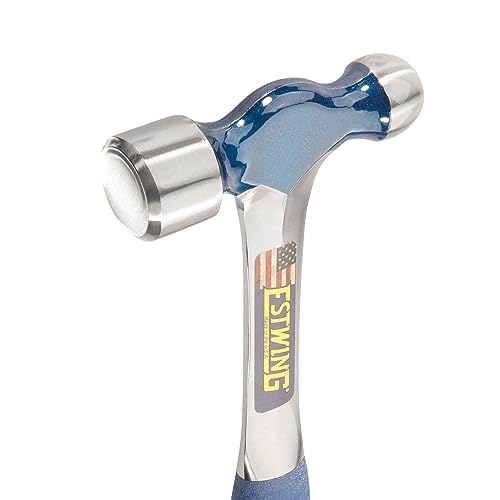
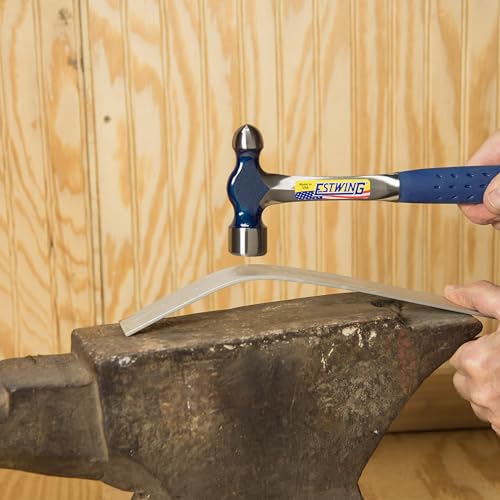
ESTWING Ball Peen Hammer - 16 oz Metalworking Tool with Forged Steel Construction & Shock Reduction Grip - E3-16BP
- VERSATILE METAL WORKING TOOL – Perfect for forming and shaping sheet metal, striking punches and chisels & peining rivets, making it the perfect mechanic hammer to have in any auto body shop.
- PICK YOUR SIZE - Available head weights for this metal hammer – 8, 12, 16, 24, and 32 oz. Whatever the task, the Estwing Ball Peen Hammer has the right size to provide optimal control and performance.
- FORGED IN ONE PIECE – This Estwing hammeris crafted from a single piece of solid steel and features a smooth rounded ball end to shape metals to the right contour.
- PATENTED SHOCK REDUCTION GRIP – Our molded vinyl creates a dimpled handle that is comfortable, durable & reduces impact vibration by 70%.
- MADE IN THE USA – Since 1923 Estwing hammers have been proudly crafted in Rockford, IL using only the finest American steel, and built to be the world's most trusted striking tools for over 100 years.




As an Amazon Associate we earn from qualifying purchases. Product prices and availability are accurate as of the date/time indicated.

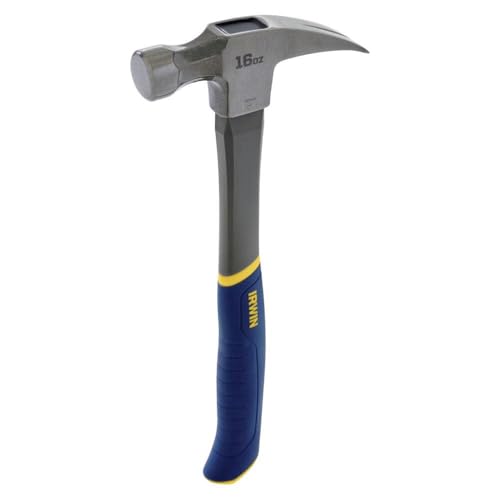
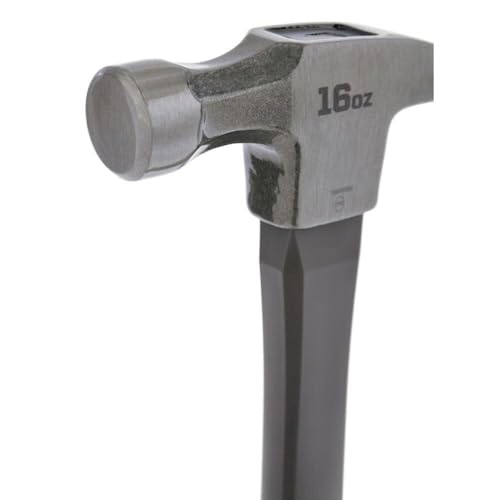
IRWIN Hammer, Fiberglass, General Purpose, Claw, 16 oz. (1954889)
- Forged steel head for superior durability
- ProTouch grip for maximum comfort even after prolonged use
- Smooth face leaves fewer marks on surfaces
- Fiberglass construction absorbs vibration and reduces fatigue
- Hybrid handle design is rounded for more comfort and fit with a curved base to prevent slippage and a hardened end cap



As an Amazon Associate we earn from qualifying purchases. Product prices and availability are accurate as of the date/time indicated.
Frequently Asked Questions
Can I use a claw hammer for metalworking tasks?
No, claw hammers are not designed for metalworking. The flat face lacks the controlled impact characteristics of a ball peen hammer. The claw is irrelevant for metal shaping and may catch on metal surfaces. Using a claw hammer on metal risks damaging the tool and producing poor-quality work. Always use the correct hammer for your material type.
Can I use a ball peen hammer to remove nails?
Technically possible but highly inefficient and inadvisable. Ball peen hammers lack the claw mechanism designed for nail removal. The rounded ball end cannot hook under nail heads effectively. Attempting nail removal wastes time and effort. Always use a claw hammer for nail-related tasks—it’s purpose-built for that job.
What is the ideal hammer weight for a beginner?
For carpentry beginners, start with a 16-ounce claw hammer. This weight provides adequate striking force without excessive fatigue. It’s light enough for control and heavy enough for efficient nail driving. As you develop technique and strength, you can adjust to heavier or lighter weights. Test different weights before purchasing to find your comfort level.
How do I know if my hammer head is loose?
Grasp the hammer head firmly and try to wiggle it side-to-side and up-and-down relative to the handle. Any movement indicates looseness. Listen for rattling sounds during use. A loose head is dangerous and must be tightened or the handle replaced immediately. Do not use a hammer with a loose head—the head can separate during striking.
What handle material is best for durability?
Fiberglass handles offer the best durability-to-cost ratio, resisting splits and damage better than wood. Steel handles are virtually indestructible but heavier and less comfortable. Wooden handles provide traditional feel and comfort but require more maintenance. For professional use, fiberglass handles deliver superior longevity. For occasional homeowner use, wood or fiberglass both work well.
Are left-handed hammers available?
Hammers are generally ambidextrous—both right and left-handed users hold them the same way. The head design doesn’t favor one side. However, claw orientation matters slightly for left-handed users who may prefer the claw positioned differently. Most users adapt quickly regardless of handedness. Specialized left-handed tools are rarely necessary for hammers.
Which Hammer Should You Choose for Your Workshop?
Your hammer selection depends entirely on your primary projects and materials. Homeowners and general contractors need a quality claw hammer as their foundational striking tool. Woodworkers benefit from owning multiple claw hammer weights for different tasks. Metalworkers, automotive enthusiasts, and fabricators require a ball peen hammer specifically. Many serious craftspeople own both hammers to handle diverse projects. Starting with a single quality claw hammer is wise for beginners—it handles 90% of household and light construction tasks.
Invest in quality tools from reputable manufacturers. A $30 claw hammer from a trusted brand outperforms a $10 budget hammer significantly. The difference manifests in balance, durability, and longevity. Read reviews and seek recommendations from experienced craftspeople. Test hammers in person before purchasing when possible. Consider your budget, project frequency, and material types. Complement your hammer selection with related tools like metric and SAE hex keys and Phillips and Torx screwdrivers for a well-rounded toolkit.
Building a comprehensive toolbox takes time and thoughtful investment. Your hammer choice establishes the foundation for quality work and safety. Whether you choose a claw hammer for carpentry or a ball peen hammer for metalworking, prioritize quality, proper maintenance, and correct usage. These timeless tools have served craftspeople for generations and will continue delivering reliable performance in 2026 and beyond. Start with the right hammer for your primary projects, and expand your collection as your skills and interests grow.
Key Takeaway: Invest in a quality claw hammer for general use, or a ball peen hammer if metalworking is your focus—both are essential tools that will serve you for decades.

Write Your Review
No reviews yet. Be the first to share your experience!