

What Is the Difference Between a Bubble Level and a Laser Level?
A bubble level uses a liquid-filled vial with an air bubble to indicate whether a surface is level or plumb, while a laser level projects a beam of light to mark perfectly level or vertical lines across distances. Bubble levels are mechanical, affordable, and require no power source. Laser levels are electronic, more precise, and ideal for large-scale projects. The choice depends on your project scope, budget, and accuracy requirements. Both tools remain essential in construction and carpentry through 2026 and beyond.
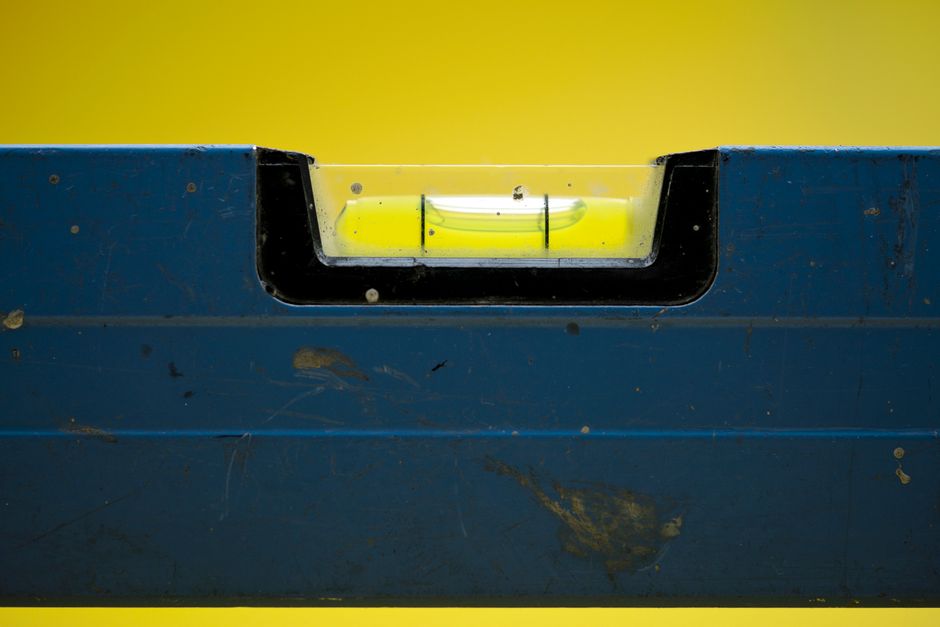
Understanding these tools helps you select the right one for your specific task. Bubble levels excel in tight spaces and small projects. Laser levels dominate when you need speed and precision across long distances. Many professionals carry both tools because they serve different purposes. A bubble level fits in your pocket and works anywhere. A laser level transforms how you handle alignment on walls, floors, and ceilings.
How Does a Bubble Level Work?
A bubble level operates on a simple principle: gravity pulls liquid downward, leaving an air bubble that floats upward. The vial contains colored liquid and a precisely calibrated air pocket. When the tool sits on a surface, the bubble settles in the center of the vial if that surface is perfectly level or plumb. This mechanical design requires zero electricity and zero calibration after purchase.
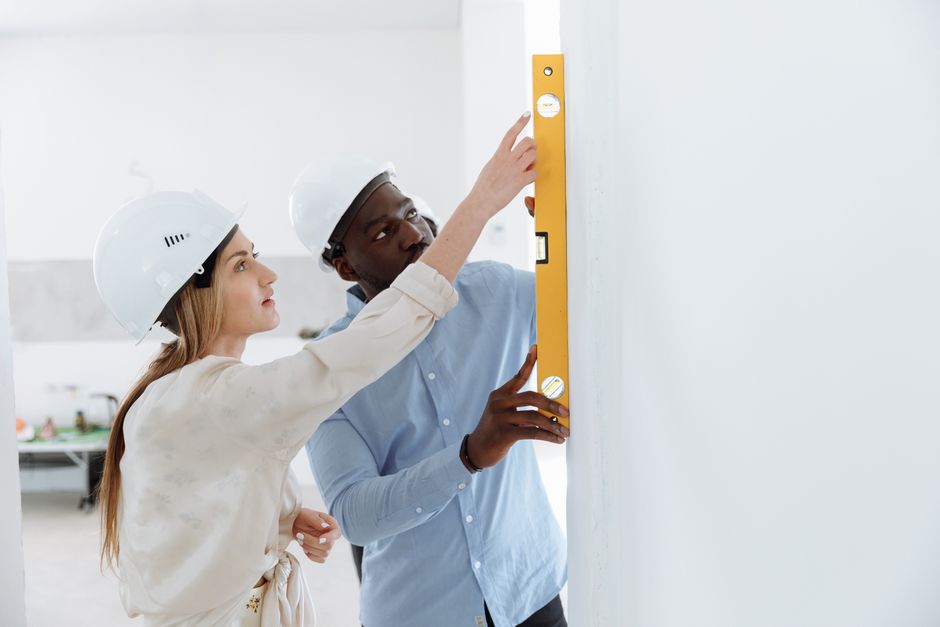
The accuracy of a bubble level depends on the quality of the vial and the precision of the frame. Professional-grade bubble levels maintain accuracy within 0.5 millimeters per meter. The longer the level, the more accurate the reading over distance. A 24-inch level detects minor slopes better than a 9-inch torpedo level because the bubble has more space to move.
Components of a Traditional Bubble Level
- Metal or aluminum frame for durability and straightness.
- Liquid-filled vials (typically containing alcohol or similar fluid).
- Air bubble calibrated to settle at the center when level.
- Marked reference lines showing level, plumb, and 45-degree angles.
- Protective bumpers to prevent damage from drops.
Key Takeaway: Bubble levels are mechanical tools that rely on gravity and liquid displacement, requiring no power and offering decades of reliable service.
How Does a Laser Level Work?
A laser level projects a narrow beam of light onto surfaces, creating a visible reference line that shows perfect level or vertical alignment. The tool contains a laser diode, a pendulum or electronic sensor, and a battery or power cord. When activated, the laser rotates or projects in a fixed direction, marking a continuous line that you can follow with your eyes or capture with a detector in low-light conditions.
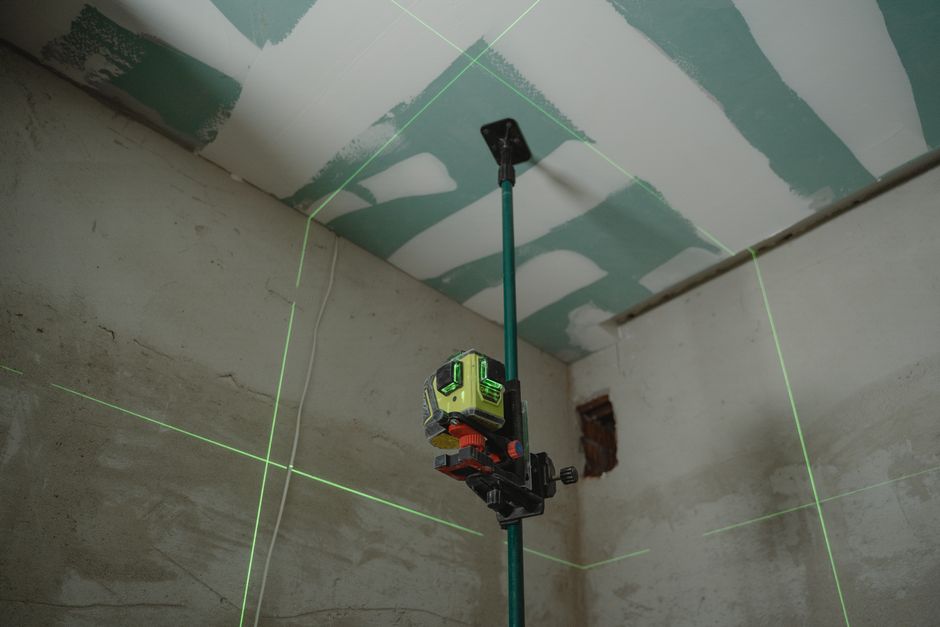
Modern laser levels in 2026 use either rotary or line-generating technology. Rotary models spin the laser beam 360 degrees, ideal for establishing level references around entire rooms. Line lasers project a single beam or cross pattern, perfect for marking specific alignment points on walls and floors. Self-leveling models automatically adjust if the tool tilts slightly, maintaining accuracy even on uneven surfaces.
Types of Laser Levels Available
- Rotary lasers: spin 360 degrees, cover large areas, ideal for foundation work.
- Line lasers: project single or cross beams, suited for interior walls and tile work.
- Dot lasers: mark specific points, useful for hanging shelves and picture frames.
- Self-leveling models: automatically adjust to maintain accuracy within 3-6 degrees of level.
- Manual-adjust models: require operator adjustment, offer greater precision in some cases.
Key Takeaway: Laser levels use electronic technology to project visible reference lines, enabling faster work over longer distances with minimal operator skill required.
What Are the Key Differences in Accuracy and Precision?
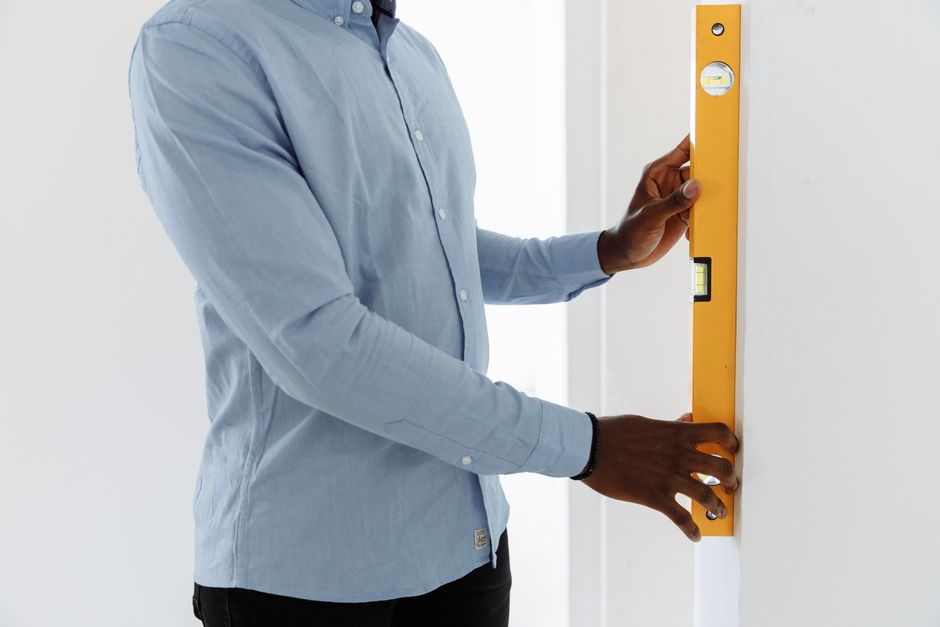
Bubble levels typically maintain accuracy within 0.5 to 1.0 millimeter per meter, depending on quality. A 24-inch professional bubble level can detect slopes as small as 1/32 inch over its length. This precision suits most residential carpentry and general construction. However, bubble levels require the operator to interpret the bubble position, introducing potential human error.
Laser levels achieve accuracy within 1/8 inch per 100 feet for quality rotary models, and some high-end versions reach 1/16 inch per 100 feet. This superior precision makes them essential for foundation work, grading, and large-scale commercial projects. The laser beam is objective—either it aligns with your reference point or it does not. There is no interpretation required, reducing operator error significantly.
For small residential projects under 30 feet, both tools deliver acceptable accuracy. For commercial work, renovations spanning multiple rooms, or outdoor grading projects, laser levels provide the precision and speed that justify their higher cost. Professional contractors often use laser levels as their primary tool and keep a bubble level as a backup for verification.
Key Takeaway: Laser levels offer superior precision over long distances, while bubble levels provide adequate accuracy for smaller projects with zero power requirements.
How Do Cost and Durability Compare?
Bubble levels range from $15 for basic models to $150 for professional-grade versions with multiple vials and premium frames. A quality 24-inch bubble level costs $40 to $80 and lasts 20+ years with proper care. These tools have no moving parts to wear out, no batteries to replace, and no electronics to fail. Dropping a bubble level from a ladder rarely causes permanent damage if the frame remains straight.

Laser levels cost $50 for basic line models to $3,000+ for professional rotary systems. A mid-range laser level suitable for homeowners runs $150 to $400. These tools require battery replacement, occasional recalibration, and careful handling to prevent optical damage. The laser diode eventually dims and may require replacement, typically after 5,000 to 10,000 hours of use. Dropping a laser level can crack the lens or misalign internal components.
Cost-Benefit Analysis for Different Users
- Homeowners: bubble level ($30-60) covers most household projects without additional expense.
- DIY enthusiasts: laser line level ($100-200) adds speed to frequent projects and pays for itself quickly.
- Professional contractors: rotary laser ($500-1,500) becomes essential for efficiency and client satisfaction.
- Specialty contractors: high-end laser systems ($2,000+) required for precision grading and large-scale work.
Key Takeaway: Bubble levels offer unmatched value for occasional use, while laser levels justify their cost for frequent or professional applications.
What Are the Practical Advantages of Each Tool?
Bubble levels excel in confined spaces where you need to check level or plumb on a single surface. Attics, crawlspaces, and tight corners are where bubble levels shine. They work perfectly in bright sunlight where laser beams become invisible. You can also use a bubble level underwater or in environments where electronics would fail. No batteries mean you always have a working tool, even after years of storage.
Laser levels transform large projects by establishing reference lines across entire rooms in minutes. Hanging crown molding, installing ceiling fans, or setting up tile layouts becomes faster and more consistent. A rotary laser can establish a level line around a 50-foot perimeter while you focus on other tasks. Laser levels reduce physical strain because you do not need to hold the tool level while marking—the laser maintains alignment automatically.
Bubble Level Advantages
- No batteries or charging required; works indefinitely.
- Visible in bright sunlight and tight spaces.
- Portable and lightweight; fits in tool belts.
- Rugged; survives drops and harsh conditions.
- No calibration or maintenance needed.
Laser Level Advantages
- Covers large areas quickly; saves hours on big projects.
- Creates continuous reference lines across rooms.
- Reduces operator error; objective alignment.
- Self-leveling models adjust automatically.
- Visible in low-light conditions with detectors.
Key Takeaway: Bubble levels dominate small spaces and outdoor work, while laser levels accelerate large indoor projects and improve precision.
Which Tool Should You Choose for Your Project?
Select a bubble level if your project involves checking level or plumb on individual surfaces, working in tight spaces, or operating without electricity. Hanging shelves, installing cabinet doors, and checking door frames are perfect bubble-level tasks. A 24-inch level handles most residential carpentry. Keep a torpedo level in your vehicle for quick checks on any job site. Budget $40 to $80 for a quality professional-grade bubble level.
Choose a laser level if you are establishing reference lines across large areas, working alone, or need to speed up repetitive alignment tasks. Installing crown molding around a room, setting tile layouts, or establishing grading lines benefit enormously from laser precision. A mid-range line laser ($100-300) suits most homeowners. Professional contractors should invest in rotary systems ($500-1,500) that pay for themselves through time savings on multiple projects.
Quick Decision Framework
- Project size under 15 feet: bubble level is sufficient and faster to deploy.
- Project size 15-50 feet: laser line level adds significant speed and accuracy.
- Project size over 50 feet: rotary laser becomes essential for efficiency.
- Outdoor grading or foundation work: rotary laser required for professional results.
- Tight spaces or no electricity: bubble level is your only practical option.
Key Takeaway: Bubble levels suit small projects and tight spaces, while laser levels justify their cost on larger projects where speed and precision matter most.
What Are Common Mistakes When Using These Tools?
Many users misinterpret bubble-level readings by placing the tool on uneven surfaces. The surface must be clean and free of dust or debris. Checking a bubble level before each use prevents accumulated damage from going unnoticed. Dropping a bubble level can shift the vials slightly, throwing off accuracy permanently. Always verify a questionable bubble level against a known-good reference tool.
Laser-level mistakes include not checking battery condition before starting work. A weak battery causes the laser to dim or shut off unexpectedly. Many users fail to use laser detectors in bright sunlight, making the beam invisible. Not allowing self-leveling models to settle before reading introduces errors. Pointing lasers at reflective surfaces or mirrors can create false reference lines that confuse the project.
How to Avoid Common Errors
- Clean surfaces thoroughly before placing either tool for accurate readings.
- Check batteries in laser levels before starting any project.
- Verify tool accuracy monthly against a known-good reference.
- Allow laser levels 3-5 seconds to settle before reading alignment.
- Use laser detectors in bright sunlight for visibility and accuracy.
- Never assume a tool is accurate; always double-check critical measurements.
Key Takeaway: Proper maintenance and careful technique prevent costly errors with either tool type.
How Have Laser Levels Evolved in 2026?
Modern laser levels in 2026 feature improved battery technology with longer runtimes and faster charging. Lithium-ion batteries now power most quality models, reducing weight and improving reliability. Bluetooth connectivity allows some laser levels to transmit data to smartphones for remote monitoring. Enhanced self-leveling sensors detect tilts within 1 degree, maintaining accuracy even on uneven ground. Laser brightness has improved significantly, making beams visible in bright daylight without additional detectors.
Digital displays on premium models show exact angles and slope percentages, eliminating guesswork. Green lasers have become standard because human eyes perceive green light better than red, improving visibility by up to 400%. Compact designs mean today’s laser levels weigh less and fit in smaller bags than earlier versions. These advances make laser technology more accessible to homeowners and small contractors who previously relied exclusively on bubble levels.
Key Takeaway: 2026 laser levels offer brighter beams, longer battery life, and smart features that make them more practical and affordable than previous generations.
Frequently Asked Questions
Can a laser level replace a bubble level completely?
No. Laser levels work poorly in bright sunlight without detectors and fail in tight spaces where beams cannot project. Bubble levels work anywhere and require no batteries. Professional contractors carry both because each excels in different situations. A laser level cannot check if a single shelf is level without projecting across the room. Many prefer bubble levels for quick, portable checks and laser levels for establishing room-wide references.
How often should I calibrate my laser level?
Most quality laser levels maintain calibration for years if handled carefully. Check accuracy monthly by comparing readings against a known-good reference surface. Professional contractors recalibrate before major projects or after dropping the tool. Many manufacturers offer calibration services for $50-150. Self-leveling models should be tested on slopes between 3 and 6 degrees to verify they still adjust properly. If accuracy drifts, recalibration or replacement is necessary.
What is the maximum range for a typical laser level?
Line lasers typically project 30-100 feet depending on brightness and ambient light. Rotary lasers reach 300-500 feet with detectors in professional-grade models. Bright daylight reduces visible range by 50% or more. Using a laser detector extends effective range significantly, especially outdoors. Cheaper models have shorter ranges; premium systems cover larger areas. For most residential projects, a line laser with 50-foot range is adequate. Commercial contractors need rotary systems for maximum distance coverage.
Are bubble levels accurate enough for professional construction?
Yes, quality bubble levels maintain professional accuracy within 0.5 millimeters per meter. Many skilled carpenters rely primarily on bubble levels for framing and finish work. However, foundation work and large-scale grading require laser precision. Professional contractors use bubble levels for detail work and laser levels for establishing room-wide or site-wide references. The choice depends on the specific task and required accuracy, not the contractor’s skill level or professional status.
How do I know if my bubble level is still accurate?
Place the level on a flat surface and note the bubble position. Rotate the level 180 degrees and place it in the same location. The bubble should return to the same position. If it does not, the vials have shifted and the level is no longer accurate. Compare your level against a known-good reference tool. Professional contractors test bubble levels monthly. If accuracy is suspect, replace the level or have it professionally recalibrated.
What safety precautions should I take with laser levels?
Never point laser beams at people or animals; direct eye exposure to laser light causes permanent vision damage. Avoid reflective surfaces that bounce beams unpredictably. Use appropriate laser glasses when working with high-powered rotary systems. Keep lasers away from children. Store laser levels safely to prevent accidental activation. Follow manufacturer warnings about laser class ratings. Most construction-grade lasers are Class 3R or lower, which are relatively safe with reasonable precautions. Always assume the laser is on and treat it with respect.
Which Tool Delivers Better Value for Your Needs in 2026?
The answer depends entirely on your specific application and budget. A homeowner tackling occasional shelving and picture-hanging projects needs only a quality bubble level costing $40-80. This single tool handles 95% of residential tasks and requires zero maintenance. A DIY enthusiast planning multiple renovation projects benefits from adding a laser line level ($150-300) that accelerates work and improves consistency. The investment pays for itself in time savings on the second or third project.
Professional contractors should own both tools and use them strategically. Bubble levels verify details and provide backup checks when laser beams fail. Laser levels establish room-wide and site-wide references that would take hours with bubble levels alone. A contractor’s toolkit includes a quality bubble level ($50-100) and at least one laser system ($300-1,500) matched to their typical project scope. Over a career, this dual-tool approach saves thousands of hours and prevents costly alignment errors.
In 2026, laser technology has become affordable enough that many homeowners justify owning both tools. A $200 investment in a bubble level and basic laser line level covers virtually every residential project. The combination provides flexibility, redundancy, and the speed that makes projects enjoyable rather than frustrating. Whether you choose one tool or both, understanding the strengths of each ensures you make the right decision for your specific needs.
Key Takeaway: Select a bubble level for basic household projects, add a laser level for frequent or large-scale work, and consider owning both for maximum versatility and professional results.






Write Your Review
No reviews yet. Be the first to share your experience!