

What’s the Difference Between Titanium and Cobalt Drill Bits for Stainless Steel?
Titanium and cobalt drill bits are both engineered for demanding applications, but they excel in different scenarios when drilling stainless steel. Titanium-coated bits feature a thin titanium nitride (TiN) layer applied to high-speed steel (HSS), offering improved heat resistance and reduced friction at a moderate price point. Cobalt bits, by contrast, contain 5-8% cobalt alloy mixed throughout the entire bit, creating superior hardness and heat tolerance that extends drill life significantly. For stainless steel—a notoriously difficult material to drill due to its work-hardening properties—cobalt bits generally outperform titanium options by 2-3 times in terms of longevity and hole quality. However, titanium-coated bits remain a practical choice for occasional users or lighter-duty applications where cost matters more than maximum performance. The key difference lies in material composition: titanium is a surface treatment, while cobalt is an integral alloy. This distinction fundamentally affects how each bit handles the intense heat and pressure generated when drilling stainless steel, which can reach temperatures exceeding 1,200°F without proper cooling.

MACXCOIP 13Pcs(1/16"-1/4") Cobalt Drill Bit Set M35 HSS Jobber Length
- Various Sizes: 13 sets of drill bits include 1/16", 5/64", 3/32", 7/64", 1/8", 9/64", 5/32", 11/64", 3/16", 13/64", 7/32", 15/64", 1/4", can meet more needs
- M35 Cobalt Drill Bit: The M35 cobalt drill bit is a durable, sharp and robust drill bit suitable for cutting stainless steel, iron castings, copper, aluminum and other soft metals as well as plastics, wood etc
- Quick and Efficient: The cobalt drill bit set can be used effectively on most soft and hard objects, with a 135 degree point tip and twist design for faster cutting, self-centering to prevent walk-off and faster chip and particle removal
- HSS Drill Bit Set: HSS cobalt drill bit set for hardened steel with excellent cutting performance. 13 sets of drill bits for long term use. The inserts are hardened and polished for improved sharpness and precise cutting without wobbling
- Easy Storage: The drill set includes a drill case with size indexes and is packaged in a small package for easy storage and sorting. If you have any questions, please refer to us and we will be happy to help you


As an Amazon Associate we earn from qualifying purchases. Product prices and availability are accurate as of the date/time indicated.
Understanding these differences helps professionals and DIY enthusiasts make informed decisions based on their specific drilling needs, budget constraints, and project frequency. Both options have legitimate applications in 2026’s tool market, but the choice depends on whether you prioritize initial cost savings or long-term value and performance reliability.
How Do Titanium Drill Bits Perform When Drilling Stainless Steel?
Titanium-coated drill bits apply a thin layer of titanium nitride to high-speed steel substrate, creating a surface that resists heat and friction more effectively than bare HSS. This coating typically measures 1-4 micrometers thick and provides several advantages for stainless steel drilling: improved lubricity reduces friction heat, the gold or bronze coating helps dissipate thermal energy, and the harder surface resists dulling from stainless steel’s abrasive crystalline structure.
Advantages of Titanium Bits for Stainless Steel
Titanium-coated bits excel at maintaining sharp cutting edges longer than uncoated HSS, extending bit life by 2-3 times compared to standard steel bits. They generate less heat during operation, reducing the risk of work-hardening in stainless steel—a phenomenon where the material becomes harder and more difficult to cut when exposed to excessive heat. The coating also improves chip evacuation, helping prevent the bit from binding or grabbing, which is critical when working with tough stainless grades like 304 and 316. Additionally, titanium bits cost significantly less than cobalt alternatives, making them attractive for budget-conscious users or those drilling stainless steel infrequently. They work well in standard corded drills and basic cordless models, requiring no special equipment or techniques.
Limitations and When Titanium Falls Short
Despite their advantages, titanium-coated bits have notable limitations for demanding stainless steel work. The coating can wear away relatively quickly under sustained high-speed drilling, especially when drilling multiple holes or working with thicker stainless steel sections. Since the coating is applied to HSS substrate, once it wears through, the underlying steel dulls rapidly. Titanium bits also perform poorly at extremely high speeds or under heavy pressure, conditions that generate the intense heat stainless steel drilling demands. For production work or professional shops drilling stainless steel regularly, titanium bits require frequent replacement, ultimately increasing total project costs despite lower initial purchase prices. They’re also less forgiving of drilling errors—too much speed or pressure can cause the coating to chip or flake prematurely.
How Do Cobalt Drill Bits Outperform Titanium for Stainless Steel Applications?
Cobalt drill bits represent the premium option for stainless steel drilling, containing 5-8% cobalt metal alloyed throughout the entire bit structure rather than just a surface coating. This fundamental difference creates a tool with exceptional hardness, heat resistance, and durability. Cobalt bits maintain their hardness at temperatures exceeding 2,000°F, compared to titanium’s effectiveness only up to about 1,200°F. This superior heat tolerance is crucial for stainless steel, which generates extreme friction and thermal stress during drilling. The cobalt alloy also provides better toughness, allowing the bit to withstand the interrupted cuts and binding forces common in stainless steel work without chipping or breaking.
Why Cobalt Excels with Stainless Steel’s Unique Challenges
Stainless steel presents three primary drilling challenges: work-hardening (the material becomes harder as it’s cut), poor chip evacuation (chips tend to weld to the bit), and extreme heat generation. Cobalt bits address all three issues effectively. The superior hardness allows cobalt bits to cut through work-hardened stainless steel without dulling, while the material’s toughness prevents binding when chips jam around the flutes. Cobalt’s exceptional heat resistance means the cutting edges maintain their sharpness even when reaching temperatures that would soften titanium-coated bits. Studies and field tests consistently show cobalt bits lasting 5-10 times longer than titanium-coated bits when drilling stainless steel extensively. For professionals drilling stainless steel regularly—fabricators, aerospace technicians, medical device manufacturers—cobalt bits deliver measurable productivity gains through reduced bit changes, faster drilling speeds, and superior hole quality with minimal burring.
Cost-Benefit Analysis of Cobalt Investment
Cobalt bits cost 3-5 times more than titanium-coated alternatives, a significant initial investment. However, when calculated across a project’s total cost, cobalt often delivers better value. A single cobalt bit might cost $8-15 compared to $2-4 for titanium, but if the cobalt bit drills 100 holes in stainless steel while the titanium bit manages only 20-30 before dulling, the per-hole cost favors cobalt substantially. For occasional users drilling a few holes yearly, this investment rarely justifies itself. For shops drilling stainless steel regularly, cobalt bits typically pay for themselves within 2-3 projects through reduced downtime, fewer bit replacements, and improved productivity.
How Do You Choose Between Titanium and Cobalt Bits for Your Stainless Steel Project?
Selecting the right drill bit requires evaluating several factors specific to your application, budget, and expected usage patterns. The decision framework involves assessing project scope, frequency, material thickness, drilling speed capabilities, and total cost of ownership rather than focusing solely on initial purchase price.
Assessing Your Drilling Frequency and Volume
Start by determining how often you’ll drill stainless steel and in what quantities. If you’re drilling fewer than 10-20 holes total across occasional projects, titanium-coated bits offer adequate performance and significant cost savings. These bits work fine for one-off jobs where tool investment shouldn’t exceed project value. However, if you’re drilling 50+ holes regularly or drilling stainless steel monthly, cobalt bits become economically justified through their extended lifespan and reduced replacement frequency. Professional shops drilling stainless steel daily should exclusively use cobalt bits—the productivity gains and consistency far outweigh the higher initial cost. Consider whether you’re drilling for yourself or billing hours to clients; if you’re billing labor, cobalt bits’ speed advantage translates directly to increased profitability per project.
Evaluating Stainless Steel Type and Thickness
Different stainless steel grades present varying difficulty levels. Austenitic stainless steels (304, 316) work-harden aggressively and benefit most from cobalt’s superior heat resistance. Ferritic stainless steels (430) are somewhat easier to drill and may work adequately with quality titanium bits. Martensitic stainless steels (410, 420) are hardest but less prone to work-hardening, sometimes performing acceptably with titanium bits. Material thickness also matters significantly: thin stainless steel sheet (under 1/8 inch) can be drilled successfully with titanium bits, while thick stainless steel sections or structural components demand cobalt’s superior performance. When drilling stainless steel thicker than 1/2 inch, cobalt bits prevent the excessive heat buildup that causes titanium coatings to fail prematurely.
Considering Equipment Capabilities and Drilling Speed
Your drilling equipment influences bit selection. Older or less powerful cordless drills may lack the speed and torque control needed for optimal cobalt bit performance, making titanium bits a more practical choice. Modern brushless drills like those in professional tool lines offer variable speed and better heat management, enabling cobalt bits to perform at their peak. Cobalt bits typically require slower speeds than titanium (500-1,500 RPM for stainless steel versus 1,000-2,500 RPM for titanium), so verify your drill can operate in the appropriate range. High-speed drilling with cobalt bits demands proper technique and coolant application; without these, you won’t realize the performance advantages that justify the premium price. If your drilling setup lacks these capabilities, titanium bits may deliver better practical results.
Calculating Total Cost of Ownership
Don’t focus solely on purchase price; calculate the true cost per hole drilled. Track how many holes each bit type produces before becoming too dull for quality results. Multiply bit cost by the number of bits needed for your project, then divide by total holes drilled. For most professional stainless steel drilling scenarios, cobalt delivers a lower per-hole cost despite higher initial expense. Additionally, factor in your labor costs: faster drilling with cobalt bits and fewer tool changes represent real time savings that impact project profitability. For DIY projects where labor cost isn’t a factor, titanium bits’ lower initial investment often makes them the practical choice unless you’re drilling extensive stainless steel.
Special Considerations for Specific Applications
Aerospace and medical device manufacturing typically mandate cobalt bits due to strict quality requirements and the critical nature of applications. General fabrication shops benefit from cobalt for production work but might use titanium for occasional prototype drilling. Maintenance technicians performing field repairs on stainless steel equipment should carry both types: cobalt for planned drilling work and titanium as backup bits for emergency repairs where replacement isn’t immediately available. Home workshops handling occasional stainless steel projects can satisfy most needs with quality titanium bits, reserving cobalt for challenging scenarios like drilling thick sections or hard stainless grades.
What Techniques and Best Practices Maximize Performance of Stainless Steel Drill Bits?
Proper technique dramatically impacts both titanium and cobalt bit performance when drilling stainless steel. Incorrect speed, pressure, or cooling can cause even premium cobalt bits to fail prematurely, while correct technique can extend titanium bit life significantly. Understanding and implementing these practices is essential for achieving quality holes and maximum tool longevity.
Speed and Feed Rate Optimization
Stainless steel drilling demands slower speeds than mild steel or aluminum. Titanium-coated bits work best at 1,000-2,500 RPM depending on hole size and material thickness, while cobalt bits prefer 500-1,500 RPM. Smaller diameter bits (under 1/8 inch) can run at the higher end of these ranges, while larger bits (over 1/4 inch) require slower speeds to prevent excessive heat generation. Feed rate—the pressure pushing the bit into the material—should be steady and moderate. Too much pressure causes heat buildup and work-hardening; too little pressure causes the bit to rub rather than cut, also generating excessive heat. The ideal feed produces continuous chips that curl away from the hole rather than tiny dust particles or welded chips. Start with light pressure and increase gradually until you achieve proper chip formation, then maintain that consistent pressure throughout the hole.
Cooling and Lubrication Strategies
Heat management is critical for stainless steel drilling success. Without proper cooling, even cobalt bits will dull rapidly and risk breaking. For manual drilling, apply cutting fluid liberally and frequently—stop every 5-10 seconds to reapply fluid and clear chips. Recommended cutting fluids include sulfurized oil, specialty stainless steel cutting oils, or water-soluble coolants formulated for stainless steel. Never use straight water, which causes rust and provides insufficient lubrication. For powered drilling, consider using a drill press with flood cooling capability, which maintains optimal tool temperature and chip evacuation. When drilling with handheld cordless drills, apply cutting fluid in small quantities to avoid excessive mess while still providing adequate lubrication. Some professionals use a small brush to apply cutting fluid continuously during drilling. The investment in proper coolant pays dividends in extended bit life and superior hole quality.
Preventing Common Drilling Errors
Several mistakes commonly damage both titanium and cobalt bits when drilling stainless steel. Excessive speed causes rapid heat buildup and coating failure on titanium bits, while also accelerating dulling on cobalt bits. Drilling without coolant is perhaps the most damaging error—it causes immediate work-hardening and dramatically shortens bit life. Applying too much pressure causes binding and can break bits, especially in cordless drills that lack proper speed control. Drilling without a pilot hole in thick material causes the bit to wander, creating oversized holes and damaging the bit’s cutting edges. Reversing direction while the bit is engaged (trying to back out of a stuck bit) can snap the bit or damage flutes. Finally, allowing the bit to overheat until it glows red indicates severe damage has already occurred. Watch for color change during drilling; if the bit starts turning blue or dark, stop immediately, let it cool, apply fresh coolant, and reduce speed or pressure. These practices apply to both bit types but are especially critical when using premium cobalt bits where damage represents significant financial loss.
Equipment Setup for Optimal Results
Your drilling equipment significantly impacts results. Drill presses provide superior control compared to handheld drills, allowing precise speed adjustment, consistent pressure application, and easy coolant application. If using a handheld drill, choose a model with variable speed control—this is essential for stainless steel work. Brushless motors offer better speed regulation than brushed motors, helping maintain optimal RPM even under load. Consider using a drill press vise or clamping system to secure the workpiece firmly; movement or vibration during drilling causes binding and bit damage. For extensive stainless steel drilling, a magnetic drill press designed for metal work provides superior results compared to standard woodworking drill presses. Ensure your chuck grips the bit firmly without runout (wobbling), as this causes uneven cutting and accelerates dulling. Clean the chuck periodically to remove metal chips that interfere with bit seating.
Recommended Products

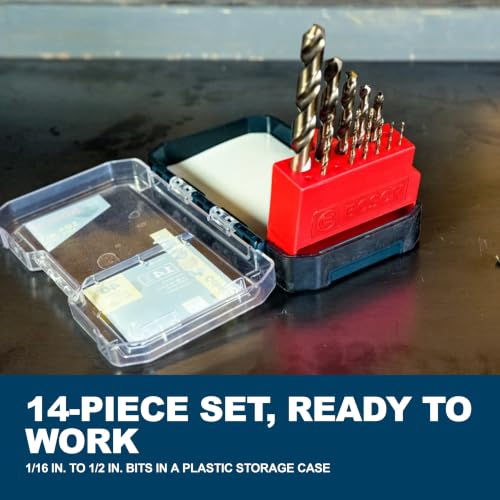
Bosch Cobalt M42 14-Piece Drill Bit Set with Case
- Enhanced M42 Alloy Material: These drill bits for metal contain an 8% cobalt alloy that delivers 10x life vs. Standard bits
- Cobalt M42 Drill Bit: Provides upgraded M42 cobalt drill bits, jobber-length bits designed for durability, high heat resistance and Hardened surface for stainless steel, cast iron, titanium, light-gauge metal and aluminum
- Surface-hardened Tip: The Cobalt drill bits for hardened steel penetrate tough, abrasive materials
- High-heat Resistant Bits: This drill bit set for metal withstands high-temperature applications for extended periods of time
- Thick Web-helix Design: The BOSCH drill bit set features a thick web-helix design that provides additional stability in tough applications
- Includes: A versatile drill bit for metal assortment featuring 1/16", 5/64", 3/32", 7/64", 1/8", 9/64", 5/32", 3/16", 7/32", 1/4", 5/16", 3/8", and 1/2" sizes


As an Amazon Associate we earn from qualifying purchases. Product prices and availability are accurate as of the date/time indicated.

DEWALT 21-Piece Titanium Nitride Drill Bit Set with Case
- Titanium Nitride Coating Pilot Point for Longer Life
- Starts on contact for cleaner holes
- No spin shanks
- Tapered web provides greater durability to reduce breaking
- Includes sizes from 1/16-inch to 1/2-inch in a plastic tough case
- Includes: 1/16' x 2, 5/64' x 2, 3/32' x 2, 7/64' x 2, 1/8' x 2, 9/64' x 1, 5/32' x 1, 11/64' x 1, 3/16' x 1, 13/64' x 1, 7/32' x 1, 15/64' x 1, 1/4 x 1, 5/16' x 1, 3/8' x 1, 1/2' x 1


As an Amazon Associate we earn from qualifying purchases. Product prices and availability are accurate as of the date/time indicated.
Frequently Asked Questions
Can you use titanium drill bits on stainless steel successfully?
Yes, quality titanium-coated bits work adequately for stainless steel drilling, especially for smaller projects or occasional use. They last 2-3 times longer than uncoated HSS bits and cost significantly less than cobalt. However, they dull faster than cobalt and work best with proper coolant and moderate speeds. For frequent or production stainless steel drilling, cobalt bits deliver superior performance and better value despite higher initial cost.
How many holes can titanium and cobalt bits drill in stainless steel?
Titanium bits typically drill 20-50 holes in stainless steel before dulling significantly, depending on hole size and material thickness. Cobalt bits can drill 100-500+ holes in the same conditions. A single cobalt bit often outlasts 3-5 titanium bits, making cobalt more economical for regular stainless steel work despite the higher per-bit cost. Exact numbers vary based on material grade, thickness, drilling technique, and coolant application.
What cutting fluid works best for drilling stainless steel?
Sulfurized cutting oil and specialty stainless steel cutting fluids provide excellent results, offering superior lubrication and heat dissipation. Water-soluble coolants formulated for stainless steel also work well. Avoid straight water, which causes rust and inadequate lubrication. For handheld drilling, apply cutting fluid frequently—every 5-10 seconds—and clear chips regularly. Proper coolant application extends both titanium and cobalt bit life significantly and improves hole quality.
Should you use a pilot hole when drilling stainless steel?
Yes, pilot holes are highly recommended for stainless steel drilling, especially with larger diameter bits or thick material. A small pilot hole (typically 1/16 to 1/8 inch) guides the larger bit, prevents wandering, reduces binding risk, and extends bit life. Pilot holes are particularly important when using handheld drills, where pressure control is more difficult. Even with cobalt bits, pilot holes improve results and reduce the risk of bit breakage in challenging applications.
Is cobalt worth the extra cost compared to titanium for occasional drilling?
For occasional stainless steel drilling (fewer than 20 holes total), titanium bits typically offer better value due to significantly lower cost. Cobalt’s longevity advantage matters most when drilling frequently or in high-volume production. However, if you’re drilling thick stainless steel or hard grades like 316, cobalt’s superior performance may justify the investment even for smaller projects. Calculate your specific per-hole costs to determine which option suits your needs.
Can titanium-coated cobalt bits exist, or is it one or the other?
While theoretically possible, titanium coatings on cobalt bits are uncommon because cobalt’s superior hardness already provides excellent performance without coating. Manufacturers occasionally apply other coatings (like TiAlN) to cobalt bits for specialized applications, but standard cobalt bits rely on the alloy itself rather than surface treatments. Titanium coating primarily benefits HSS bits, which lack cobalt’s inherent hardness. Most manufacturers optimize each technology separately rather than combining them.
Is Choosing Between Titanium and Cobalt Bits Worth the Research Investment?
Absolutely. Selecting the appropriate drill bit type for stainless steel work directly impacts project success, tool longevity, and overall costs. The difference between using the right and wrong bit type can mean the difference between completing a project efficiently with quality results versus struggling with dull bits, poor hole quality, and mounting frustration. In 2026, as stainless steel applications continue expanding across industries from aerospace to medical devices to general fabrication, understanding these tools’ capabilities becomes increasingly valuable.
For professionals and serious DIY enthusiasts, the decision between titanium and cobalt isn’t merely about initial purchase price—it’s about total value delivered. Cobalt bits represent a genuine performance advantage for demanding applications, backed by measurable improvements in tool life, drilling speed, and hole quality. However, titanium bits remain a practical, cost-effective choice for lighter-duty applications where their performance-to-price ratio makes sense. The key is matching the tool to your specific needs rather than defaulting to either option without consideration.
Implementing proper drilling techniques amplifies whatever bit type you choose. Correct speed, adequate coolant, appropriate pressure, and proper equipment setup enable even titanium bits to perform reliably, while poor technique can compromise even premium cobalt bits. This combination of right tool selection plus proper technique creates the conditions for success.
As you plan stainless steel drilling projects, take time to assess your specific requirements: frequency of drilling, material thickness and grade, equipment capabilities, and total project costs. Use this framework to make informed decisions that balance performance, durability, and budget. Whether you choose titanium for occasional work or invest in cobalt for regular use, you’ll achieve better results than using generic bits without consideration for the material’s unique challenges. The research investment pays dividends through improved results and cost efficiency across your current and future stainless steel projects.


Write Your Review
No reviews yet. Be the first to share your experience!