

What Is an Air Ratchet and Why Does Tight Space Work Matter?
An air ratchet is a pneumatic tool that delivers rapid rotational force using compressed air, making it ideal for fastening and loosening bolts in confined areas. Unlike impact wrenches, air ratchets provide controlled, steady rotation without jarring shock. They excel in automotive repair, machinery maintenance, and assembly work where space is severely limited. The compact design and lightweight construction make them invaluable for mechanics working under vehicles, inside engine compartments, or around complex machinery. Air ratchets operate at speeds between 200 and 400 RPM, delivering consistent torque without damaging delicate components. Their ability to fit into spaces where hand tools cannot reach makes them essential for professional technicians in 2026.

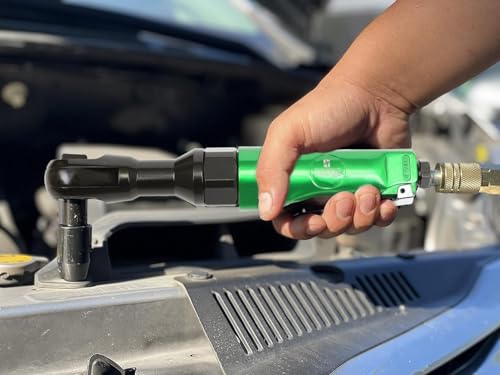
DYNAMIC POWER 3/8 inch Professional Air Ratchet, Green&Black
- Max Torque: 45 FT-LBS: Delivers powerful performance with a maximum torque of 45 ft-lbs for tackling a wide range of fastening tasks
- Durable & Reliable: Built to withstand regular use, offering long-lasting, consistent performance in demanding environments
- Ergonomic Grip: Comfortable, non-slip handle for better control during operation
- Reversible Function: Allows for both tightening and loosening of fasteners, offering versatility for various applications
- Professional-Grade Performance: Designed for heavy-duty use in automotive repairs, maintenance, and assembly work
- Free Speed: 160 rpm: Operates at a free speed of 160 revolutions per minute for efficient fastening operations
- Working Pressure: 90 PSI: Optimized to operate at a working pressure of 90 pounds per square inch for consistent performance
- Average Air Consumption: 6 CFM @ 90 PSI: Consumes an average of 6 cubic feet per minute at 90 PSI for efficient air usage


As an Amazon Associate we earn from qualifying purchases. Product prices and availability are accurate as of the date/time indicated.
Tight space work demands precision and technique. Standard wrenches and breaker bars simply won’t fit in confined areas, and attempting to force them can cause injury or damage. Air ratchets solve this problem by providing a slender profile and adjustable head positions. The tool’s versatility across different socket sizes and orientations makes it adaptable to nearly any workspace constraint. Understanding proper usage prevents stripped bolts, damaged fasteners, and costly mistakes.
Key Takeaway: Air ratchets are compact pneumatic tools perfect for tight spaces because they combine power with precision in a slim profile.
How Do You Select the Right Air Ratchet for Confined Workspaces?
Choosing the correct air ratchet requires understanding your workspace dimensions and fastener requirements. Measure the available space carefully before purchasing. Standard air ratchets range from 3/8-inch to 1/2-inch drive sizes, with 3/8-inch being ideal for tight quarters. Consider the length of the tool body—shorter models fit into narrower gaps. Check the head design; some feature swivel heads that rotate 360 degrees, offering flexibility in confined areas.

Power and torque specifications matter significantly. Look for models delivering 20 to 50 foot-pounds of torque, sufficient for most automotive fasteners without excessive force. Lighter models under 3 pounds reduce fatigue during extended use overhead or in awkward positions. Weight distribution affects control—tools with balanced weight feel more manageable in tight spaces.
Key Features to Evaluate
- Drive size: 3/8-inch drive fits tighter spaces than 1/2-inch options.
- Overall length: Shorter bodies navigate confined areas more easily.
- Head design: Swivel or adjustable heads provide angular access options.
- Torque range: 20-50 foot-pounds suits most automotive applications.
- Weight: Under 3 pounds prevents fatigue in overhead positions.
- Air consumption: Lower CFM requirements mean smaller compressors suffice.
Material quality affects durability in tight spaces where the tool contacts surrounding surfaces. Aluminum bodies resist corrosion better than steel when exposed to moisture. Chrome-plated components resist rust and wear from repeated contact with metal edges. Sealed bearings prevent dust infiltration when working in dirty environments.
Key Takeaway: Select a 3/8-inch drive air ratchet under 3 pounds with a swivel head for optimal tight space performance.
What Preparation Steps Ensure Safe Tight Space Operation?
Preparation prevents accidents and improves efficiency when working in confined areas. First, inspect the workspace thoroughly. Clear debris, remove obstacles, and ensure adequate lighting. Use flashlights or headlamps to illuminate dark corners where fasteners are located. Check for sharp edges, protruding bolts, or moving parts that could snag clothing or skin.
Secure the work piece firmly before beginning. Loose components shift during ratcheting, creating hazards and reducing control. Use clamps, blocks, or stands to stabilize the object. Never rely on your body weight to hold items in place—this prevents proper tool control and increases injury risk.
Pre-Operation Safety Checklist
- Verify air compressor pressure matches tool specifications (typically 90-120 PSI).
- Inspect hoses for leaks, cracks, or damage before connecting.
- Wear safety glasses to protect eyes from flying debris.
- Use gloves for grip and hand protection in tight spaces.
- Remove loose clothing and secure long hair before starting.
- Test the tool briefly in open space to confirm proper operation.
Adjust air pressure appropriately. Higher pressure increases speed but may overtighten fasteners, causing damage. Lower pressure reduces noise and heat generation in confined spaces. Reference the manufacturer’s recommended PSI range for your specific model. Connect quick-disconnect couplings properly to prevent accidental disconnection during use.
Key Takeaway: Thorough workspace preparation, proper lighting, and secure work pieces are essential before operating an air ratchet in confined areas.
How Do You Position Your Body and Tool in Tight Spaces Effectively?
Body positioning determines both safety and effectiveness when using an air ratchet in confined areas. Assess the space from multiple angles before committing to a position. Identify the most direct route to the fastener, considering your arm reach and tool clearance. Position yourself to maintain balance and stability—never work in positions where you cannot quickly withdraw if needed.
Maintain firm footing at all times. If working under a vehicle, use jack stands rated for the weight and position them properly. Never rely solely on a jack to hold the vehicle. Work with your knees bent slightly and your core engaged, distributing stress across larger muscle groups rather than concentrating it in your shoulders and arms.
Effective Positioning Techniques
- Approach fasteners from the angle requiring minimal tool rotation.
- Keep elbows close to your body to maintain control and reduce strain.
- Use your non-dominant hand to stabilize the work piece whenever possible.
- Position the air hose to avoid tangling or catching on sharp edges.
- Maintain visual contact with the fastener throughout the operation.
- Practice moving into and out of the confined space before using the tool.
Grip the air ratchet firmly but not excessively. Excessive grip strength causes hand fatigue and reduces control. Let the tool do the work—your hands should guide, not force. In very tight spaces, use extension bars or adapters to increase reach, but ensure they don’t compromise stability or create binding.
Key Takeaway: Proper body positioning with firm footing, stable core engagement, and controlled grip ensures safety and precision in confined workspaces.
What Socket and Adapter Combinations Work Best in Confined Areas?
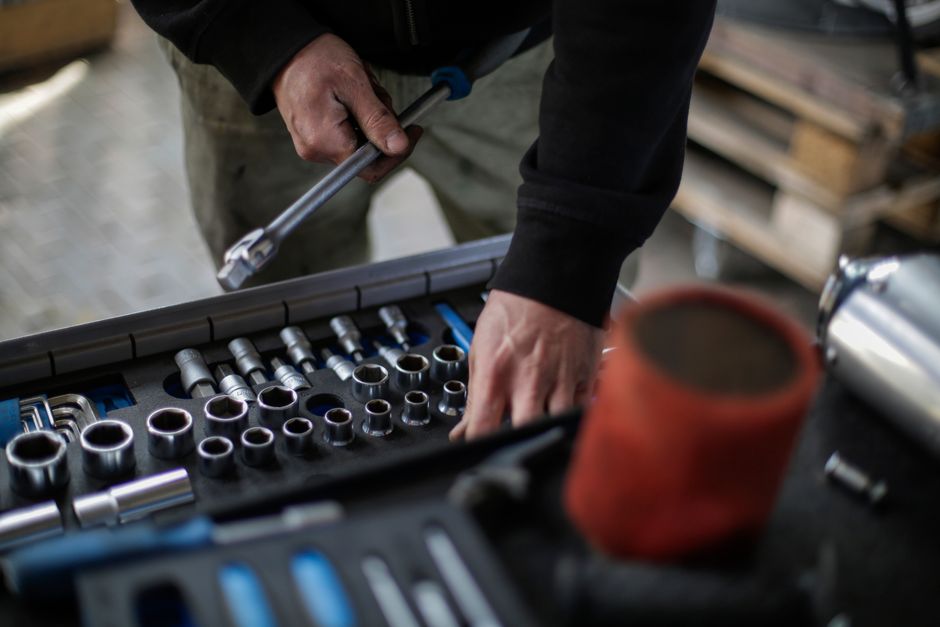
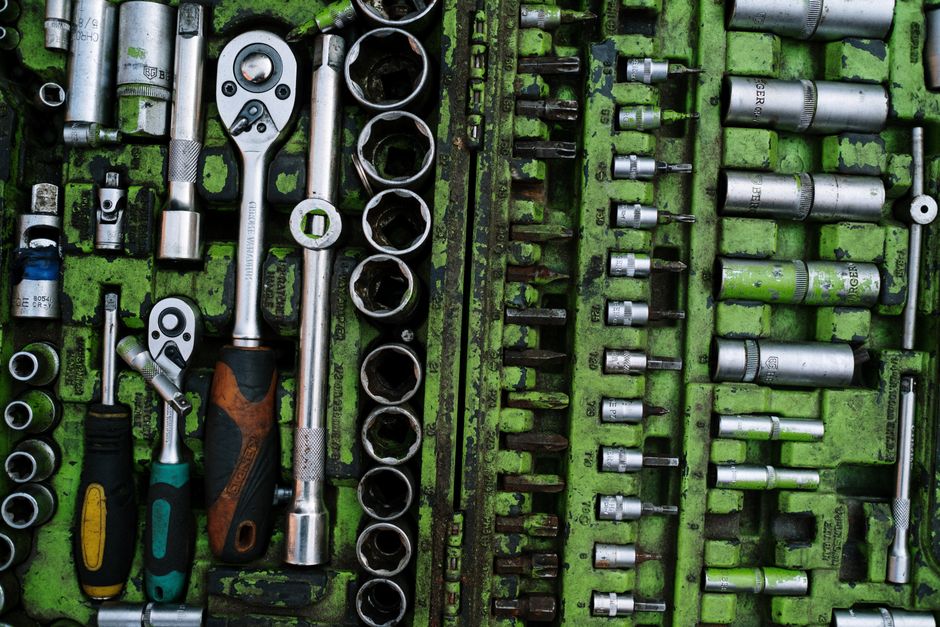
Socket selection dramatically impacts your ability to work in tight spaces. Short sockets measure 1.25 inches long, compared to standard sockets at 1.5 inches or deep sockets at 2.5 inches. For tight quarters, short sockets are essential. They reduce overall tool length while maintaining proper fastener engagement. Metric and SAE sizes both come in short versions—verify your fastener size before purchasing.
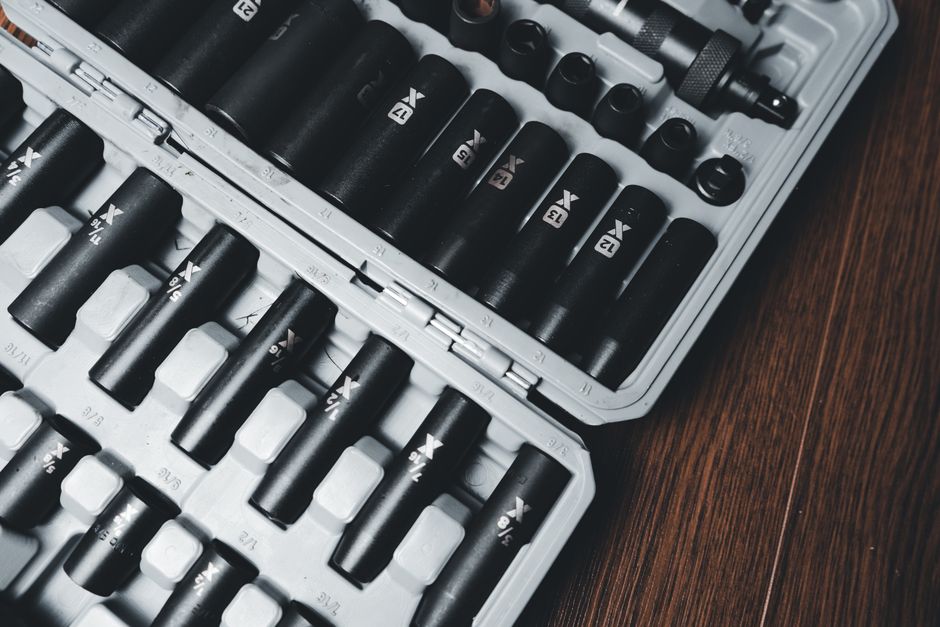
Universal joints and swivel adapters extend your reach and allow angled fastener access. However, they add length and complexity. Use them strategically only when direct access is impossible. Wobble extensions offer flexible positioning but reduce torque transmission slightly—acceptable for low-torque applications but problematic for stubborn fasteners.
Socket and Adapter Selection Guide
- Short sockets: Minimize overall length in confined spaces.
- Shallow sockets: Provide clearance around fastener heads.
- Universal joints: Allow angled access but reduce torque.
- Wobble extensions: Offer flexibility for misaligned fasteners.
- Impact-rated sockets: Withstand air ratchet stress without cracking.
- Magnetic sockets: Prevent fasteners from dropping in tight spaces.
Always use impact-rated sockets when operating pneumatic tools. Standard hand tool sockets may shatter under the repeated impacts of an air ratchet, creating dangerous projectiles in confined spaces. Look for sockets marked “impact” or “pneumatic” on their labels. Magnetic sockets prove invaluable when working in spaces where dropped fasteners are difficult to retrieve.
Key Takeaway: Short, impact-rated sockets combined with minimal adapters provide the best tight space performance.
How Do You Operate an Air Ratchet Safely in Confined Spaces?
Operating technique directly affects safety and fastener integrity. Before applying full pressure, engage the socket with the fastener and verify proper alignment. Misaligned engagement strips bolt heads and damages sockets. Start at low air pressure to confirm correct seating, then gradually increase pressure. This controlled approach prevents sudden torque spikes that could cause hand injuries or fastener damage.
Maintain constant awareness of your surroundings while operating the tool. Keep your hands, fingers, and body clear of pinch points. Avoid placing fingers near the socket or fastener—rotating sockets can catch skin or cause abrasion injuries. Monitor the air hose to ensure it doesn’t wrap around your limbs or the work piece.
Step-by-Step Operation Process
- Engage socket fully onto the fastener with gentle pressure.
- Verify alignment and seating before applying air pressure.
- Start at 50% air pressure to confirm proper engagement.
- Gradually increase pressure while monitoring fastener movement.
- Apply steady, controlled pressure rather than full pressure bursts.
- Release pressure immediately when the fastener breaks free or reaches desired tightness.
Listen to the tool’s sound during operation. A steady, rhythmic hum indicates normal operation. Grinding or squealing noises suggest misalignment or excessive pressure. Chattering sounds indicate the socket is slipping on the fastener—stop immediately and reseat the socket. These auditory cues alert you to problems before they cause damage.
Never force a stuck fastener with maximum air pressure. Instead, apply penetrating oil, wait several minutes, then try again at moderate pressure. Forcing creates safety hazards and risks breaking the fastener, complicating removal. Patience and technique beat brute force in tight spaces where you have limited maneuverability to recover from mistakes.
Key Takeaway: Controlled pressure application, constant awareness, and attention to tool sounds ensure safe, effective operation in confined areas.
What Maintenance and Troubleshooting Keeps Your Air Ratchet Reliable?
Regular maintenance extends tool life and prevents failures during critical work. After each use, drain moisture from the tool by running it briefly without load. Moisture accumulation damages internal components and reduces performance. Weekly, apply a few drops of pneumatic tool oil to the air inlet. This lubricates internal mechanisms and prevents corrosion.
Inspect hoses monthly for cracks, leaks, or damage. Replace damaged hoses immediately—they reduce pressure efficiency and create safety hazards. Check air filters in your compressor monthly and replace them when clogged. Clean filters ensure consistent pressure delivery to your air ratchet. Store the tool in a dry location away from extreme temperatures.
Common Issues and Solutions
- Loss of power: Check air compressor pressure and hose connections for leaks.
- Inconsistent rotation: Drain moisture from the tool and check for internal damage.
- Excessive noise: Verify proper lubrication and inspect for worn bearings.
- Socket slipping: Ensure sockets are impact-rated and properly seated on fasteners.
- Hose kinks: Use hose reels or guides to prevent kinking and pressure loss.
- Pressure fluctuation: Check compressor tank condition and replace worn regulators.
If your air ratchet loses power gradually, suspect moisture accumulation or inadequate lubrication. Run the tool at full pressure for 30 seconds to expel moisture, then apply tool oil. If power loss persists, internal components may need professional service. Never attempt internal repairs yourself—pneumatic tools contain high-pressure components requiring specialized knowledge.
Key Takeaway: Monthly maintenance including moisture drainage, lubrication, and hose inspection prevents failures and extends tool reliability.
How Do You Achieve Professional Results When Using an Air Ratchet in Tight Spaces?
Professional results require technique refinement beyond basic operation. Develop a feel for pressure control by practicing on accessible fasteners first. Learn how your specific tool responds at different pressure levels. This familiarity transfers to tight space work where you cannot see the fastener clearly. Experienced technicians adjust pressure intuitively based on tool sound and vibration feedback.
Invest in quality tools and accessories. Cheap sockets crack under pneumatic stress, and inferior ratchets lack precision. Professional-grade tools deliver consistent performance in confined areas where mistakes are costly. A well-maintained air ratchet from a reputable manufacturer provides years of reliable service.
Pro Techniques for Tight Space Excellence
- Use extension bars strategically to increase reach without sacrificing control.
- Mark fasteners with tape or paint to track progress in dark spaces.
- Establish a logical fastening sequence to prevent rework.
- Document fastener torque specifications before beginning work.
- Practice smooth, controlled pressure application rather than on-off bursts.
- Develop workspace organization habits to prevent tool and fastener loss.
Document your work procedures. Note which sockets, adapters, and pressure settings work best for specific fasteners. This documentation speeds up future projects and ensures consistency. Professional technicians maintain tool kits organized by application, reducing search time in tight spaces where every second counts.
Consider your compressor’s capacity when planning tight space projects. Undersized compressors struggle to maintain pressure during extended use, reducing efficiency. For frequent tight space work, invest in a compressor with adequate CFM output for your air ratchet model. Check the tool’s air consumption specifications and ensure your compressor exceeds those requirements by at least 20%.
Key Takeaway: Professional results come from deliberate practice, quality tools, documented procedures, and adequate compressor capacity.
Recommended Products

Ingersoll Rand 107XPA 3/8" Air Ratchet - 54 ft lbs Torque
- ADVANCED DESIGN: The advanced head design of the IG 107XPA 3/8 inch pneumatic ratchet wrench provides increased durability to one of the industry’s most popular ratchets
- 360 DEGREE EXHAUST: The 360-degree exhaust capabilities of the Ingersoll Rand 107XPA standard ratchet wrench directs exhaust away from the operator, ensuring a more comfortable workspace
- INCREASED CONTROL: The power regulator you’ll find on this ratchet wrench provides increased control on every job
- BETTER ACCESS: With greater access and reach, you can work more easily in deep, hard to reach areas
- TRUSTED QUALITY: With Ingersoll Rand products, you can expect your tools to continuously exceed your expectations


As an Amazon Associate we earn from qualifying purchases. Product prices and availability are accurate as of the date/time indicated.

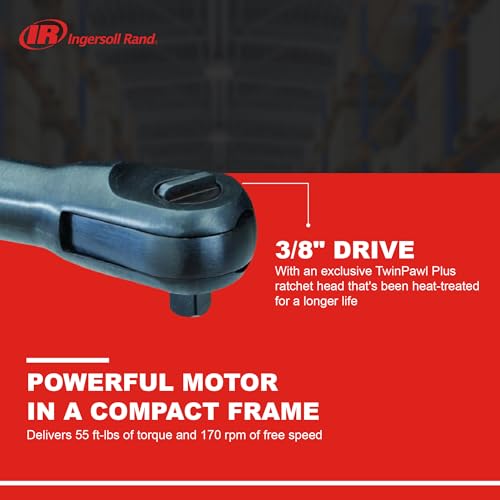
Ingersoll Rand 170G 3/8" Drive Air Ratchet Wrench
- Powerful motor delivers 55 ft.-lbs. of torque and 170 rpm of free speed
- Heat-treated ratchet head ensures a longer life for the tool, protecting your investment
- Ergonomic grip provides better comfort, keeping you on the job and finishing tasks efficiently
- Ideal for general engine repair, home projects and light industrial applications



As an Amazon Associate we earn from qualifying purchases. Product prices and availability are accurate as of the date/time indicated.
Frequently Asked Questions
Can you use an air ratchet on delicate fasteners without damage?
Yes, air ratchets are excellent for delicate fasteners because they provide controlled torque without shock. Unlike impact wrenches, air ratchets deliver smooth, steady rotation. Start at low pressure and increase gradually. Monitor fastener seating carefully. Use impact-rated sockets to prevent slipping. This controlled approach protects delicate fasteners from damage while ensuring proper engagement.
What air pressure is safe for tight space work?
Most air ratchets operate safely between 90 and 120 PSI. Check your tool’s manual for specific requirements. Lower pressure (90-100 PSI) reduces noise and heat in confined spaces, improving comfort and safety. Higher pressure (110-120 PSI) increases speed but risks overtightening fasteners. Start low and increase pressure only as needed for the task at hand.
How do you prevent air hose tangles in confined spaces?
Route the air hose away from sharp edges and moving parts before entering tight spaces. Use hose guides or clips to secure the hose along your work path. Keep the hose relatively slack to prevent kinking and pressure loss. Consider using a hose reel to manage excess length. Regularly inspect hoses for damage caused by contact with sharp objects.
What’s the difference between air ratchets and air impact wrenches for tight spaces?
Air ratchets provide continuous, controlled rotation ideal for precise fastening in tight spaces. Impact wrenches deliver rapid hammer blows for loosening stubborn fasteners but lack precision. Impact wrenches suit removal work; air ratchets excel at installation. For tight spaces, air ratchets are generally superior because they offer better control and fit into narrower areas more easily.
Can you use adapters to increase reach in very tight spaces?
Yes, but use adapters cautiously. Extension bars and universal joints increase reach but reduce torque transmission and precision. Reserve adapters for situations where direct access is impossible. Keep adapters as short as possible. Ensure all adapters are impact-rated and properly secured. Avoid stacking multiple adapters, which compounds torque loss and creates instability.
How often should you service an air ratchet used frequently in tight spaces?
For frequent use, drain moisture weekly and apply tool oil after each session. Inspect hoses and connections monthly. Professional service annually ensures internal components remain in good condition. More frequent service is warranted if the tool operates in dusty or wet environments. Regular maintenance prevents failures during critical tight space work.
What Final Tips Will Help You Master Air Ratchet Use in Tight Spaces?
Mastering air ratchet use in tight spaces combines proper equipment selection, thorough preparation, controlled technique, and consistent maintenance. Start by investing in the right tool—a 3/8-inch drive air ratchet under 3 pounds with a swivel head provides the versatility tight spaces demand. Pair it with short, impact-rated sockets and minimal adapters to maximize performance in confined areas.
Develop your skills through deliberate practice on accessible fasteners before tackling challenging tight space projects. Learn your tool’s behavior at different pressure levels. Build muscle memory for controlled pressure application and proper positioning. Document your successful approaches so you can replicate them consistently. Consider exploring related tools like air impact wrenches for stubborn fastener removal to expand your pneumatic toolkit.
Remember that working in tight spaces demands patience and respect for safety. Never compromise safety for speed. Use proper lighting, maintain firm footing, and wear appropriate protective equipment. If a fastener resists, apply penetrating oil and wait rather than forcing the issue. Professional technicians understand that deliberate, controlled work prevents costly mistakes and injuries. Your air ratchet is a precision tool—treat it accordingly, and it will serve you reliably for years in even the most challenging confined workspaces.
Key Takeaway: Master tight space air ratchet work through proper equipment, deliberate practice, controlled technique, and unwavering safety commitment.




Write Your Review
No reviews yet. Be the first to share your experience!