

How to Inflate Car Tires with a Portable Air Compressor: Quick Answer
Inflating car tires with a portable air compressor is straightforward: check your vehicle’s recommended tire pressure, connect the compressor hose to the tire valve stem, set the desired PSI on the compressor, and let it fill until reaching the target pressure. Most modern portable compressors automatically shut off when the correct pressure is reached, making the process safe and convenient. This essential skill takes just five minutes per tire and prevents flat tires, improves fuel efficiency, and extends tire lifespan. Portable air compressors have become standard equipment for drivers in 2026, offering reliability and portability that traditional gas station pumps cannot match.

AstroAI L7 Cordless Tire Inflator 150PSI - Portable Air Compressor
- ADVANCED TRUEGAUGE SCREEN: This battery tire inflator includes updated sensor technology, capable of collecting pressure data from tire inflators at a frequency of 200 times per second. Its valid data rate is higher than 80%, which is 60% better than the market average. From routine maintenance to roadside emergencies, its accurate readings ensure confident pressure checks and a safer driving experience.Suitable as a Father's Day gift for your dad.
- EASY TO USE: You can choose 4+N smart modes (car, motorcycle, bicycle, ball, and custom) and 4 pressure units (PSI, Bar, kPa, kg/cm²) to preset based on your inflation needs. The custom mode allows you to freely preset the desired pressure value (3-150PSI) based on the inflatables you want to inflate. A must-have for outdoor activities and road trips, the L7 is a practical car lovers gift for men and women who have everything.
- COMPACT, FASTER INFLATION: Weighing less than 1 pound, this portable tire inflator is easy to carry and store in any limited space, such as cars, bike racks, or backpacks. It's suitable as a car accessories gift for men or women. The compressor's 150PSI maximum pressure, it can refill a 195/65R15 tire from 30 to 36PSI in just 1.5 minutes.(Note: After 15 minutes of continuous use, allow the unit to rest for 10 minutes.)
- LONG RUNTIME & AUTO-OFF: After fully charging, the built-in 4000mAh large-capacity battery allows the car tire pump to refill up to 8 tires (195/65R15) from 30 to 36PSI. The preset function and auto-off function deliver a hands-free inflation experience, making it user-friendly for beginners and experienced users alike. With just one press, the cordless bike tire pump will easily inflate car tires, motorcycle tires, bicycle tires (700 × 23C/700 × 38C/29 × 2.25), e-bike tires, balls, and more.(Note: Not suitable for tires larger than 25 inches, such as heavy-duty truck tires.)
- VERSATILE EMERGENCY TOOL: The bike pump can be used as more than an air pump, it is also a multifunctional emergency tool gift for mom and dad. The flashlight on the top has 3 modes (flashlight, SOS, and strobe) to illuminate the night for easy operation. The air compressor is equipped with USB-C and USB input/output ports, providing backup power for your phones and other electronic devices. (Note: Use a 5V/1A USB power adapter for charging. If overheat protection activates, the inflator cannot be charged until it cools for 10 minutes.)


As an Amazon Associate we earn from qualifying purchases. Product prices and availability are accurate as of the date/time indicated.
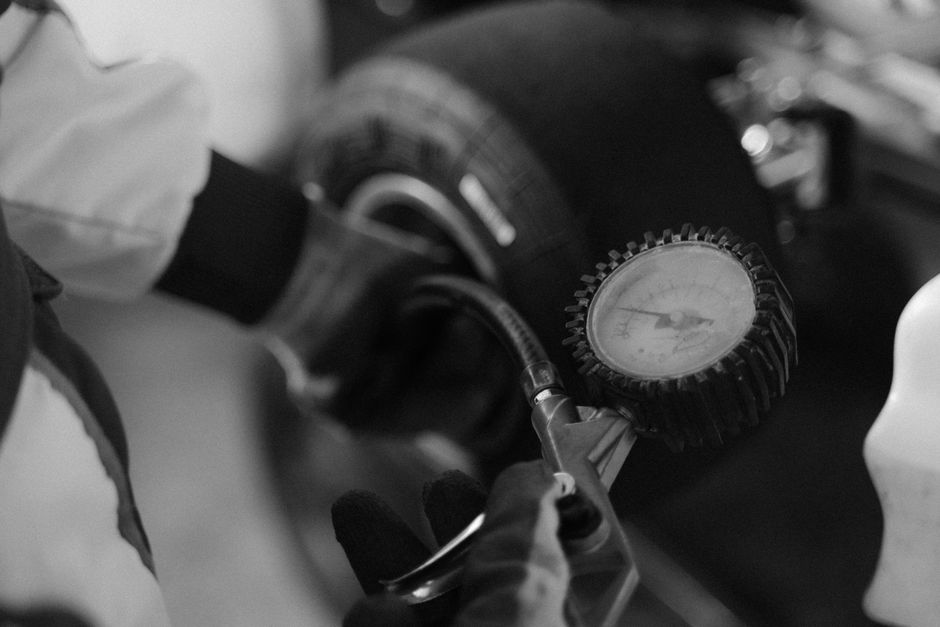
Proper tire pressure is critical for vehicle safety and performance. Under-inflated tires increase rolling resistance, reducing fuel economy by up to 3 percent. Over-inflated tires wear unevenly and reduce traction on wet surfaces. A quality portable air compressor eliminates guesswork by delivering precise pressure control. Whether you’re preparing for a road trip, responding to a slow leak, or maintaining routine vehicle care, understanding proper inflation technique saves time and money while keeping you safer on the road.
What Is a Portable Air Compressor and Why Do You Need One?
A portable air compressor is a compact, battery-powered or plug-in device that pressurizes air to inflate tires and other items. Unlike traditional gas station pumps, portable compressors fit in your trunk or glove compartment for emergency use anywhere. They operate independently of electrical outlets or compressed air sources, making them invaluable for roadside breakdowns.

Portable compressors offer several advantages over traditional inflation methods:
- Always available in emergencies without relying on gas stations or repair shops.
- Provide precise pressure control with digital displays and automatic shut-off features.
- Inflate tires faster than manual pumps, typically completing a tire in 2-4 minutes.
- Lightweight and compact designs fit easily in vehicles without taking up significant space.
- Work for multiple applications including sports equipment, air mattresses, and inflatable pools.
Modern portable compressors in 2026 feature advanced technology including LED work lights, preset pressure modes, and wireless connectivity. Some models connect to smartphone apps for real-time pressure monitoring. For drivers who prioritize convenience and self-sufficiency, a quality portable air compressor is essential equipment.
Key Takeaway: Portable air compressors provide convenient, precise tire inflation anywhere without depending on external infrastructure.
How Do You Prepare Your Vehicle Before Inflating Tires?
Proper preparation ensures safe and effective tire inflation. Start by parking on level, firm ground away from traffic. This prevents the vehicle from rolling and allows accurate pressure readings. Allow tires to cool for at least three hours after driving, as heat increases air pressure and creates false readings. Hot tires can read 4-6 PSI higher than their actual cold pressure.
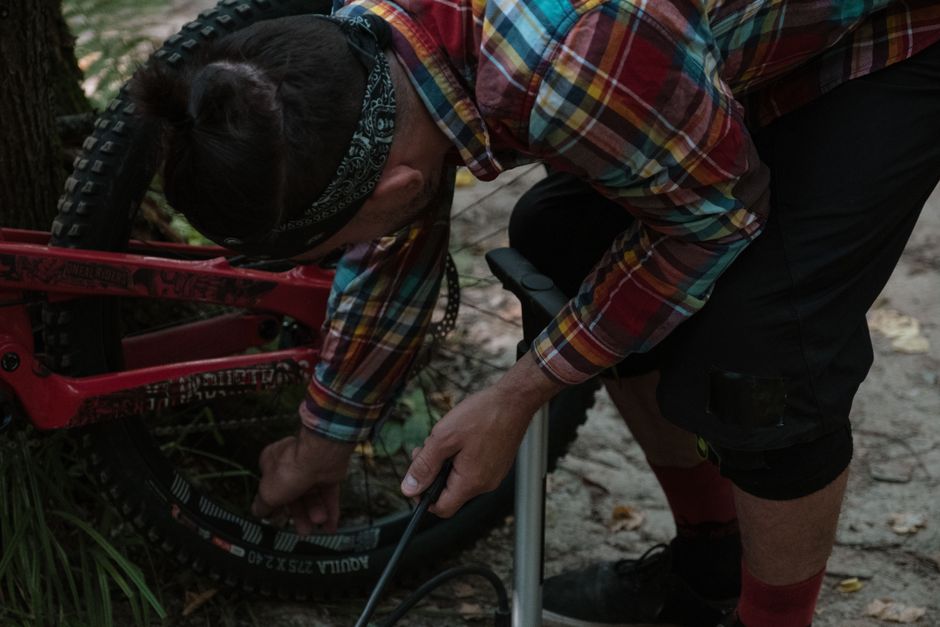
Locate your vehicle’s recommended tire pressure before beginning. This information appears on:
- The driver’s side door jamb label—the most reliable source.
- Your vehicle’s owner’s manual.
- The tire sidewall, which shows maximum pressure, not recommended pressure.
- Tire pressure monitoring system displays in modern vehicles.
Gathering Your Equipment
Assemble all necessary items before starting. You’ll need your portable air compressor, the correct hose attachment for your tire valve stems, and a tire pressure gauge for verification. Most modern compressors include built-in gauges, but a separate gauge provides backup accuracy. Keep a pen and paper handy to record each tire’s pressure for comparison.
Inspect your compressor before use. Check that the power source is fully charged if battery-operated. Verify that hoses are intact without cracks or leaks. Test the valve connection to ensure it fits your tire stem securely without wobbling. These simple checks prevent mid-inflation problems and equipment damage.
Key Takeaway: Proper preparation with correct PSI information and equipment inspection ensures efficient, accurate tire inflation.
What Are the Step-by-Step Instructions for Inflating a Tire?
Follow this systematic process for each tire. First, remove the valve stem cap by turning it counterclockwise. Don’t lose this cap—it prevents dirt and moisture from entering the valve. Set the cap aside on a clean surface where you won’t accidentally step on it.
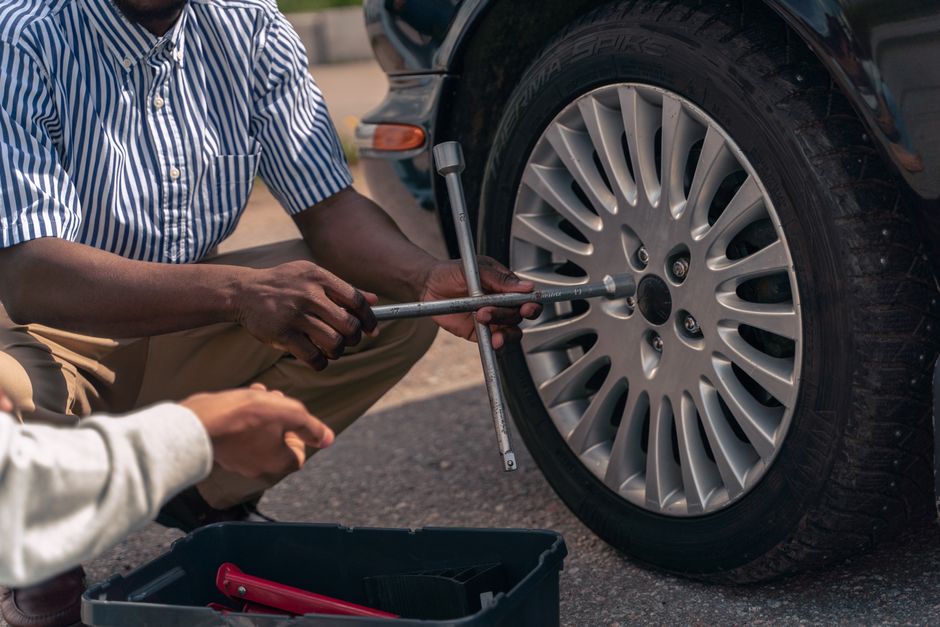
The inflation process requires careful attention to detail:
- Firmly press the compressor hose onto the valve stem at a 90-degree angle.
- Hold the connection steady throughout inflation to prevent air leaks.
- Activate the compressor and monitor the pressure gauge continuously.
- Stop inflation when the target PSI is reached on the display.
- Quickly remove the hose and replace the valve stem cap immediately.
Monitoring Pressure During Inflation
Watch the digital display closely as pressure increases. Most portable compressors in 2026 feature auto-shutoff technology that stops inflation automatically at your preset pressure. However, manual monitoring prevents overshooting and catches equipment malfunctions early. If pressure climbs too quickly or surpasses your target, release the hose immediately.
Some compressors offer preset modes for common vehicle types. These modes automatically set the correct PSI for sedans, SUVs, or trucks. Using preset modes saves time and eliminates pressure calculation errors. After inflation stops, remove the hose within 2-3 seconds to minimize air loss.
Verifying Your Work
After inflating all four tires, verify accuracy with an independent tire pressure gauge. Press the gauge firmly onto the valve stem and note the reading. Compare results to your vehicle’s recommended pressure. If readings differ by more than 1 PSI, adjust by adding or releasing small amounts of air. Precision matters for safety and fuel efficiency.
Key Takeaway: Careful connection, steady pressure monitoring, and verification with an independent gauge ensure accurate tire inflation every time.
How Often Should You Check and Inflate Your Car Tires?
Check tire pressure at least once monthly, even if tires appear properly inflated. Monthly checks catch slow leaks before they become dangerous. Additionally, inspect tires before long road trips and when outside temperatures change significantly. Cold weather reduces tire pressure by approximately 1 PSI for every 10-degree Fahrenheit drop.
Establish a maintenance schedule based on these factors:
- Monthly pressure checks using your portable compressor or gas station pump.
- Before road trips exceeding 300 miles to ensure safe handling.
- When seasonal temperature changes occur (spring and fall transitions).
- After any visible damage or puncture repair to confirm proper sealing.
- When tire pressure warning lights illuminate on your dashboard.
Modern vehicles with tire pressure monitoring systems alert you when pressure drops below safe levels. However, these systems activate only when pressure is critically low. Proactive monthly checks prevent reaching that point. Maintaining correct pressure extends tire life by 25 percent and improves fuel economy significantly.
Key Takeaway: Monthly pressure checks and seasonal adjustments maximize tire safety, longevity, and fuel efficiency.
What Common Mistakes Should You Avoid?
Many drivers make preventable errors that compromise safety or damage equipment. Never inflate tires immediately after driving when they’re hot. Hot tires read 4-6 PSI higher than their actual pressure, leading to over-inflation when cooled. Always wait at least three hours after driving before checking pressure.
Common inflation mistakes include:
- Confusing tire sidewall maximum pressure with recommended pressure specifications.
- Over-inflating tires by 2-3 PSI, reducing traction and increasing wear.
- Failing to replace valve stem caps, allowing moisture and dirt infiltration.
- Using damaged or cracked compressor hoses that cause air leaks.
- Inflating tires unevenly—some at correct pressure, others under or over-inflated.
- Ignoring slow leaks that indicate punctures or valve stem problems.
Avoid using the tire sidewall’s maximum PSI as your target. Sidewall pressure represents the maximum safe limit, not the manufacturer’s recommendation. Your vehicle’s door jamb label shows the correct target pressure. Exceeding recommended pressure by even 2 PSI causes uneven wear, reduces traction, and increases blowout risk on highways.
Key Takeaway: Using correct pressure specifications, waiting for cool tires, and maintaining equipment prevents common inflation errors.
How Do You Troubleshoot Inflation Problems?
If your compressor fails to inflate a tire, several issues might be responsible. First, check that the hose connection is secure and straight. A loose or angled connection allows air to escape around the valve stem. Press the hose firmly perpendicular to the tire for a complete seal. Listen for hissing sounds indicating air leaks at the connection point.
If the connection is tight but inflation fails, the tire valve stem may be defective. Valve stems can crack or corrode over time, preventing proper sealing. Inspect the valve stem for visible damage or corrosion. If damaged, professional tire replacement is necessary. Some portable compressors include valve stem adapters for different tire types—ensure you’re using the correct adapter for your vehicle.
Addressing Compressor Malfunctions
If your compressor won’t power on, verify the battery charge or electrical outlet connection. Battery-powered models need regular charging, typically overnight. Plug-in models require functional outlets and appropriate electrical circuits. Some compressors have overheating protection that disables operation if internal temperature exceeds safe limits. Allow the compressor to cool for 30 minutes before attempting use again.
If the pressure gauge displays erratic readings, the sensor may be faulty. Compare readings with an independent tire pressure gauge to verify accuracy. Consistent discrepancies between your compressor and external gauges indicate sensor problems requiring professional service or equipment replacement.
Key Takeaway: Most inflation failures result from loose connections or defective valve stems, both easily identified and corrected.
What Safety Precautions Should You Follow?
Safety is paramount when working with pressurized equipment. Never exceed your tire’s maximum PSI, which appears on the sidewall. Over-inflated tires can rupture without warning, especially on hot days or during highway driving. Always verify your target pressure against your vehicle’s door jamb label before inflating.
Essential safety practices include:
- Never leave a running compressor unattended—stay present throughout inflation.
- Wear safety glasses to protect eyes from potential air release.
- Keep children and pets away from the inflation area during operation.
- Avoid inflating tires in extreme heat above 95 degrees Fahrenheit.
- Never attempt to inflate a visibly damaged or bulging tire.
- Stop immediately if you hear unusual hissing or detect equipment damage.
If a tire shows visible damage like bulges, cracks, or deep punctures, do not attempt inflation. Damaged tires can fail catastrophically when pressurized. Instead, contact a professional tire repair service. Similarly, if your compressor shows signs of damage or malfunction, discontinue use and seek professional service.
Key Takeaway: Constant attention, proper pressure limits, and damage inspection prevent injuries and equipment failures.
Conclusion: Why Mastering Tire Inflation Skills Matters in 2026
Learning to inflate car tires with a portable air compressor is an essential skill for modern drivers. This straightforward process takes minutes but prevents dangerous blowouts, improves fuel efficiency, and extends tire lifespan significantly. In 2026, portable air compressors offer advanced features like auto-shutoff, digital displays, and smartphone connectivity that make precise inflation easier than ever.
Proper tire pressure affects every aspect of vehicle performance and safety. Under-inflated tires increase stopping distance and reduce traction in wet conditions. Over-inflated tires wear prematurely and provide poor handling. By maintaining correct pressure monthly and understanding proper inflation technique, you take control of your vehicle’s maintenance and safety.
Investing in a quality portable air compressor provides peace of mind for roadside emergencies and routine maintenance. Combined with monthly pressure checks and attention to your vehicle’s specifications, this simple tool becomes one of your most valuable automotive investments. Start implementing these practices today to enjoy safer, more efficient driving throughout 2026 and beyond.
Recommended Products

OlarHike Portable Tire Inflator: Dual Power 6000mAh Air Pump
- [Fast & Efficient Inflation] The OlarHike tire inflator features a high-performance motor that delivers rapid airflow—inflate a standard car tire (195/65 R15) from 30 to 35 PSI (+5 PSI) in just 55 seconds, or a larger SUV tire (235/65 R17) from 30 to 35 PSI (+5 PSI) in only 2.2 minutes. Ideal for cars, SUVs, light Pickup(Within 51 PSI), motorcycles, bicycles, and sports balls. Its practical everyday usefulness also makes it a thoughtful car gift for men who value reliable tools for their vehicles. Important Note: The unit can only inflate car and pickup truck tires up to 51 PSI and is not compatible with heavy-duty pickup trucks or RVs.
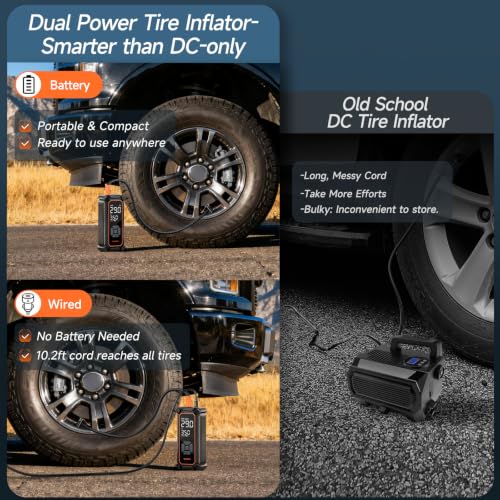
- [Dual Power Mode: Power Your Way] Enjoy ultimate inflation flexibility. This tire inflator operates in two convenient ways: Cordless Freedom: Use the built-in rechargeable battery for quick, on-the-go inflation anywhere. Continuous Power: Plug into any standard 12V car cigarette lighter using the included cable for endless, worry-free operation. This versatile design also makes it a practical car accessories gift for men or women, especially for drivers who like to stay prepared on the road.
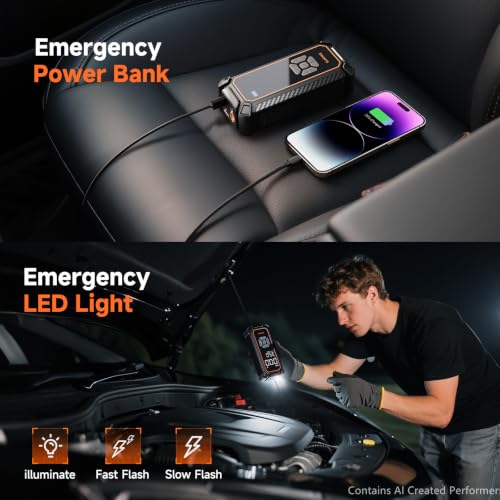
- [High-Voltage Battery] Equipped with three built-in 2000mAh batteries, this cordless air compressor can handle multiple quick top-offs on a single charge: Up to 18 standard car tires (195/65 R15) from 30 to 35 PSI (+5 PSI). Up to 11 SUV tires (235/65 R17) from 30 to 35 PSI (+5 PSI). Great for long road trips or emergency use—and the USB output lets you charge your phone or other devices on the go. Its combination of tire inflation, emergency support, and device charging makes it a useful multifunctional emergency tool gift for mom and dad. Note: Please charge only with a 5V 2A or 5V 3A adapter. Avoid unbranded or high-power chargers.
- [Ultra‑Large Display & Auto Shut‑Off] Features a bright dual LED screen and high-precision pressure sensor for real-time monitoring of current and target PSI. The auto shut-off function stops inflation exactly at your preset level (e.g., 30 to 35 PSI), helping prevent over-inflation and ensuring safer tire pressure every time.
- [Smart & User‑Friendly Operation] [Smart & User-Friendly Operation] Includes four preset modes for cars, bikes, motocycles, and sports equipment. Quickly switch between PSI, BAR, KPA, and KG/CM² with a single touch. Built-in memory recalls your last used setting, making each use faster and more convenient. Easy operation and practical everyday value make it a useful option among mens gifts ideas, whether for a new driver, daily commuter, or car enthusiast.
- [Compact, Wireless & Travel-Ready] Lightweight at just 1.2 pounds and compact with dimensions of 6.5’’ x 2.76’’ x 2.17’’, it fits easily in your trunk, backpack, or bike rack. Includes a storage bag and essential accessories like a long air hose, ball needle, and French valve adapter. A built-in LED flashlight provides visibility for nighttime inflations and roadside emergencies. An ideal gift choice for birthdays, holidays, or any special occasion—good for friends, family, and car lovers alike. Whether you’re looking for a birthday gift for your dad, gifts for husband, or a practical car lovers gift for men and women who have everything.
- [What You Get] 1× OlarHike Tire Inflator 1× Long Air Hose 1× Type‑C Charging Cable 1× Long Nozzle 1× Ball Needle 1× French Valve Adapter 1× Storage Bag 1x DC Power Cord
- [Award-Winning, Sustainable, and Exclusively Patented] Proud recipient of the Family Choice Award, which recognizes products and services that enrich the lives of families. Certified for sustainability to support a greener future, and protected by an exclusive design patent for its innovative, user-friendly design
- [Your Feedback Matters] We are constantly improving, and your insights power our progress






As an Amazon Associate we earn from qualifying purchases. Product prices and availability are accurate as of the date/time indicated.

CRAFTSMAN Tire Inflator Portable Air Compressor, Cordless Mini Air Pump for Car Tires with Digital Tire Pressure Gauge, 6000mAh Battery Powered Air Pump, Max Pressure 150 PSI, 12V DC Corded
- Powerful Inflation Performance - With a built-in true 6000mAh rechargeable battery, this tire inflator can support up to 4 car tires (195/55 R15) and charge them from 30PSI to 36PSI in 45 seconds
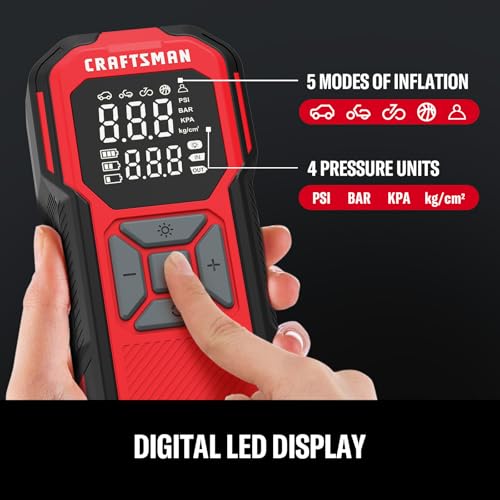
- 5 Inflation Mode - This portable air pump has 4 preset inflation modes: bike pump, motorcycle pump, car pump and ball pump, and supports custom modes (set pressure values according to the inflation object) to meet various inflation needs. 4 pressure units :PSI, KPA, BAR, KG/CM²
- Portable Electric Air Pump - Weighing 1.28 lbs, cordless design, compact size, easy to store in the car and carry, road trip essentials. Additional car accessories include: Extra nozzle×3, Extra Fuse x1, USB Type C Charging Cord×1, 10ft 12V car accessory plugx1
- Versatile 12V Air Compressor - Not just the tire pump. Built-in LED lights, can be switched to three modes, for emergency power and use in low-light conditions. Includes a type-C charging port and a 5V/1A USB output port, USB-C charger can be used to charge phones and other electronics
- Smart & Safe Air Pump for Inflatables - LED screen always show you accurate real-time tire pressure values and preset values for easy monitoring of tire pressure status. Automatic shut-off feature turns the Inflator off once your preset pressure level has been reached, preventing over-inflation




As an Amazon Associate we earn from qualifying purchases. Product prices and availability are accurate as of the date/time indicated.
Frequently Asked Questions
What PSI should I inflate my car tires to?
Check your vehicle’s door jamb label for the manufacturer’s recommended pressure, typically between 30-35 PSI for most sedans. This differs from the tire sidewall’s maximum pressure, which is the absolute limit, not the target. Using the correct specification ensures optimal safety, fuel efficiency, and tire longevity. Never exceed the sidewall maximum under any circumstances.
How long does it take to inflate a tire with a portable compressor?
Most portable air compressors inflate a tire from 20 PSI to 35 PSI in 2-4 minutes, depending on the compressor’s power rating and the tire’s starting pressure. Battery-powered models typically work slower than plug-in versions. The process is significantly faster than manual pumps and comparable to professional gas station equipment, making portable compressors ideal for roadside emergencies.
Can I use a portable air compressor on a completely flat tire?
Yes, portable air compressors can inflate completely flat tires, though it takes longer than partially deflated tires. Ensure the valve stem connection is completely secure to prevent air leaks. If the tire won’t hold pressure after inflation, a puncture or valve stem defect is likely. Professional tire repair may be necessary to identify and fix the underlying problem.
What’s the difference between tire pressure and tire volume?
Tire pressure measures the force exerted by air inside the tire, expressed in PSI. Tire volume refers to the total amount of air the tire contains. Your vehicle’s specifications address pressure, not volume. Proper pressure ensures correct tire shape, handling, and safety regardless of tire size or type. Always target pressure, not volume, when inflating.
Is it safe to inflate tires in hot weather?
Avoid inflating tires when temperatures exceed 95 degrees Fahrenheit, as heat increases air pressure artificially. Wait until evening or early morning when temperatures cool. If you must inflate in heat, use lower target pressure and recheck when temperatures drop. Hot weather inflation often results in over-pressurization when tires cool, compromising safety and tire wear.
How often should I replace my portable air compressor?
Quality portable compressors last 5-10 years with proper maintenance and care. Replace the unit if it fails to reach target pressure, displays erratic gauge readings, or shows physical damage. Battery-powered models may need battery replacement every 2-3 years. Regular inspection and timely repairs extend equipment lifespan significantly beyond typical replacement intervals.






Write Your Review
No reviews yet. Be the first to share your experience!