

What Is the Quickest Way to Cut PVC Pipe Without a Saw?
Cutting PVC pipe without a saw is entirely possible and often faster than you’d expect. A ratcheting PVC cutter, utility knife, or even a hacksaw alternative can deliver clean cuts in seconds. The best method depends on pipe diameter, thickness, and your available tools. PVC pipe is softer than metal, making it ideal for hand-tool cutting. Most DIY projects don’t require power tools for PVC work. With proper technique and the right tool selection, you’ll achieve professional results safely and efficiently.
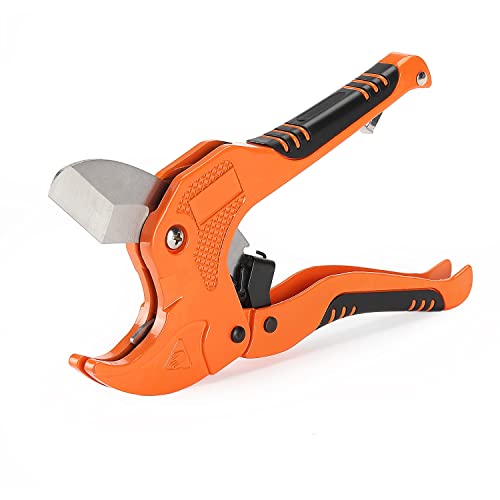
Bates Ratchet PVC Pipe Cutter - Up to 1-5/8" Capacity
- Bates ratchet-type pipe cutter is made of manganese steel with high hardness, good toughness, strength, and durability. It also features a ratchet mechanism that makes cutting through pipes quick and easy - perfect for anyone who wants to get the job done fast.
- The rubber-textured handle is comfortable to use, reliable to hold, and not easy to hurt. A stainless steel buckle is at the bottom of the tube cutter for easy storage. When you don't use it, you can shrink the handles on both sides and lock the security lock to save space and prevent accidental injury.
- Bates ratchet-type pipe cutter is perfect for easily cutting through pipes. The triangle design at the edge of the knife allows better access to the pipe, while the unique structure design makes it easy to cut pipes with a few presses.
- This tool is not only powerful but also easy to use, which makes it an ideal choice for people who are not familiar with such tools. The fish-shaped handle provides a comfortable grip that guarantees long-lasting working.
- Our tube Cutter is ideal for use on various plastic pipes and tubes. It is an essential cutting tool for handymen, plumbers, electricians, and vehicle mechanics. The cutter is commonly used for cutting most kinds of plastic (PVC, CPVC, PP, PEX, PE, rubber hose) and multilayer tubing.Not suitable for 2” PVC or metal pipes


As an Amazon Associate we earn from qualifying purchases. Product prices and availability are accurate as of the date/time indicated.
Many homeowners and plumbers prefer saw-free methods because they’re quieter, portable, and require minimal setup. You can cut PVC anywhere—in tight spaces, outdoors, or indoors without creating dust clouds. Hand tools also give you better control over cut quality and safety. Whether you’re working on plumbing repairs, irrigation systems, or craft projects, these techniques work reliably. Understanding your options helps you choose the fastest method for your specific task.
Key Takeaway: Hand tools like ratcheting cutters and utility knives cut PVC pipe cleanly and quickly without a saw.
What Are the Best Hand Tools for Cutting PVC Pipe?
Several hand tools excel at cutting PVC pipe without a saw. Each tool has strengths depending on pipe size and your comfort level. Ratcheting cutters are the gold standard for professional-quality cuts. Utility knives work well for smaller diameters. Hacksaw blades in manual frames offer precision on larger pipes. Tubing cutters designed for PVC provide consistent, perpendicular cuts. Pruning shears and tin snips handle thin-wall PVC efficiently.
The ratcheting PVC cutter is arguably the best investment for regular PVC work. It uses mechanical advantage to slice through pipe with minimal effort. You simply position it around the pipe and pump the handles until the pipe separates. The cut is always perpendicular and clean. No measuring or marking required for most applications.
- Ratcheting PVC cutters: Best for pipes up to 2 inches; professional-grade cuts; minimal effort required.
- Utility knives: Fast for small diameters; require multiple passes; excellent control and precision.
- Hacksaw blades: Versatile for all sizes; require manual effort; good for thick-wall PVC.
- Tubing cutters: Consistent perpendicular cuts; work on all diameters; slightly slower than ratcheting cutters.
- Tin snips or pruning shears: Ideal for thin-wall or flexible PVC; quick and easy; limited to smaller pipes.
Key Takeaway: Ratcheting cutters offer the fastest, cleanest cuts, while utility knives provide affordable versatility for smaller jobs.
How Does a Ratcheting PVC Cutter Work?
A ratcheting PVC cutter uses a two-handle pump mechanism to slice through pipe. The cutting wheel sits inside the tool and rotates as you pump. Each pump rotation advances the blade slightly deeper into the pipe. After 10-15 pumps, the pipe separates completely. The enclosed design prevents the blade from slipping sideways, ensuring a perpendicular cut every time. Most quality models cut up to 2-inch diameter pipes cleanly.
The mechanical advantage of ratcheting cutters means you need minimal hand strength. Even teenagers and older adults can use them easily. The cuts are so clean that deburring is often unnecessary. This tool is ideal for plumbing work, irrigation installation, and repair projects. Professional plumbers rely on ratcheting cutters for speed and consistency.
When Should You Use a Utility Knife?
Utility knives work best for PVC pipes under 1.5 inches in diameter. The technique involves scoring the pipe repeatedly while rotating it. After 5-10 rotations with firm pressure, the pipe separates cleanly. This method requires a sharp blade and steady hand pressure. Dull blades create rough edges and require excessive passes.
Utility knives are perfect when you don’t have specialized cutters available. They’re already in most toolboxes and cost nothing extra. The main drawback is that larger pipes require significant effort. For small irrigation lines or electrical conduit, a utility knife is fast and practical. Always use a fresh blade for the cleanest cuts and safest operation.
What Is the Step-by-Step Process for Cutting PVC Pipe by Hand?
The cutting process varies slightly depending on your chosen tool. All methods share common principles: secure the pipe, mark the cut line, and apply steady pressure. Proper technique prevents hand injuries and ensures clean separation. Rushing the process leads to rough edges and wasted material. Taking 30 seconds per cut saves time on cleanup and deburring later.
Cutting with a Ratcheting Cutter
Position the ratcheting cutter around the pipe where you want to cut. Align the cutting wheel with your marked line. Squeeze the handles together firmly to engage the blade. Begin pumping the handles in a steady rhythm, maintaining even pressure. The blade will gradually bite deeper into the pipe. Continue until the pipe separates completely. Remove any burrs with a deburring tool or utility knife blade.
- Mark your cut line with a permanent marker for visibility.
- Position the cutter so the blade aligns perfectly with your mark.
- Apply firm initial pressure to engage the cutting wheel.
- Pump handles 10-15 times with consistent rhythm and pressure.
- Stop when the pipe separates; don’t force it beyond separation.
- Deburr the cut edge with a file or deburring tool.
Cutting with a Utility Knife
Secure the pipe in a vise or have someone hold it firmly. Mark your cut line with a bright marker. Position the utility knife blade perpendicular to the pipe. Apply firm downward pressure while rotating the pipe slowly. Score the line deeply but don’t try to cut through in one pass. After 5-10 rotations, the pipe should separate. Deburr the rough edge immediately.
The key to utility knife cutting is consistent rotation and pressure. Don’t saw back-and-forth; instead, rotate the pipe under a stationary blade. This technique creates a clean groove that weakens the pipe until separation occurs. Always cut away from your body and keep fingers clear of the blade path.
Cutting with a Hacksaw Blade
Install the hacksaw blade in a manual frame or handle. Secure the pipe horizontally in a vise at waist height. Mark your cut line clearly. Begin sawing with smooth, even strokes using the full blade length. Let the blade do the work; don’t force it. Maintain steady pressure and a consistent rhythm. The cut should take 30-60 seconds depending on pipe diameter and thickness. Deburr the edge when finished.
Key Takeaway: Secure the pipe, mark the line, apply steady pressure, and let the tool do the work for clean cuts.
How Do You Ensure a Straight, Clean Cut Every Time?
Achieving perpendicular cuts requires proper setup and technique. A crooked cut wastes material and creates fitting problems. Several strategies guarantee straight cuts consistently. Marking the line clearly is the first step. Using the right tool for your pipe size matters significantly. Securing the pipe firmly prevents movement during cutting. Steady, even pressure produces better results than rushing.
- Use a pipe marking tool or wrap tape around the pipe to create a visible guide line.
- Choose a tool designed for your specific pipe diameter and wall thickness.
- Secure the pipe in a vise with rubber-lined jaws to prevent damage.
- Keep the cutting tool perpendicular to the pipe throughout the cut.
- Apply steady, even pressure rather than forcing the tool.
- Let the tool do the work; resist the urge to rush the process.
Using Marking Tools for Accuracy
A pipe marking tool wraps completely around the pipe, creating a perfect guide line. These tools cost $10-20 and are invaluable for multiple cuts. Alternatively, wrap painter’s tape around the pipe and mark a line on the tape. A permanent marker shows clearly on white tape. This method works perfectly for straight cuts without specialized equipment.
Securing the Pipe Properly
A vise with rubber-lined jaws protects the pipe from damage while holding it firmly. Position the pipe so the cut line is visible and accessible. Don’t over-tighten; you only need enough pressure to prevent rotation. For portable work, ask a helper to hold the pipe steady. Clamp it horizontally at waist height for ergonomic cutting. Proper setup takes 30 seconds and saves frustration.
Key Takeaway: Marking tools, proper vise setup, and steady pressure deliver consistently straight cuts.
What Safety Precautions Should You Take When Cutting PVC Pipe?
Hand tool cutting is generally safer than power tools, but precautions remain essential. PVC pipe edges become sharp after cutting and can cause nasty cuts. Blade slips can injure fingers and hands. Proper technique and awareness prevent most accidents. Safety glasses protect your eyes from flying debris. Work gloves shield your hands during handling. Taking safety seriously makes the job faster and more enjoyable.
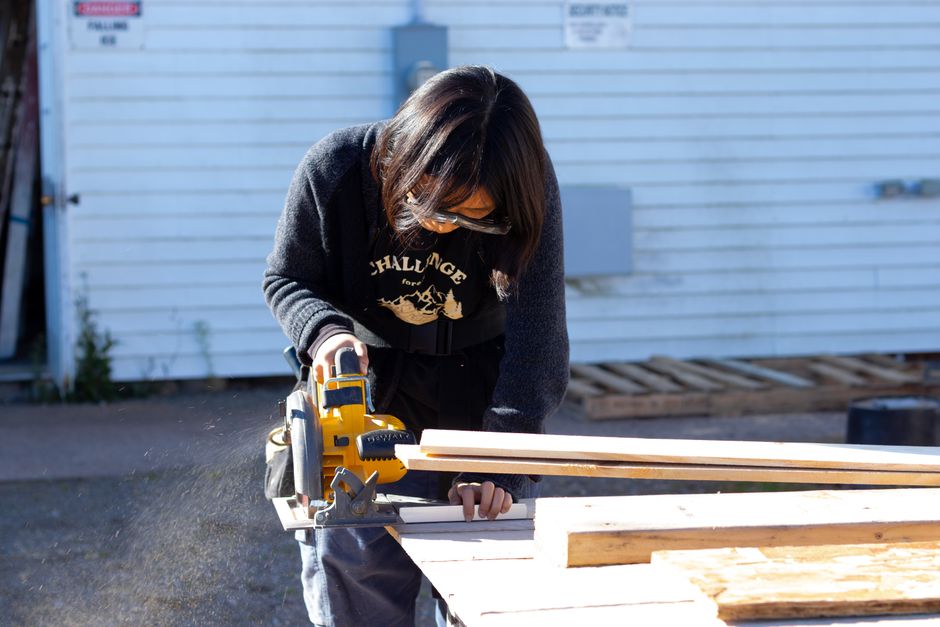
- Always wear safety glasses to protect eyes from sharp edges and debris.
- Use work gloves to protect hands from sharp cut edges and blade contact.
- Keep hands clear of the cutting blade path at all times.
- Secure the pipe firmly to prevent slipping during cutting.
- Never rush the cutting process; speed comes from good technique, not force.
- Deburr cut edges immediately to prevent hand injuries.
- Keep blades sharp; dull blades require excessive force and are more likely to slip.
- Work in good lighting so you can see your cut line and hand position clearly.
Handling Sharp Edges Safely
Fresh PVC cuts have razor-sharp edges that cut skin easily. Always deburr immediately after cutting. A deburring tool, file, or utility knife blade removes the sharp edge in seconds. Sand the edge smooth if the pipe will contact skin. Wear gloves when handling freshly cut pipe until edges are smooth. This simple step prevents painful cuts and makes installation safer.
Preventing Blade Slips
Keep your hands at least 6 inches away from the cutting blade. Never reach over or under the blade during cutting. Secure the pipe so firmly that it cannot rotate unexpectedly. Use two hands to control cutting tools; one hand stabilizes the tool while the other applies pressure. Keep your work area clear of distractions. Focus entirely on the cutting task until completion.
Key Takeaway: Wear safety gear, keep hands clear of blades, and deburr edges immediately to prevent injuries.
How Do You Deburr PVC Pipe After Cutting?
Deburring removes the sharp edge left after cutting. This step takes 10-15 seconds and prevents hand injuries. Several tools work effectively for deburring PVC. The method depends on pipe size and your available tools. Deburring also helps fittings slide on smoothly without resistance. Clean edges look more professional and feel safer to handle.
Using a Deburring Tool
Specialized PVC deburring tools cost $5-15 and work quickly. Simply insert the cut end into the tool and twist 2-3 times. The tool removes both internal and external burrs simultaneously. This is the fastest method and produces excellent results. Most professional plumbers keep a deburring tool in their pocket.
Alternative Deburring Methods
A utility knife blade works well for external burrs; carefully scrape around the cut edge. Fine sandpaper (120-220 grit) smooths edges effectively but takes longer. A file removes burrs from larger pipes. A rotary tool with a small burr bit deburrs quickly but requires electricity. Choose whatever method you have available; any deburring is better than none.
- Deburring tools: Fastest method; removes internal and external burrs; costs $5-15.
- Utility knife: Scrape edges carefully; free if you already own one; good for small pipes.
- Sandpaper: Smooth finish; time-consuming; works on all sizes.
- Files: Effective for larger pipes; requires manual effort; affordable.
- Rotary tools: Quick and efficient; requires electricity; overkill for occasional use.
Key Takeaway: A dedicated deburring tool is the fastest option, but sandpaper or a utility knife works fine for occasional projects.
What Common Mistakes Should You Avoid When Cutting PVC Pipe?
Many DIYers make preventable mistakes that waste time and material. Using dull blades requires excessive force and creates rough cuts. Cutting at an angle results in poor fitting connections. Rushing the process leads to hand injuries and wasted pipe. Choosing the wrong tool for your pipe size makes the job unnecessarily difficult. Learning from others’ mistakes saves frustration and improves results.
- Using dull blades: Replace blades frequently; sharp blades cut faster with less effort and injury risk.
- Cutting at an angle: Always position the tool perpendicular to the pipe for proper fitting connections.
- Skipping deburring: Rough edges cause injuries and prevent smooth fitting installation.
- Choosing the wrong tool: Match your tool to pipe size; ratcheting cutters work best for 0.5-2 inch pipes.
- Rushing the cut: Steady, deliberate cuts take less total time than multiple rough attempts.
- Not securing the pipe: A secure pipe prevents slipping and ensures a straight cut.
- Ignoring safety: Proper technique prevents injuries and makes the job more enjoyable.
Why Blade Sharpness Matters
Dull blades require 3-4 times more pressure than sharp ones. This excessive force causes hand fatigue and increases slip risk. Dull blades also create rough, jagged edges that require extensive deburring. Replacing blades costs pennies but saves minutes of work. Keep a fresh blade installed at all times for best results.
The Importance of Perpendicular Cuts
Angled cuts prevent fittings from seating properly. Water may leak around poorly fitted connections. Crooked cuts waste material and require replacement. Spending an extra 5 seconds to ensure perpendicular alignment prevents these problems. Use marking tools and proper vise positioning to guarantee straight cuts.
Key Takeaway: Sharp blades, perpendicular cuts, and proper technique prevent mistakes and save time overall.
How Do You Choose the Right Tool for Your Specific PVC Pipe Project?
Selecting the best cutting method depends on pipe diameter, thickness, and your available tools. Small diameter pipes (0.5-1 inch) cut easily with utility knives or tin snips. Medium pipes (1-2 inches) work best with ratcheting cutters. Large pipes (over 2 inches) require hacksaw blades or tubing cutters. Wall thickness also matters; thin-wall PVC cuts differently than schedule 40 pipe. Understanding these factors ensures you pick the most efficient tool.
Cutting Small Diameter Pipes
Pipes under 1 inch diameter are ideal for utility knives, tin snips, or pruning shears. These tools are fast, quiet, and require minimal setup. A utility knife makes clean cuts on thin-wall PVC with 5-10 rotations. Tin snips work even faster on flexible PVC tubing. These tools are perfect for irrigation systems, electrical conduit, and craft projects. No special equipment needed.
Cutting Medium Diameter Pipes
Pipes between 1 and 2 inches are the sweet spot for ratcheting cutters. This tool size range delivers the fastest, cleanest cuts. A ratcheting cutter completes a cut in 15-20 seconds with minimal effort. This is the professional standard for plumbing work. If you’re doing multiple cuts, a ratcheting cutter is the best investment.
Cutting Large Diameter Pipes
Pipes over 2 inches require hacksaw blades, tubing cutters, or specialized large-capacity ratcheting cutters. Hacksaw blades work on any size but require more manual effort. Tubing cutters designed for large pipes provide consistent results. These projects are less common for DIYers but do occur in irrigation and drainage work. Choose your tool based on how many cuts you need to make.
- Small pipes (under 1 inch): Utility knife, tin snips, or pruning shears; fast and easy.
- Medium pipes (1-2 inches): Ratcheting cutter; professional-grade cuts with minimal effort.
- Large pipes (over 2 inches): Hacksaw blade or large-capacity tubing cutter; more effort required.
- Thin-wall flexible PVC: Tin snips or pruning shears; fastest option available.
- Schedule 40 rigid PVC: Ratcheting cutter or hacksaw blade; requires more force.
Key Takeaway: Match your tool to pipe size and thickness; ratcheting cutters excel for medium diameters while utility knives work best for small pipes.
What Tools and Materials Do You Need to Get Started?
A basic PVC cutting setup requires minimal investment. Most items cost under $50 total, and many are tools you already own. A quality ratcheting cutter is the single best investment for regular PVC work. A utility knife is essential for any toolbox and works as a backup. Safety gear protects you during cutting. A deburring tool prevents injuries after cutting. Marking supplies ensure accurate cuts. Having these items ready makes projects faster and safer.
- Ratcheting PVC cutter: $15-30; best tool for most projects; professional-grade results.
- Utility knife with fresh blades: $5-15; versatile for small pipes; already in most toolboxes.
- Hacksaw blade and frame: $5-10; backup option for large pipes; inexpensive insurance.
- Deburring tool: $5-10; prevents hand injuries; 10-second deburring.
- Safety glasses: $3-10; essential protection; non-negotiable.
- Work gloves: $5-15; protect hands from sharp edges; comfortable during work.
- Permanent marker: $1-3; marks cut lines clearly; essential for accuracy.
- Vise with rubber jaws: $20-50; secures pipe firmly; prevents slipping.
Many DIYers already own utility knives, safety glasses, and work gloves. If you only need to make a few cuts, these existing tools may be sufficient. For regular PVC work, a ratcheting cutter is the best single investment. A complete setup costs under $100 and will last for years.
Key Takeaway: Start with a utility knife and safety gear; add a ratcheting cutter if you work with PVC regularly.
How Does Cutting PVC Compare to Cutting Other Materials Like Copper Pipe?
PVC pipe is significantly softer and easier to cut than copper or steel pipe. Hand tools that work on PVC won’t necessarily work on metal pipes. Copper pipe requires specialized tools like pipe cutters designed for metal. Metal pipes are harder and require more cutting force. PVC’s softness makes it ideal for DIY projects and hand-tool cutting. If you’re working with copper pipe, check out our guide on how to cut copper pipe with a pipe cutter for specific techniques.
The cutting process differs significantly between materials. PVC requires less pressure and can be cut with basic hand tools. Copper needs a specialized tubing cutter or hacksaw with a metal-cutting blade. Steel pipe is even harder and often requires power tools. Understanding these differences helps you select appropriate tools for your project. PVC’s ease of cutting makes it popular for DIY plumbing and irrigation projects.
Key Takeaway: PVC cuts more easily than copper or steel, making hand tools practical for most DIY projects.
Are There Any Alternative Cutting Methods You Should Know About?
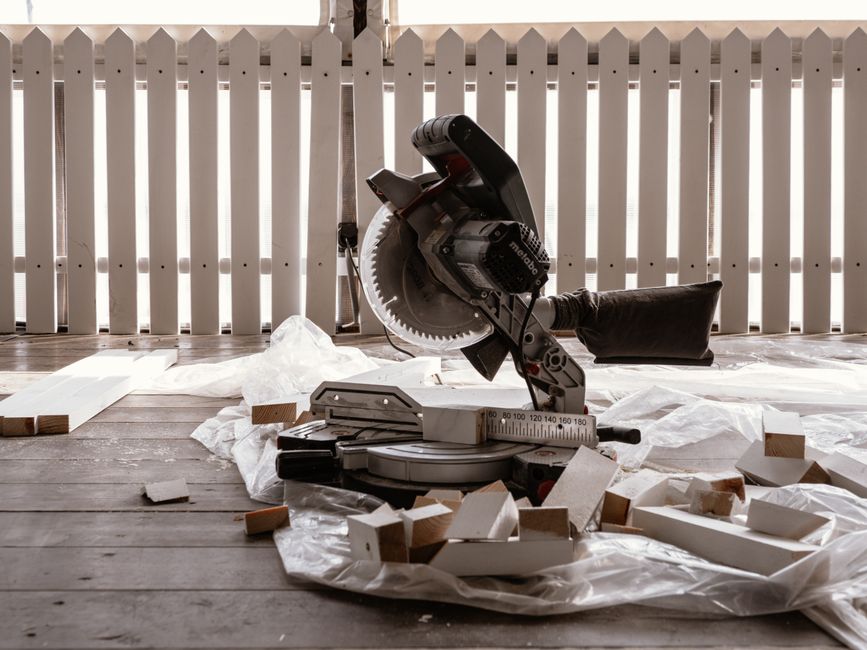
Beyond traditional hand tools, a few alternative methods exist for cutting PVC pipe. A rotary tool with a cutting wheel works quickly for small pipes. An angle grinder handles large pipes but creates significant dust. A bandsaw cuts PVC cleanly if you have access to one. A miter saw with a fine-toothed blade works for straight cuts. Most of these alternatives require electricity and aren’t practical for portable work. Hand tools remain the most practical option for most DIY projects.
- Rotary tools: Fast for small pipes; requires electricity; creates dust.
- Angle grinders: Handles large pipes; messy and loud; overkill for most projects.
- Bandsaws: Clean cuts on all sizes; requires stationary equipment; excellent for multiple cuts.
- Miter saws: Straight cuts; requires electricity; works well with fine-toothed blades.
- Hand tools: Quiet, portable, safe; best for most DIY projects; no electricity required.
Key Takeaway: Hand tools remain the most practical and portable option for cutting PVC pipe without a saw.
What Is the Best Approach to Cutting PVC Pipe Without a Saw in 2026?
The best approach depends on your specific project needs and available tools. For most DIYers, a ratcheting PVC cutter is the single best investment. This tool delivers professional-grade cuts with minimal effort and setup. If you only need to make a few cuts, a utility knife works perfectly for small pipes. Combining multiple tools gives you flexibility for any pipe size or thickness. Proper technique and safety precautions matter more than the specific tool chosen.
Start with what you have available, then invest in specialized tools as your needs grow. A utility knife and safety glasses are a bare minimum for any PVC cutting. Add a ratcheting cutter if you work with medium-diameter pipes regularly. Keep blades sharp and deburr edges immediately for safety and appearance. Secure the pipe firmly and take time to ensure perpendicular cuts. These practices guarantee success on any PVC cutting project.
The key to efficient PVC cutting is matching your tool to the job and using proper technique. Rushing leads to injuries and wasted material. Steady, deliberate work takes less total time and produces better results. Safety should never be compromised for speed. With the right tools and knowledge, cutting PVC pipe becomes quick, easy, and enjoyable. Your completed projects will have professional-quality joints and connections.
Key Takeaway: Invest in a ratcheting cutter for regular work, use proper technique, and prioritize safety for professional results on every project.
Recommended Products

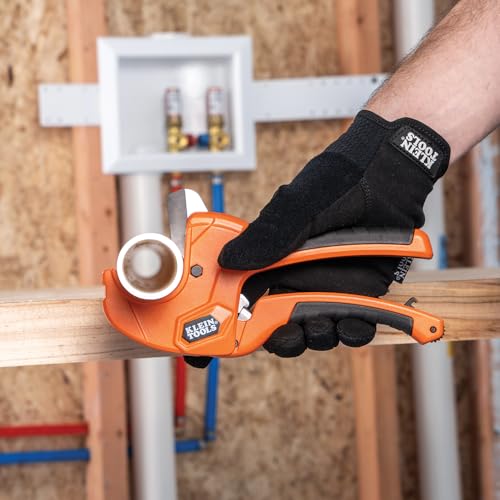
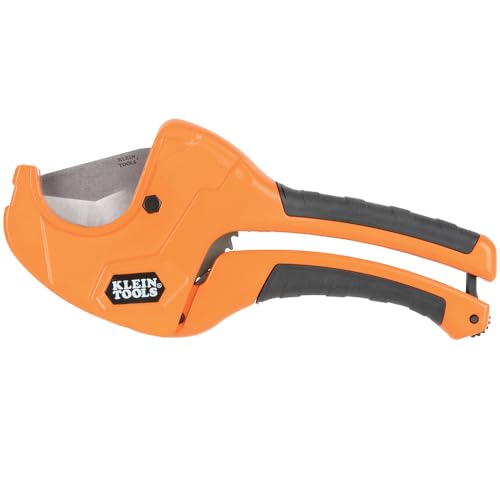
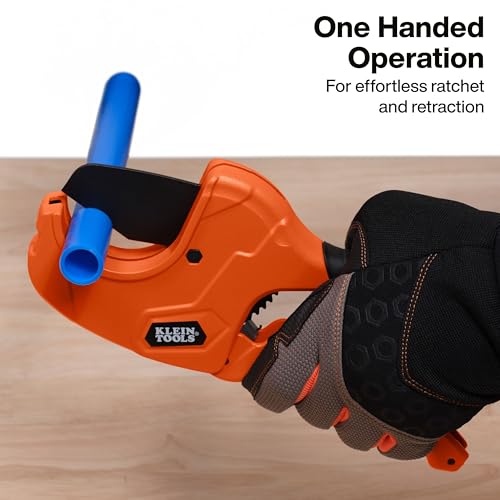
Klein Tools 50063 Ratcheting PVC Pipe Cutter, Cuts 1-1/4-Inch I.D. PVC, CPVC, PEX Pipes, One-Handed Operation, Replaceable Blades
- RATCHETING PVC PIPE CUTTER: Ability to cut up to 1-1/4-Inch (31 mm) I.D.; 1-5/8-Inch (41 mm) O.D. pipes
- VERSATILE CUTTING: Cuts schedule 40/80 PVC CPVC, and PEX
- LIGHTWEIGHT DESIGN: Soft-molded handles provide comfort and secure grip
- DURABLE RATCHETING BLADE: Handles pull apart to retract blade
- SECURE STORAGE: Latch ensures safe closure for PVC cutter tool






As an Amazon Associate we earn from qualifying purchases. Product prices and availability are accurate as of the date/time indicated.

Klein Tools 50080 Ratcheting PVC Pipe Cutter, Cuts 2-Inch ID PVC, CPVC, PEX Pipes, One-Handed Operation, Replaceable Blades
- RATCHETING PVC PIPE CUTTER: Cuts up to 2-Inch ID and 2-3/8-Inch OD pipes
- VERSATILE CUTTING: Cuts Schedule 40/80 PVC CPVC, and PEX pipes
- LIGHTWEIGHT DESIGN: Soft-molded handles provide comfort and secure grip
- EASY BLADE RETRACTION: Durable ratcheting blade activated by pulling handles apart
- OPTIMIZED JAW DESIGN: Holds various pipe sizes, making it an essential cutting tool for homeowners, handymen, plumbers, and electricians



As an Amazon Associate we earn from qualifying purchases. Product prices and availability are accurate as of the date/time indicated.
Frequently Asked Questions
Can you cut PVC pipe with a utility knife?
Yes, a utility knife cuts PVC pipe effectively, especially for diameters under 1.5 inches. Secure the pipe, mark your cut line, and rotate it slowly under the blade while applying firm downward pressure. After 5-10 rotations, the pipe separates cleanly. Always use a sharp blade and deburr the edge immediately. This method is free if you already own a utility knife.
What is the fastest way to cut PVC pipe by hand?
A ratcheting PVC cutter is the fastest hand-tool method, completing cuts in 15-20 seconds. Simply position the cutter around the pipe and pump the handles until separation occurs. The enclosed design ensures perpendicular cuts without measuring or marking. For small pipes, tin snips or pruning shears are even faster. Choose your tool based on pipe diameter.
Do you need a deburring tool after cutting PVC pipe?
A deburring tool isn’t strictly necessary but is highly recommended. Fresh PVC cuts have sharp edges that cut skin and prevent smooth fitting installation. A deburring tool removes burrs in 10-15 seconds. Alternatives include sandpaper, files, or a utility knife blade. Spending 15 seconds deburring prevents hand injuries and improves your work quality.
What size ratcheting cutter should you buy?
Choose a ratcheting cutter rated for your most common pipe diameter. Most DIYers work with 0.5 to 2-inch pipes, so a standard-capacity cutter handles 95% of projects. Large-capacity cutters for pipes over 2 inches are less common and more expensive. Buy the cutter that matches your typical work; you can always use alternative tools for unusual sizes.
Can you cut PVC pipe with tin snips?
Yes, tin snips cut thin-wall and flexible PVC quickly and easily. They work best on pipes under 1 inch diameter. Tin snips are ideal for irrigation tubing and electrical conduit. For rigid schedule 40 PVC or larger diameters, a ratcheting cutter or utility knife works better. Tin snips are inexpensive and worth having in your toolbox.
How do you ensure a straight cut on PVC pipe?
Mark your cut line clearly with a permanent marker or marking tool. Secure the pipe firmly in a vise so it cannot rotate. Position your cutting tool perpendicular to the pipe. Apply steady, even pressure throughout the cut. Let the tool do the work rather than forcing it. These practices guarantee straight cuts every time, regardless of your tool choice.


Write Your Review
No reviews yet. Be the first to share your experience!