

What Is the Key Difference Between DeWalt Atomic and XR Tool Sizes?
DeWalt’s Atomic and XR tool lines represent two distinct approaches to power tool design, with the primary distinction being overall dimensions and weight. The Atomic line features significantly more compact footprints and lighter weights—typically 30-40% smaller and 20-30% lighter than comparable XR models. Atomic tools maintain full power output in a reduced package, making them ideal for overhead work, confined spaces, and users prioritizing maneuverability. XR tools, conversely, offer larger battery capacities and extended runtimes by design, resulting in slightly bulkier dimensions. Both lines deliver professional-grade performance; the choice depends on whether you prioritize portability or extended operational time. DeWalt introduced the Atomic line in response to growing demand for compact, lightweight tools that don’t sacrifice power. This innovation has reshaped how contractors and DIY enthusiasts evaluate tool selection, shifting focus from raw size to efficiency and workspace accessibility. Understanding these dimensional differences helps you select tools that match your specific working conditions and project requirements.

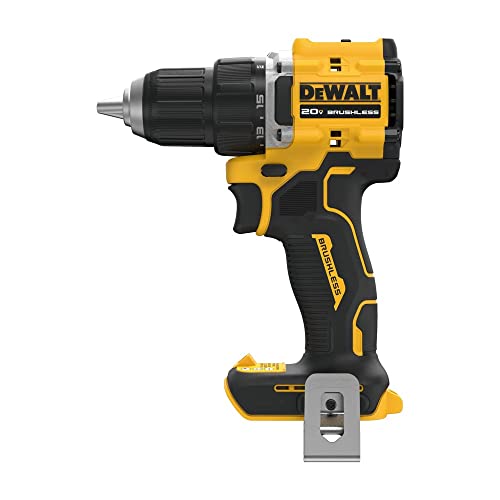
Dewalt DCD794B 20V MAX ATOMIC COMPACT SERIES Brushless Lithium-Ion 1/2 in. Cordless Drill Driver (Tool Only)
- Rechargeable


As an Amazon Associate we earn from qualifying purchases. Product prices and availability are accurate as of the date/time indicated.
How Do DeWalt Atomic Tool Dimensions Compare to XR Models?
DeWalt Atomic tools are engineered with a focus on reducing overall footprint without compromising motor performance. Most Atomic drills measure approximately 7.5-8 inches in length, while XR equivalents typically span 9-10 inches. The width and depth follow similar proportional reductions. For example, the DeWalt Atomic compact drill/driver weighs around 3.6 pounds without battery, compared to 4.2-4.5 pounds for XR models. This dimensional advantage proves particularly valuable in confined spaces such as inside cabinets, wall cavities, or tight corners on job sites.
Weight Distribution and Balance
Beyond absolute weight, Atomic tools feature optimized weight distribution that enhances control during extended use. The compact form factor positions the motor and battery closer together, reducing strain on your wrist and forearm. XR tools, while heavier, distribute weight slightly differently due to their larger battery compartments. Users working overhead or in vertical positions consistently report less fatigue with Atomic tools. The balance point differs noticeably—Atomic tools feel more naturally centered in your hand, while XR models require slightly more grip strength to maintain control.
Battery Compatibility and Thickness
Both Atomic and XR tools use DeWalt’s 20V platform, ensuring battery compatibility across lines. However, battery thickness varies significantly. Atomic batteries are approximately 1 inch thinner than standard XR batteries, contributing to the overall size reduction. This dimensional difference affects how tools fit in tool bags, storage racks, and vehicle compartments. If you’re upgrading from one line to another, battery storage requirements may change substantially.
Why Would You Choose Atomic Tools Over XR for Your Projects?
Selecting Atomic tools makes sense when workspace constraints outweigh runtime requirements. Professional electricians working in residential walls, HVAC technicians accessing confined ductwork, and cabinet makers drilling precise holes in tight spaces benefit tremendously from Atomic’s compact design. The reduced size doesn’t mean reduced power—Atomic drills deliver the same torque and rotational speed as XR models, just in a lighter package.
Specific Use Cases for Atomic Tools
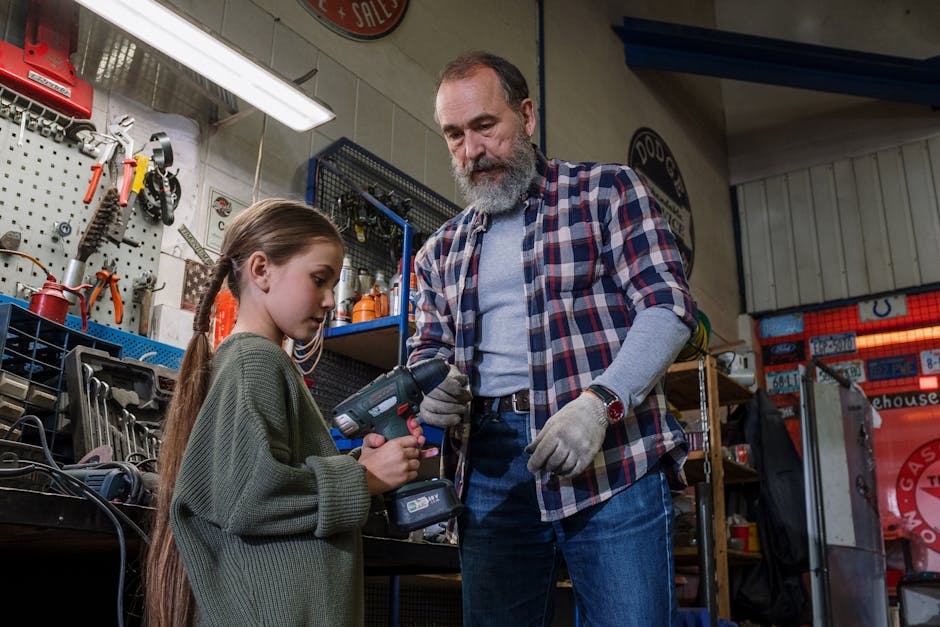
Overhead work represents one of Atomic’s strongest applications. When drilling or fastening above shoulder height, the weight reduction becomes noticeable after 15-20 minutes of continuous use. Fatigue significantly decreases with the 0.6-0.9 pound weight savings per tool. Atomic tools also excel in detailed work requiring precision and control—the lighter weight allows finer motor control and less hand strain during delicate operations. Users performing repetitive fastening tasks report reduced hand fatigue at day’s end when using Atomic tools. Additionally, Atomic tools fit more easily into standard tool belts and bags, improving jobsite mobility and organization.
Workspace Accessibility Advantages
Compact tool design opens access to previously difficult areas. Inside kitchen cabinets, under sinks, between wall studs, and within tight mechanical spaces—Atomic tools navigate these environments more effectively. The reduced diameter also matters; some tools can fit through 2-inch openings where XR equivalents simply won’t pass. For renovation work in older homes with narrow wall cavities, Atomic tools provide genuine operational advantages.
When Should You Prioritize XR Tools Over Atomic Models?
XR tools earn their place when extended runtime and larger battery capacity matter more than portability. High-volume production environments, all-day fastening jobs, and projects requiring minimal battery changes favor XR tools. The larger battery capacity—typically 2.0-3.0 Ah versus 1.3-2.0 Ah in Atomic batteries—delivers 40-60% longer runtime per charge. For contractors billing hourly labor, reduced battery swap time translates directly to productivity gains and profitability.

Production-Focused Applications
Framing crews installing hundreds of fasteners daily benefit from XR’s extended runtime. Roofing teams working across large surface areas appreciate XR’s ability to complete sections without battery changes. Decking installation, fence building, and other repetitive fastening tasks favor XR tools. The slight weight increase becomes negligible when considering the productivity advantage of working longer between charges. Additionally, XR tools often cost slightly less per unit, providing better value when purchasing multiple tools for a crew.
Runtime Calculations and Battery Economics
A typical Atomic 1.3 Ah battery provides approximately 45-60 minutes of continuous fastening work, while a 3.0 Ah XR battery delivers 120-150 minutes. For projects requiring 4+ hours of continuous operation, XR tools reduce the total number of batteries needed, lowering overall system cost. Battery charging time remains constant regardless of capacity, so larger batteries maximize charging efficiency. For contractors with limited charging infrastructure on job sites, XR’s extended runtime provides significant operational flexibility.
How Do You Choose Between Atomic and XR Tools for Your Toolkit?
Selecting between DeWalt Atomic and XR tools requires honest assessment of your typical working conditions, project scope, and physical considerations. Start by analyzing your most common projects and workspace constraints. If you frequently work in confined spaces, overhead positions, or detailed applications, Atomic tools likely provide better value through improved control and reduced fatigue. If your projects emphasize volume and runtime matters more than portability, XR tools deliver superior productivity.
Evaluating Your Specific Needs
Create a simple matrix listing your primary tool uses. For each application, note whether you work in confined spaces (favoring Atomic) or open areas (favoring XR), whether runtime or portability matters more, and whether you prefer lighter tools or extended battery life. Most professionals discover they need both lines—Atomic tools for detail work and confined spaces, XR tools for high-volume production tasks. This mixed approach optimizes your toolkit for diverse project requirements without unnecessary redundancy.
Physical Considerations and Ergonomics
Age, strength, and physical limitations significantly influence tool selection. Users over 55 years old or those with wrist, shoulder, or back issues consistently report better experiences with Atomic tools. The weight reduction translates to measurable comfort improvements during full workdays. Conversely, younger users with excellent physical conditioning may find XR’s slight weight increase negligible compared to runtime advantages. Test both tool sizes at your local DeWalt dealer or rental center before committing to a full toolkit. Hands-on evaluation reveals comfort levels that specifications alone cannot convey.
Budget and System Integration
Consider your existing DeWalt battery inventory. If you already own multiple XR batteries, adding Atomic tools requires purchasing compatible batteries—a significant investment. Conversely, if building a toolkit from scratch, starting with Atomic tools for general use and adding specialized XR tools for production work often proves more cost-effective. Battery pricing ranges from $40-80 per unit, so system compatibility affects total toolkit investment substantially. Calculate the cost per tool across your anticipated purchases before finalizing your decision.
What Are Common Mistakes When Comparing Atomic and XR Tools?
Many users make selection errors by focusing exclusively on size differences while ignoring actual application requirements. A contractor might purchase Atomic tools assuming they’ll work everywhere, then discover insufficient runtime for their typical projects. Conversely, others buy XR tools based on battery capacity alone, later regretting the added weight during overhead work. Understanding these common pitfalls helps you avoid costly mistakes in your tool selection process.
Overestimating Atomic Limitations
The most frequent mistake involves assuming Atomic tools lack power or capability. They don’t. Atomic drills deliver identical torque, speed, and performance to XR models—just in a lighter package. Users sometimes purchase XR tools unnecessarily, paying extra for weight they don’t need. Performance specifications, not tool size, should drive power-related decisions. Both lines deliver 300 unit watts of output and similar rotational speeds. If your project requires specific power levels, both Atomic and XR models meet those requirements equally.
Underestimating Runtime Needs
Conversely, some users underestimate how quickly Atomic batteries deplete during high-volume work. A contractor fastening 500+ screws daily might experience multiple battery changes with Atomic tools, significantly impacting productivity. Honest assessment of your typical runtime requirements prevents this mistake. Calculate expected battery runtime for your most common projects, then compare against available battery capacities. If your calculations suggest runtime concerns, XR tools provide better value despite the weight penalty.
Ignoring Real-World Workspace Constraints
Users sometimes overlook actual workspace dimensions when selecting tools. A contractor might purchase XR tools for general use, then discover they cannot fit inside wall cavities, cabinet interiors, or mechanical spaces where most of their work occurs. Conversely, others buy Atomic tools for production work where XR’s extended runtime would provide better productivity. Visit your actual job sites before purchasing—measure confined spaces, evaluate overhead work areas, and honestly assess your typical working positions. This real-world evaluation prevents expensive tool selection errors.
How Do You Maximize Performance and Longevity With Either Tool Line?
Regardless of which line you select, proper maintenance and usage practices ensure optimal performance and extended tool life. Both Atomic and XR tools share identical maintenance requirements since they use the same motor and transmission designs. Understanding these practices maximizes your investment value and maintains consistent performance across your toolkit.
Battery Management for Both Lines
Proper battery care extends lifespan and maintains performance consistency. Store batteries in cool, dry environments between 50-80°F—excessive heat degrades lithium cells and reduces capacity. Avoid complete discharge cycles; recharge when battery indicator shows 20% remaining capacity. This practice extends overall battery lifespan by 30-40% compared to regular deep-discharge usage. Use DeWalt’s chargers exclusively—third-party chargers may damage battery management systems and void warranties. Rotate batteries during extended use, allowing each battery to cool between charges. This rotation practice prevents thermal stress and maintains consistent performance.
Motor and Transmission Care
Both Atomic and XR tools feature brushless motors requiring minimal maintenance. Avoid exposing tools to excessive dust and debris—use dust extraction when available. For pneumatic-equivalent tools, periodic compressed air cleaning removes internal dust accumulation. Never submerge tools in water; moisture damages motor windings and electronic components. After wet conditions, allow tools to dry completely before storage. Check chuck tightness monthly; loose chucks reduce drilling precision and can damage bits. Replace worn chucks promptly—they cost $15-25 and prevent bit slippage and potential injuries.
Bit Selection and Cutting Technique
Using appropriate bits for your material prevents motor strain and extends tool longevity. Dull bits require excessive force and generate heat that damages motor components. Replace bits when they become dull—sharp bits cost less than motor repairs. Maintain steady pressure without forcing the tool; let the motor do the work. Forcing tools into materials causes motor strain, heat buildup, and premature failure. For both Atomic and XR tools, proper technique matters more than tool size for longevity and safety.
Recommended Products
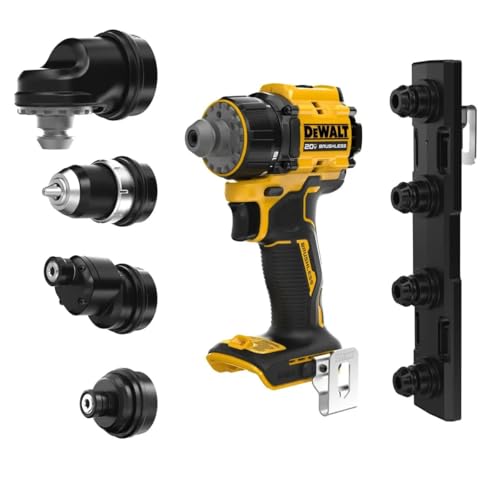
DeWALT DCD803B ATOMIC 20V MAX 5-in-1 Brushless Cordless Multi-Head Drill/Driver, Tool Only
- Multitasking Capabilities: Tackle diverse applications with the included attachments: 1/2 in. (13mm) metal chuck, 1/4 in. hex right angle, 1/4 in. hex quick release offset, and a 1/4 in. hex quick release
- Swift Switching: Effortlessly transition between tasks using the included attachments
- Access Tight Spaces: Reach hard-to-access areas with individual attachment use on the right angle attachment
- Secure Connection Indicator: Ensure attachment security with the yellow collar around the chuck
- Organizational Aid: Mount the organizer on the wall or use belt hooks to hang tools or store up to 4 attachment heads
- Powerful Performance: Tackle tough, confined applications with up to 15% increased power


As an Amazon Associate we earn from qualifying purchases. Product prices and availability are accurate as of the date/time indicated.
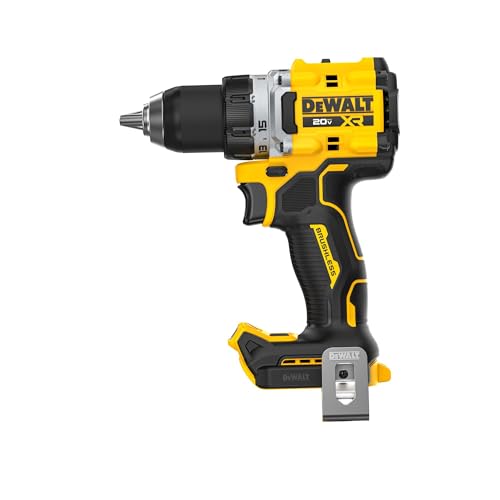
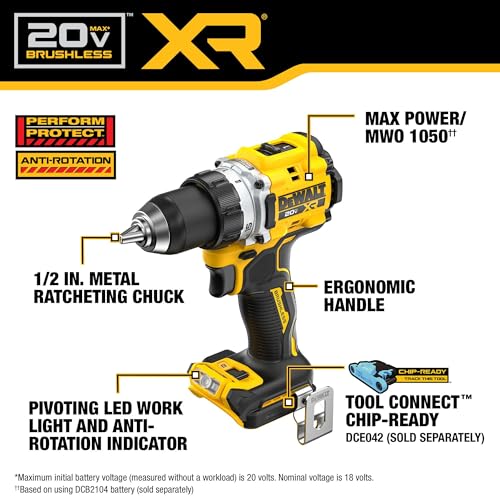
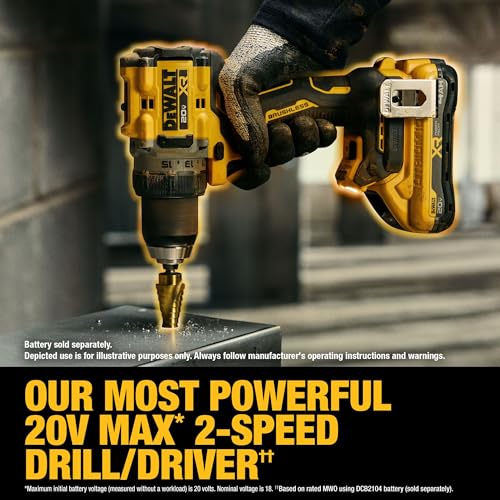
DEWALT 20V MAX XR Brushless Cordless 1/2 in. Drill/Driver (Tool Only) (DCD801B)
- Our Most Powerful 20V MAX* 2-Speed Drill Driver** - Complete a wide range of applications with this drill/driver that is up to 109% more powerful.
- Help Maximize Control - Equipped with the ANTI-ROTATION System that senses the rotational motion of the tool and shuts it down if the motion is excessive. The red LED indicator illuminates when the ANTI-ROTATION System is engaged.
- Competitive Advantage - Dominate demands with this tool designed to be up to 25% more powerful vs. Milwaukee***.
- Professional Performance - Complete jobs with top level speed, control, and precision with a high-speed transmission and variable speed trigger featuring 2 settings (no load 0-650/0-2,000 rpm).
- Bright LED Work light - Illuminate dim work areas with an adjustable, 3-position LED featuring 70 lumens and auto-shutoff function.
- Help Maximize Productivity - Make up to 175 holes per charge.
- High Bit Retention - Work confidently with a 1/2 in. metal ratcheting chuck that provides secure bit retention.
- TOOL CONNECT CHIP READY - Featuring TOOL CONNECT CHIP READY functionality (DEWALT chip sold separately) when paired with the DEWALT Site Manager app that shows data on jobsite asset management and tool location.
- Part Of Our Best Performing Line Of 20V MAX* Power Tools – Innovative power tools designed to deliver certainty for the world’s toughest pros.




As an Amazon Associate we earn from qualifying purchases. Product prices and availability are accurate as of the date/time indicated.
Frequently Asked Questions
What is the exact weight difference between DeWalt Atomic and XR tools?
Atomic tools typically weigh 0.6-0.9 pounds less than comparable XR models without batteries. For example, Atomic compact drills weigh approximately 3.6 pounds while XR equivalents weigh 4.2-4.5 pounds. This 15-20% weight reduction becomes noticeable during extended overhead work. Battery weight differs more significantly—Atomic batteries weigh approximately 0.5 pounds less per unit due to reduced capacity, contributing to overall system weight savings.
Can you use Atomic batteries in XR tools and vice versa?
Yes, both Atomic and XR batteries work interchangeably across all DeWalt 20V tools since they share the same platform connector. However, using smaller Atomic batteries in XR tools reduces runtime proportionally. Using larger XR batteries in Atomic tools increases weight but extends runtime. This compatibility provides flexibility when building your toolkit, allowing strategic battery selection based on specific project requirements and workspace constraints.
Do Atomic tools deliver the same power output as XR models?
Yes, Atomic and XR tools deliver identical power output—approximately 300 unit watts for most models. Both lines feature the same brushless motor technology and transmission designs. The size reduction in Atomic tools doesn’t compromise power; it simply packages that power into a lighter, more compact form factor. Performance specifications remain equivalent across both lines.
Which tool line costs more—Atomic or XR?
Atomic tools typically cost slightly more per unit due to their compact engineering, often $20-40 more than comparable XR models. However, this premium decreases when purchasing multiple tools as a system. Atomic batteries cost slightly less than XR batteries due to reduced capacity. For budget-conscious buyers, the overall system cost depends on your specific toolkit composition and battery requirements rather than individual tool pricing.
How long do batteries last in typical usage for each line?
Atomic batteries provide 45-60 minutes of continuous fastening work, while XR batteries deliver 120-150 minutes with equivalent tools. Actual runtime varies based on application intensity, material type, and bit condition. Light-duty applications extend runtime significantly, while high-volume fastening reduces it. Both battery types maintain performance for 3-5 years of regular use with proper care and storage practices.
Are Atomic tools suitable for professional contractors?
Absolutely. Many professional contractors exclusively use Atomic tools for detail work, electrical installations, and confined-space applications. Atomic tools deliver professional-grade durability and performance in a more portable package. Contractors often maintain both Atomic and XR tools in their kits, using Atomic for precision and confined work while reserving XR for high-volume production tasks. Professional suitability depends entirely on matching tool selection to your specific applications.
Is DeWalt Atomic the Right Choice for Your Toolkit in 2026?
Choosing between DeWalt Atomic and XR tools requires honest evaluation of your working conditions, project requirements, and physical capabilities rather than simply selecting based on marketing or general recommendations. Both tool lines represent excellent engineering and deliver professional-grade performance. The Atomic line excels for users prioritizing portability, working in confined spaces, or performing overhead tasks where weight matters significantly. XR tools deliver superior value for high-volume production work where extended runtime reduces battery-swap downtime and improves overall productivity. The ideal solution for most professionals involves maintaining both lines in your toolkit—Atomic tools for detail work and confined applications, XR tools for production-focused tasks. This hybrid approach optimizes your capability across diverse project types without unnecessary redundancy. As you evaluate your specific needs in 2026, consider visiting your local DeWalt dealer to handle both tool sizes firsthand. Hands-on evaluation reveals comfort levels and handling characteristics that specifications alone cannot convey. Test both lines on your actual job sites and within your real working spaces before committing significant capital to a complete toolkit. This practical approach ensures your tool selection directly matches your working reality rather than theoretical preferences. Whether you ultimately choose Atomic, XR, or a combination of both, DeWalt’s commitment to innovation and quality ensures you’re investing in tools that will serve your projects reliably for years to come. The key is selecting tools that enhance your productivity and comfort while matching your actual working conditions and project requirements.



Write Your Review
No reviews yet. Be the first to share your experience!