
The best metal cutting blade for a circular saw in October 2026 is the Diablo Steel Demon Cermet II 7-1/4 inch, 48-tooth blade ($39.96), which pairs cermet teeth with a triple chip grind for clean, low-spark cuts in steel and stainless steel. For a budget alternative, the DEWALT DW3329 ($8.15) provides a 68-tooth, rust-resistant design suited to lighter ferrous metal work. Across all five blades reviewed, prices fall within $8.15 - $39.96, with cermet models sitting at the premium end and steel-bodied blades at the budget end. Each blade below is evaluated for tooth design, intended materials, and fit, so you can narrow the choice quickly. The bottom line: choose a blade whose diameter matches your saw, pick a tooth count that suits your material thickness, and spend more on cermet teeth only when cut quality, heat control, and blade life matter most.
What Is the Best Metal Cutting Blade for a Circular Saw in 2026?
Cutting metal with a circular saw is different from cutting lumber. Steel generates heat quickly, and that heat dulls teeth, discolors the workpiece, and can warp a thin blade. Standard wood blades simply are not designed for these loads. Metal-cutting blades use harder tooth materials, specialized tooth geometry, and coatings or stabilizer features that manage heat and vibration. For anyone cutting angle iron, channel, rebar, square tube, or sheet metal on a job site or in a home shop, the right blade can mean the difference between a clean, controlled cut and a rough, slow one.
Metal-cutting blades fall into a few broad families. Steel-bodied blades with hardened teeth are the most affordable and work well for occasional light use. Cermet blades use a ceramic-metal tooth composition that resists heat and holds an edge longer, which is why they dominate the premium segment. Carbide-tipped designs sit in between and are common in professional fabrication shops. Choosing among them depends on how often you cut, how thick the stock is, and whether the finish matters.
Safety should guide every purchase. Abrasive and metal-cutting operations produce sparks, hot debris, and fine particles, so eye and hearing protection are essential. The U.S. Occupational Safety and Health Administration publishes general guidance on power tool and metalworking hazards at OSHA, and it is worth reviewing before starting any new cutting task. Always confirm your saw’s guard works correctly and that the blade is rated for the maximum RPM of your tool.
Which Metal Cutting Circular Saw Blades Stand Out in 2026?
The five blades below cover a practical range of diameters, tooth counts, and price tiers. Each entry explains what the blade is designed to do, who it suits, and where it may fall short. Manufacturer claims are noted as claims, since independent lab testing for every product is not publicly available.
Is the DEWALT DW3329 Blade a Good Choice for Metal Cutting?
The DEWALT DW3329 ($8.15) is a 7-1/4 inch, 68-tooth metal cutting blade in the budget tier. Its high tooth count is designed for finer, smoother cuts in thinner ferrous stock, such as sheet metal, light angle iron, and conduit. DEWALT lists precision-sharpened teeth for fast, smooth cutting and longer life, a blade coating that resists rust and reduces friction, and a thicker body for added durability in heavier work. The blade suits DIYers, maintenance crews, and hobbyists who cut metal occasionally and want a dependable, affordable option from a well-known brand. Its main limitation is that a fine-tooth design cuts more slowly through thick material and generates more heat in long passes, so it is best kept for lighter jobs. Learn more about the brand at DEWALT.

DEWALT DW3329 7-1/4 Inch 68T Metal Cutting Circular Saw Blade Review
- Precision sharpened teeth for fast, smooth cuts and longer life
- Blade coating prevents rust and reduces friction
- Thicker body provides increased durability in heavy-duty applications


As an Amazon Associate we earn from qualifying purchases. Product prices and availability are accurate as of the date/time indicated.
Is the DEWALT DW3330 Blade Good for Heavier Steel Cutting?
The DEWALT DW3330 ($9.08) is a 7-1/4 inch, 16-tooth blade in the budget tier, marketed for steel and iron cutting. Fewer teeth mean larger gullets and more aggressive cutting, which can move through thicker stock faster and clear chips more easily. The trade-off is a rougher finish and less precise edge quality compared with higher-tooth designs. This blade fits users who prioritize speed over surface finish, such as cutting rough sections for later grinding or welding. The listing describes it as easy to use and manufactured in China, and the product details are relatively limited, so buyers should confirm arbor size and maximum RPM on the packaging before purchase. Because it is a basic steel-cutting option, it is a sensible low-cost choice for occasional rough cuts rather than a long-term production blade.
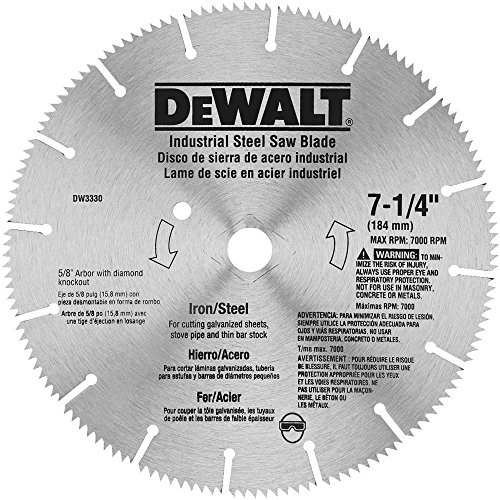
DEWALT DW3330 7-1/4 in. 16-Tooth Metal Cutting Circular Saw Blade
- The product is 7-1/4" Stl/iron blade
- Easy to use
- The product is manufactured in China

As an Amazon Associate we earn from qualifying purchases. Product prices and availability are accurate as of the date/time indicated.
Is the Diablo Steel Demon Cermet II Good for Medium Metal Cutting?
The Diablo Steel Demon Cermet II 7-1/4 inch, 48-tooth blade ($39.96) is the top pick in this group and sits at the premium price tier. It uses Cermet II teeth, a triple chip grind, and Perma-Shield coating. Diablo states that the blade delivers faster cuts, cooler cutting than a grinding disc, and reduced spark production, which can help in areas where hot work permits are restricted. The company also claims longer tooth life than standard grinding discs, along with laser-cut stabilizer vents that reduce noise and vibration. The 48-tooth layout balances speed and finish, making it well suited to steel, stainless steel, tube, and angle iron in medium thicknesses. It is best for fabricators, maintenance professionals, and serious DIYers who want consistent results. Its main drawback is cost, so occasional users may find a budget blade more practical. More details are available at Diablo.

Diablo 7-1/4-Inch Cermet II Metal Cutting Saw Blade, 48 Teeth, D0748CFA
- Enhanced Durability - Cermet II teeth deliver a more efficient and productive metal cutting solution through high heat tolerance and increased hardness for superior wear, fewer blade changes and up to 25X longer life versus standard grinding discs .
- Cooler Cutting Performance - Up to 50X cooler cuts with a circular saw blade when compared to a grinding disc that increases temperature of steel by up to 500 degrees. Grinding discs increase the temperature enough to permanently discolor the steel .
- Increased Cutting Speed - The blade delivers up to 10X faster cuts with a circular saw blade for maximum productivity and efficiency, resulting in up to 60 seconds faster cuts in both metals and stainless steels versus standard grinding discs .
- Safety and Reduced Emissions - The Triple Chip Cutting action minimizes sparks, ensuring a safer work environment and reducing the need for “hot” work permits, making it ideal for regulated areas .
- Precision and Stability - The optimized blade design minimizes metal wandering and deflection for accurate cuts, while Laser Cut Stabilizer Vents reduce noise and vibration, keeping the blade cool and enhancing cutting performance .


As an Amazon Associate we earn from qualifying purchases. Product prices and availability are accurate as of the date/time indicated.
Is the 6-1/2 Inch Cermet 40T Blade Right for Smaller Circular Saws?
The 6-1/2 inch Cermet 40T blade ($19.00) is a premium cermet option sized for smaller hand-held circular saws. Its 40-tooth ATB (alternate top bevel) geometry is user-friendly for hand-held work, and the cermet carbide teeth are designed to handle hard steel with less heat buildup. The listing highlights laser-cut stabilizer vents to trap noise and vibration and reduce blade warp, a 0.071 inch kerf tip thickness, and a maximum rated speed of 6000 RPM. It suits users cutting mild steel plate, sheet, tube, and angle iron with a compact saw. Before buying, confirm that your saw accepts a 6-1/2 inch blade and a 5/8 inch arbor, since the smaller diameter will not fit most 7-1/4 inch tools. For people with a compact saw, it delivers cermet performance without requiring a larger, heavier tool.

Echo Corner 6-1/2" Cermet Metal Cutting Saw Blade 40T, 5/8" Arbor
- Fast Clean Cool Dry Cutting Ferrous, Mild Steel Plate/Sheet/Tube, Angle-Iron or other tough metals
- Expert Cermet Carbide Tooth, able to cut very hard steel and Long lasting
- ATB Tooth Style, Particularly user-friendly for hand-held circular saws
- Laser Cut Stabilizer Vents: Vents trap noise & vibration and stabilize the blade keeping it cool, reducing the blade warp
- Diameter: 6-1/2", Kerf Tip Thickness: 0.071", Max RPM: 6000 (Rotations Per Minute)
- 5/8" arbor, Diamond Knockout Arbor for Worm drive saws


As an Amazon Associate we earn from qualifying purchases. Product prices and availability are accurate as of the date/time indicated.
Is the HARDWIN 48T Cermet Blade a Good Value for Structural Steel?
The HARDWIN 7-1/4 inch, 48-tooth cermet blade ($18.39) is priced in the premium tier and targets structural steel, including rebar, channel, angle iron, pipe, and round bar. The listing emphasizes an ultra-thin kerf that reduces material waste, ceramic alloy teeth intended to lower temperatures and spark production, and a laser-cut steel core with anti-rust and anti-stick coating. It also cites low-noise, low-vibration cutting and a 5/8 inch arbor that the seller says fits most mainstream corded and cordless circular saws. Some listing text references a specific brand for compatibility, so buyers should verify fit against their own saw’s arbor size and maximum RPM rather than relying on that claim alone. This blade suits fabrication and DIY projects that involve frequent structural cuts, where thin-kerf efficiency and a clean finish add real value over a longer service life.

HARDWIN 7-1/4" 48T Cermet Metal Cutting Saw Blade, 5/8" Arbor
- Professional-Grade Metal Cutting Expert:The 7-1/4" precision cermet carbide-tipped saw blade features 48 optimized teeth, specifically engineered for efficient cutting of various structural steels including rebar, channel steel, angle iron, metal pipes, and round bars. Its ultra-thin kerf design significantly reduces material waste, enhancing cutting economy
- Innovative Safe Cutting System:Incorporating advanced ceramic alloy tooth technology, it dramatically reduces temperature and minimizes spark generation during cutting, preventing material discoloration from heat while ensuring safer operation and cleaner cuts
- Industrial-Grade Durable Construction:Combining high-hardness teeth with professional anti-rust/anti-stick coating and laser-cut high-precision steel core, this blade delivers exceptional durability for demanding continuous operation
- High-Precision Low-Noise Cutting Experience:The specialized tooth geometry integrated with noise-reduction technology ensures smooth, low-vibration cutting with flawless surface finish, substantially reducing post-processing work. For optimal performance, we recommend pairing with professional metal cutting equipment
- Universal Tool Compatibility:With standard 5/8" arbor design, this blade seamlessly fits most mainstream corded/cordless circular saws including Diablo , making it ideal for both metal fabrication and DIY projects


As an Amazon Associate we earn from qualifying purchases. Product prices and availability are accurate as of the date/time indicated.
What Should You Look for When Choosing Metal Cutting Blades for a Circular Saw?
Choosing a metal cutting blade starts with matching the blade to your saw. The most important specification is diameter, which must match your saw’s rated blade size. Most common hand-held saws use 7-1/4 inch blades, while smaller compact saws use 6-1/2 inch blades. Arbor size, usually 5/8 inch for metal blades, must also match your saw exactly. Finally, check the maximum RPM rating on the blade against your saw’s no-load speed. A blade rated below your saw’s speed can be dangerous, so this check is not optional.
Tooth count is the next factor. Higher tooth counts, such as 48 or 68 teeth, produce smoother, more controlled cuts in thinner metal, while lower counts, such as 16 or 40 teeth, cut faster through thicker material but leave rougher edges. As a rule of thumb, use finer teeth for sheet, tube, and thin angle iron, and coarser teeth for thick plate and rough cutting. Tooth geometry also matters. Triple chip grind (TCG) and alternate top bevel (ATB) designs each handle metal differently, and manufacturers often list the geometry on the packaging or product page.
Tooth material determines how long the blade lasts and how much heat it can handle. Standard steel teeth are affordable but dull quickly on hard stock. Carbide tips hold an edge much longer. Cermet, a ceramic-metal composite, resists heat and wear especially well, which is why premium cermet blades can run cooler and produce fewer sparks. Heat is the main enemy of metal cutting, because it dulls teeth, discolors steel, and can warp thin blades. If you cut often or work with stainless steel, cermet teeth usually pay for themselves through longer life and fewer blade changes.
- Diameter and arbor: Match the blade to your saw’s rated size and arbor before anything else.
- Maximum RPM: Confirm the blade’s rated speed meets or exceeds your saw’s speed.
- Tooth count: Use high counts for thin metal and smooth finish, low counts for thick stock and speed.
- Tooth material: Choose steel for occasional use, carbide for regular work, and cermet for heat-sensitive or high-volume cutting.
- Coating and body: Anti-rust and anti-stick coatings help with longevity, while thicker or laser-cut bodies resist warp.
- Kerf width: Thin-kerf blades remove less material and require less power, which helps smaller saws.
Cutting technique affects blade life as much as the blade itself. Let the saw do the work rather than forcing the blade through the metal, since excessive pressure generates heat and accelerates wear. Use cutting fluid or a lubricant designed for metal where appropriate, and allow the blade to cool between long cuts. Clamp the workpiece securely, because movement causes binding and blade deflection. Keep the guard in place and use the saw only with the correct guard setup for metal work.
Finally, consider your workplace rules. Many job sites and facilities restrict sparks and open flame, and some require hot work permits. Blades that produce fewer sparks may simplify compliance in these environments. The U.S. Occupational Safety and Health Administration outlines general hazard controls for cutting and welding at OSHA. Checking your site’s requirements before buying can prevent costly delays. For broader background on how saws operate and why blade geometry matters, see our guide on how a circular saw works, and for sizing advice, read what size circular saw blade you need for framing.
Which Metal Cutting Blade Should You Buy?
For most buyers who want the strongest all-around metal cutting performance, the Diablo Steel Demon Cermet II 7-1/4 inch blade is the best overall choice. Its cermet teeth, triple chip grind, and stabilizer vents combine speed, cooler cuts, and reduced sparks, making it a strong fit for steel, stainless, and tube work. It costs more than budget options, but its claimed longer life and fewer blade changes can offset that cost for regular users. The HARDWIN 48-tooth cermet blade is a close alternative for structural steel and thin-kerf efficiency, provided you verify arbor and RPM compatibility first.
If your budget is limited and your cutting is occasional, the DEWALT DW3329 is the most sensible starting point. Its 68-tooth design is well suited to sheet metal and light ferrous work, and its coating and thicker body add durability for the price. For rough cuts in thicker steel where finish is less important, the DEWALT DW3330 offers a simple, low-cost option with a more aggressive tooth layout. Remember that its product details are limited, so confirm specifications before buying.
If your saw is compact, the 6-1/2 inch Cermet 40T blade is the right choice, since it offers premium cermet performance in a smaller diameter. Across all five blades, prices range within $8.15 - $39.96, so the decision should rest on material, saw size, and how often you cut rather than price alone. Match diameter, arbor, and RPM first, then choose tooth count and material for your specific work.
Frequently Asked Questions
What is the best metal cutting blade for a circular saw?
For most users, the Diablo Steel Demon Cermet II 7-1/4 inch, 48-tooth blade is the best overall choice. Its cermet teeth and triple chip grind deliver faster, cooler, lower-spark cuts in steel and stainless steel. It costs more than budget options, but its claimed longer life can offset that cost for regular cutting. For occasional light work, a budget steel-bodied blade may be more practical.
Can I use a wood blade to cut metal with a circular saw?
No, you should not use a wood blade to cut metal. Wood blades lack the hardened teeth and geometry needed for metal, and they can overheat, dull quickly, or fail under load. Metal-cutting blades are designed to handle heat and friction. Always use a blade rated for metal, confirm the correct diameter and arbor size, and check that its maximum RPM meets or exceeds your saw’s speed.
How many teeth should a metal cutting circular saw blade have?
Higher tooth counts, such as 48 or 68, generally produce smoother cuts in thin sheet, tube, and light angle iron. Lower counts, such as 16 or 40, cut faster through thicker material but leave a rougher edge. A medium count around 40 to 48 is a good all-around compromise for most mild steel and stainless steel work in typical workshop conditions.
What does cermet mean in a metal cutting blade?
Cermet is a composite material made from ceramic and metal particles. Cermet teeth resist heat and wear better than standard steel, which helps them stay sharp longer and produce cooler, lower-spark cuts. Manufacturers often use cermet in premium metal blades. Cermet blades usually cost more than steel or basic carbide options, but they are typically favored for heat-sensitive work and high-volume cutting.
Do I need eye protection when cutting metal with a circular saw?
Yes, eye and face protection are essential. Metal cutting produces sparks, hot particles, and fine debris that can cause serious injury. Wear safety glasses or a face shield, along with hearing protection and gloves suited to the task. The U.S. Occupational Safety and Health Administration provides general workplace safety guidance at osha.gov, and following your site’s hot work rules is also important.










Write Your Review
No reviews yet. Be the first to share your experience!