

What Is the Best Outlet Tester for Electrical Safety?
Quick Answer: The Klein Tools RT110 Outlet Tester ($9.97) is our top pick for most homeowners and electricians seeking reliable, affordable outlet testing. For those needing GFCI-specific detection, the Klein Tools RT210 ($13.98) offers mid-range value with comprehensive wiring problem identification. Budget-conscious buyers will appreciate the Neoteck Non Contact Voltage Detector ($9.99), while professionals requiring advanced diagnostics should consider the Klein Tools RT250 ($16.00) with its LCD display and trip-time measurement. Prices range from $9.97 - $26.99, making outlet testers accessible for DIY enthusiasts and professionals alike. Whether you need basic outlet verification or advanced GFCI troubleshooting, today’s outlet testers combine safety, durability, and ease of use to help you identify wiring faults before they become hazards.
An outlet tester is an essential electrical safety tool that identifies wiring problems, verifies ground connections, and confirms proper outlet functionality. These devices range from simple light-indicator models to advanced LCD-display units that measure GFCI trip times. Outlet testers are critical for homeowners performing electrical inspections, renters verifying rental property safety, and electricians troubleshooting complex wiring issues. The market has evolved significantly, with modern testers offering non-contact voltage detection, enhanced durability, and multi-function capabilities. Understanding the differences between basic receptacle testers and advanced diagnostic tools helps you select the right device for your specific electrical needs and skill level.
Which Outlet Testers Stand Out in 2026?
Klein Tools RT110 Outlet Tester: Budget-Friendly Reliability for Standard Outlets

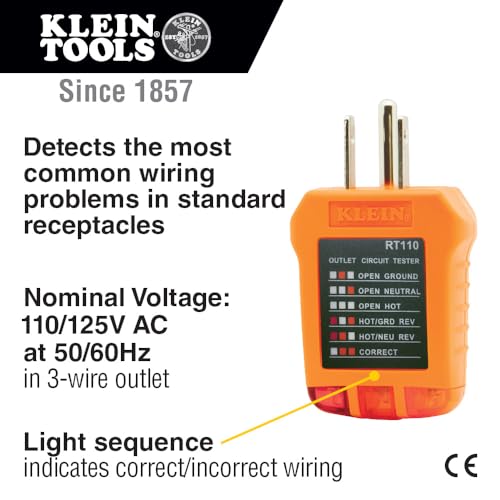
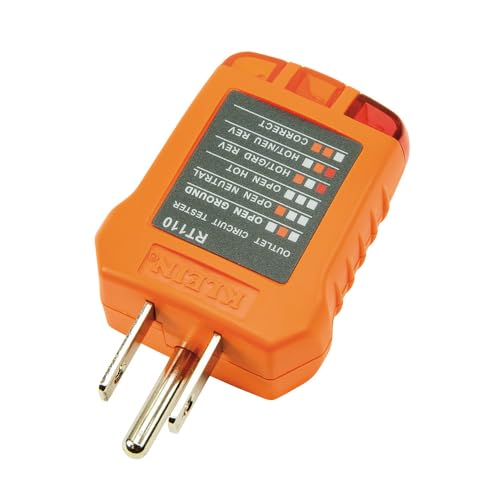
Klein Tools RT110 Outlet Tester | Fast Wiring Problem Detection
- CLEAR LIGHT SEQUENCE: Outlet tester's light sequence indicates correct/incorrect wiring, ensuring easy identification of wiring issues
- COMPLIANT WITH STANDARDS: Receptacle tester conforms to UL Std 1436 and is certified to CSA Std C22.2 #160, ensuring safety and quality
- WIDE OPERATING TEMPERATURE RANGE: Can be used in temperatures ranging from 32-degrees F to 140-degrees F (0-degrees C to 40-degrees C), providing versatility
- DURABLE AND TOUGH: Built to withstand a 6.6-foot (2m) drop, ensuring longevity and reliability in various working conditions
- VERSATILE VOLTAGE SUPPORT: Designed for use with 110/125V AC at 50/60Hz in 3-wire outlets, catering to common voltage requirements
- DETECTS COMMON WIRING PROBLEMS: Specifically designed to detect the most common wiring problems found in standard receptacles, ensuring safety and functionality
- EASY AND RELIABLE TESTING: The receptacle tester offers a convenient solution for testing outlets and identifying potential wiring issues quickly and accurately



As an Amazon Associate we earn from qualifying purchases. Product prices and availability are accurate as of the date/time indicated.
The Klein Tools RT110 ($9.97) represents the entry-level standard for outlet testing, offering straightforward light-sequence indicators that reveal wiring conditions at a glance. This budget-tier tester uses a simple three-light system to identify correct wiring, open grounds, open neutrals, and reversed polarity—the most common outlet problems homeowners encounter. Conforming to UL Standard 1436 and CSA Standard C22.2 #160, the RT110 meets rigorous safety certifications that ensure accurate readings.
The device excels in durability despite its affordable price, surviving 6.6-foot drops without losing functionality. Its wide operating temperature range (32°F to 140°F) makes it suitable for basements, attics, and outdoor testing scenarios. The RT110 works exclusively with 110/125V AC at 50/60Hz in standard 3-wire outlets, which covers the vast majority of residential electrical systems in North America. Best for homeowners conducting periodic safety checks, renters verifying rental units, and electricians maintaining a backup tester in their van. The straightforward light-indicator design requires no batteries or electronics, ensuring it remains operational for years without maintenance. Limitations include inability to test GFCI outlets specifically or provide detailed diagnostic information beyond basic wiring faults.
Klein Tools RT210 Outlet Tester: Mid-Range GFCI Detection and Wiring Problem Identification
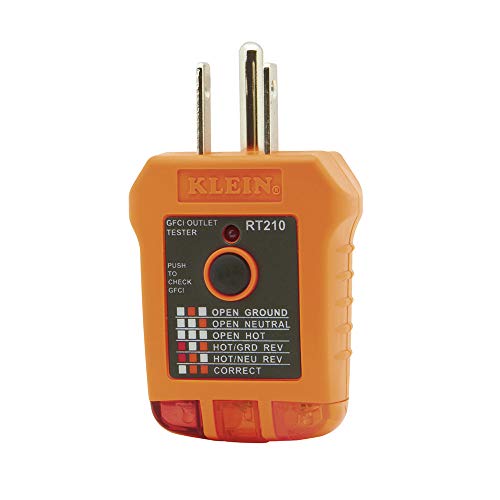
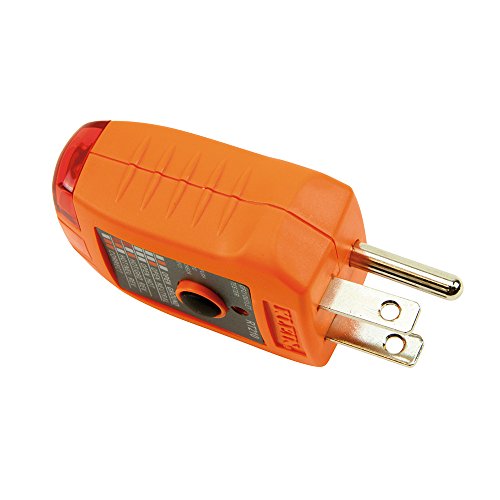
Klein Tools RT210 GFCI Outlet Tester - Fast Wiring Detection
- EFFECTIVE GFCI WIRING PROBLEM DETECTION: GFCI Tester detects common wiring problems in standard and GFCI receptacles, ensuring electrical safety
- COMPATIBLE WITH GFCI OUTLETS: Works on GFCI outlets and verifies the proper operation of the ground fault protective device, providing peace of mind
- DURABLE AND TOUGH: Built to withstand a 6.6-foot (2m) drop, ensuring durability and reliability in various working conditions
- WIDE OPERATING TEMPERATURE RANGE: Can be used in temperatures ranging from 32-Degree to 140-Degree Fahrenheit (0-Degree to 40-Degree Celsius), offering versatility
- VERSATILE VOLTAGE SUPPORT: Designed for use with 110/125V AC at 50/60Hz in 3-wire outlets, meeting common voltage requirements
- QUICK AND ACCURATE TESTING: The GFCI Tester provides a fast and reliable solution for detecting wiring issues and confirming the functionality of GFCI outlets
- ENSURE ELECTRICAL SAFETY: By utilizing the GFCI Tester, users can verify proper wiring and operation, promoting electrical safety in homes and workplaces


As an Amazon Associate we earn from qualifying purchases. Product prices and availability are accurate as of the date/time indicated.
The Klein Tools RT210 ($13.98) advances beyond basic outlet testing by specifically detecting GFCI wiring problems and verifying ground fault protection device operation. This mid-range tester combines the reliable light-sequence system of the RT110 with enhanced capability to work on GFCI outlets, which are mandatory in kitchens, bathrooms, and outdoor locations per electrical codes. The RT210 identifies common wiring faults in both standard and GFCI receptacles, making it invaluable for comprehensive home electrical safety audits.
Like its budget sibling, the RT210 withstands 6.6-foot drops and operates across temperatures from 32°F to 140°F, ensuring reliability in diverse environments. It functions with 110/125V AC at 50/60Hz in 3-wire outlets and requires no batteries, eliminating ongoing maintenance costs. The GFCI compatibility feature is essential for verifying that ground fault protection devices trip properly—a critical safety function that prevents electrocution in wet environments. Best for homeowners with modern electrical systems featuring GFCI protection, electricians inspecting code compliance, and property managers conducting thorough safety reviews. The RT210 bridges the gap between basic testing and advanced diagnostics, offering professional-grade capabilities at an accessible mid-range price point. Drawbacks include the same light-indicator limitations as the RT110 and inability to measure GFCI trip times for detailed analysis.
Neoteck Non Contact Voltage Detector: Budget Pen-Style Voltage Testing with Safety Priority
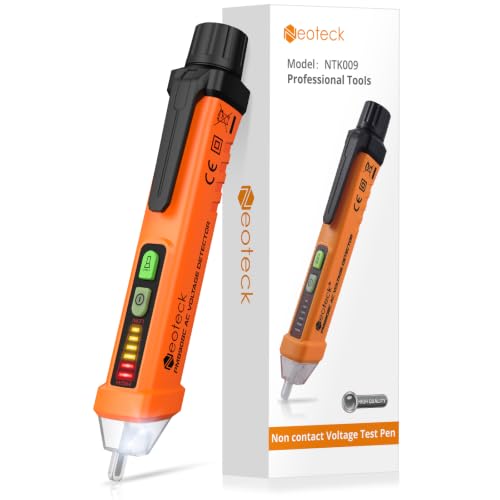
Neoteck Non-Contact Voltage Detector 12-1000V AC Tester
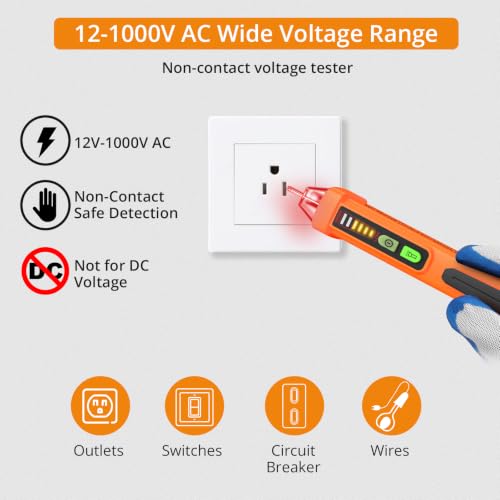
- 【Non-contact Voltage Tester】 Ranging 12-1000V AC, You can easily distinguish the live and null wire through different level of alarm sound and LED indicator. ( Note Please:Not Suitable for Christmas Light Testing)
- 【Safe and Convenient】 The Voltage Pen Tester Detectes Voltage in a Non-Contact Way, So Do Not Worry about There Could be any Possibility of being Shocked by the Electricity
- 【High Efficiency】 As Long As Voltage is Detected, the Led in the Tester Pen will Shine
- 【Multifunction, Easy to Use】 It Also Acts as an Emergency Flashlight which can Illuminate the Working Area, You can Use the Non Contact Voltage Detector in Circuit Breakers, Lighting Fixtures, Switches, Outlets, Wires and Anywhere You Need it
- 【CE CAT III600V RoHS Certificate】 A Professional Tester, It is Perfectly Suitable also for DIY'ers, Hobbyists and Home Owners, It Helps You Make the First and the Most Important Safety Check
- 【Practical for Everyday Electrical Safety】 Designed for electricians, maintenance technicians, DIY enthusiasts, homeowners and new homeowners, this Non-contact voltage tester is ideal for home repairs, outlet checks, appliance troubleshooting, workshop projects and property inspections. Its compact, easy-to-use design also makes it a thoughtful addition to a father’s, husband’s or handyman’s toolbox for birthdays, festival, housewarmings and other occasions


As an Amazon Associate we earn from qualifying purchases. Product prices and availability are accurate as of the date/time indicated.
The Neoteck Non Contact Voltage Detector ($9.99) represents a fundamentally different approach to electrical testing—non-contact voltage detection rather than outlet-specific diagnosis. This budget-tier pen-style tester safely identifies live circuits without direct contact, eliminating shock risk when testing cables, circuit breakers, lighting fixtures, switches, and outlets. The device detects AC voltage ranging from 12V to 1000V, covering residential and light commercial applications with dual alert systems: LED indicators and audible feedback that distinguish between live and neutral wires.
The compact pen design fits easily in toolboxes and utility belts, and the built-in flashlight provides hands-free illumination in dark work areas—a practical feature electricians appreciate. CE CAT III 600V certification and RoHS compliance ensure safety standards compliance. The non-contact detection principle makes this ideal for quick voltage checks before beginning work, circuit identification, and troubleshooting in confined spaces where direct contact testers cannot reach. Best for DIY enthusiasts prioritizing safety, homeowners checking for live circuits before maintenance, and electricians needing a secondary verification tool. Limitations include unsuitability for low-voltage applications like Christmas lights, potential proximity requirements for reliable detection, and limited real-world user feedback on long-term reliability. The budget pricing may indicate lower build quality compared to established professional brands.
Klein Tools RT250 GFCI Outlet Tester: Premium LCD Display with Advanced Trip-Time Measurement

Klein Tools RT250 GFCI Outlet Tester with LCD Display
- CLEAR LCD READOUT: GFCI Receptacle Tester features a large backlit LCD readout for easy voltage reading and clear indication of wiring conditions
- TRIP TIME DISPLAY: LCD readout shows the time required to trip a GFCI device, allowing for quick and accurate troubleshooting
- DETECT COMMON WIRING FAULTS: Detect and identify common wiring faults, ensuring electrical safety and proper functionality of GFCI receptacles
- PATENT-PENDING OPEN NEUTRAL & OPEN GROUND DETECTION: Innovative detection system identifies Open Neutral and Open Ground wiring faults, enhancing safety measures
- CONVENIENT AUTO-HOLD FEATURE: Auto-Hold function holds the reading for hard-to-reach outlets, providing convenience and ease of use


As an Amazon Associate we earn from qualifying purchases. Product prices and availability are accurate as of the date/time indicated.
The Klein Tools RT250 ($16.00) represents the premium tier of outlet testing technology, featuring a large backlit LCD display that provides precise voltage readings and GFCI trip-time measurements. This advanced tester identifies common wiring faults while displaying the exact milliseconds required for a GFCI device to trip—critical information for verifying that ground fault protection operates within code-specified timeframes. The patent-pending Open Neutral and Open Ground detection system identifies sophisticated wiring faults that basic light-indicator testers cannot distinguish.
The LCD readout eliminates ambiguity inherent in light-sequence interpretation, making the RT250 ideal for complex troubleshooting scenarios where precise diagnostics matter. The convenient auto-hold feature captures readings for hard-to-reach outlets, allowing technicians to step down from ladders or crawl spaces and review results safely. This premium model is best for licensed electricians performing code compliance inspections, electrical contractors troubleshooting customer complaints, and advanced DIYers demanding professional-grade diagnostics. The RT250 justifies its premium price through superior diagnostic capability and precision measurements that ensure electrical systems meet current safety standards. Drawbacks include higher cost than basic models and potential overkill for simple homeowner safety checks that basic testers adequately address.
Klein Tools 80025 Outlet Tester Kit: Two-in-One Premium Solution Combining GFCI and Non-Contact Testing

Klein Tools 2-Piece Outlet & Voltage Tester Kit
- SMART BUY: A complete, high-performance kit that offers convenience and value
- COMPLETE OUTLET TESTER TOOL KIT: Includes GFCI Tester (Cat. No. RT210) and Non-Contact Voltage Tester Pen (Cat. No. NCVT1P)
- DETECT COMMON WIRING PROBLEMS: Quickly identifies wiring issues in standard and GFCI receptacles
- GFCI OUTLET COMPATIBLE: Confirms the proper operation of ground fault protective devices in GFCI outlets
- VOLTAGE TESTER PEN: Non-contact detection of voltage in cables, circuit breakers, lighting fixtures, switches, and more
- BRIGHT LED INDICATORS: High-intensity green LED indicates operational status, while red LED and warning tone signal voltage detection
- EASY CONTROL: Digitally controlled ON/OFF power button for convenient operation


As an Amazon Associate we earn from qualifying purchases. Product prices and availability are accurate as of the date/time indicated.
The Klein Tools 80025 ($26.99) offers premium value by bundling the RT210 GFCI tester with a non-contact voltage tester pen into a comprehensive two-piece kit. This combination approach eliminates the need for separate purchases while providing complementary testing capabilities—outlet-specific GFCI diagnosis plus safe non-contact voltage detection in cables, circuit breakers, and fixtures. The kit delivers professional-grade versatility at a price point lower than purchasing premium models individually.
The included GFCI tester identifies wiring problems in standard and ground fault receptacles using proven light-sequence technology, while the non-contact voltage pen safely detects live circuits without direct contact. Bright LED indicators and audible alerts provide immediate feedback, and the compact design fits standard toolboxes for job-site portability. This kit is best for electricians maintaining comprehensive diagnostic capabilities, property managers conducting thorough safety audits, and serious DIYers wanting professional-grade tools without purchasing individual premium models. The two-piece configuration addresses both outlet-specific testing and general voltage detection, covering most residential electrical troubleshooting scenarios. Limitations include reliance on battery power for the non-contact tester, requiring access to working outlets for GFCI testing, and limited documentation for users unfamiliar with outlet testing procedures.
Klein Tools NCVT1PKIT Electrical Tester Kit: Premium Non-Contact Detection with Versatile Voltage Range

Klein Tools Voltage & GFCI Tester Kit - 2-Piece Electrical Test Set
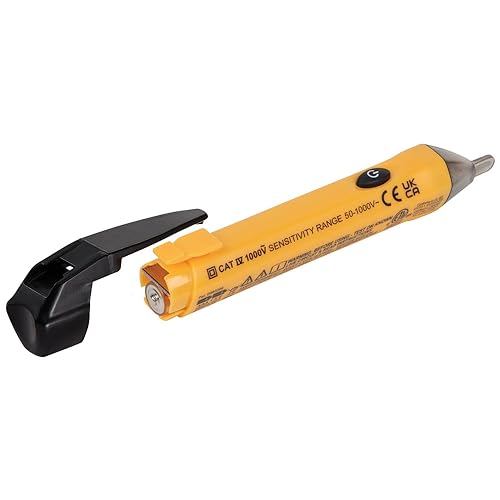
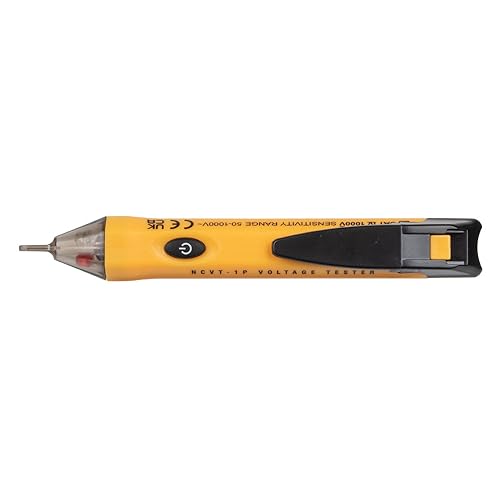
- VERSATILE DETECTION: Cat. No. NCVT1P Non-Contact Voltage Tester automatically detects AC voltage in cables, cords, circuit breakers, lighting fixtures, switches, non-tamper-resistant outlets and wires
- CLEAR INDICATION: Bright LED illuminates green to indicate tester is operational and flashes red and emits a beeping alert when voltage is detected
- WIDE OPERATING RANGE: With a power operating range of 50 to 1000V AC, this tester is suitable for a broad range of applications
- BATTERY SAVING FEATURE: Auto-power off after inactivity helps conserve battery life, extending the device's usability
- LIGHTWEIGHT AND DURABLE: Compact design with a convenient clip fits securely in pocket; 6.6-Foot (2 m) drop protection
- RELIABLE ELECTRICAL TESTING: GFCI Outlet Tester (Cat. No. RT205) detects common wiring problems in both standard and GFCI receptacles, ensuring electrical safety
- COMPLETE KIT: The kit includes the Cat. No. NCVT1P Non-Contact Voltage Tester, Cat. No. RT205 GFCI Receptacle Tester, detailed instructions, and all the required batteries




As an Amazon Associate we earn from qualifying purchases. Product prices and availability are accurate as of the date/time indicated.
The Klein Tools NCVT1PKIT ($26.97) focuses specifically on non-contact voltage detection with a pen-style tester offering a wide 50V to 1000V AC operating range. This premium non-contact solution automatically detects voltage in cables, cords, circuit breakers, lighting fixtures, switches, non-tamper-resistant outlets, and wires—making it ideal for comprehensive voltage identification without direct contact risk. The bright LED indicator illuminates green during normal operation and flashes red with audible beeping when voltage is detected, providing clear and immediate feedback.
The auto-power-off feature conserves battery life during extended storage, while the lightweight compact design with pocket clip ensures portability for field work. The 6.6-foot drop protection guarantees durability in demanding job-site conditions, and the wide voltage range covers residential, commercial, and light industrial applications. This premium kit is best for electricians prioritizing non-contact safety, contractors working in wet or hazardous environments where direct contact poses risks, and professionals needing reliable voltage detection across diverse circuit types. The single-focus design means this kit does not address outlet-specific GFCI testing or wiring fault diagnosis—it excels purely at voltage presence detection. The premium price reflects Klein Tools’ reputation for professional-grade reliability and precision engineering.
What Should You Look for When Choosing an Outlet Tester?
Selecting the right outlet tester requires understanding your specific electrical testing needs, the types of outlets you’ll encounter, and your technical expertise level. The primary distinction lies between receptacle testers designed for outlet-specific diagnosis and non-contact voltage detectors used for general voltage identification. Receptacle testers work by inserting prongs into outlet slots and reading light indicators or LCD displays that reveal wiring conditions—they’re essential for identifying open grounds, open neutrals, reversed polarity, and other common faults. Non-contact voltage testers detect electrical presence without physical contact, making them safer for quick voltage checks in cables, fixtures, and circuit breakers.
Consider your testing scope before purchasing. Homeowners conducting periodic safety checks benefit from basic light-indicator receptacle testers like the Klein Tools RT110, which cost less and require no batteries. Those with modern electrical systems featuring GFCI protection in kitchens, bathrooms, and outdoor areas should prioritize GFCI-compatible testers like the RT210 or RT250 to verify ground fault protection operates correctly. Electricians and contractors performing code compliance inspections justify the premium investment in advanced LCD-display models with trip-time measurement capabilities, ensuring GFCI devices meet required response times.
Voltage range matters significantly when selecting non-contact testers. The Neoteck detector covers 12V to 1000V AC, suitable for residential and light commercial work, while the Klein Tools NCVT1PKIT offers 50V to 1000V range, better for standard commercial applications. Temperature operating ranges become critical for contractors working in basements, attics, and outdoor environments—Klein Tools models operate from 32°F to 140°F, ensuring reliability across seasonal variations and climate-controlled spaces.
Durability features directly impact long-term value. All Klein Tools models withstand 6.6-foot drops without damage, essential for job-site reliability where tools fall from ladders and trucks. Battery requirements differ between models—light-indicator testers like the RT110 and RT210 require no batteries, while LCD and non-contact models depend on battery power, adding ongoing maintenance costs. Auto-power-off features on premium models like the NCVT1PKIT extend battery life during storage.
Certifications ensure your tester meets safety standards. UL Standard 1436 and CSA Standard C22.2 #160 certification on Klein Tools receptacle testers guarantees accurate readings and safe operation. CE CAT III 600V certification on non-contact testers confirms compliance with international electrical safety standards. These certifications matter when results inform decisions affecting personal safety or code compliance inspections.
Consider your toolkit’s existing tools. If you already own a quality non-contact voltage tester, the RT110 or RT210 receptacle tester complements it perfectly. Alternatively, comprehensive kits like the 80025 or NCVT1PKIT bundle complementary tools at better value than purchasing individually. Pocket clips and compact designs matter for field technicians who need tools immediately accessible without searching toolboxes.
Finally, evaluate your comfort level interpreting results. Light-indicator testers require understanding three-light patterns to identify specific faults—manageable for most users but requiring reference materials. LCD-display models like the RT250 eliminate ambiguity with direct voltage and trip-time readouts, ideal for users preferring explicit numerical feedback. Non-contact testers provide the simplest feedback: red light and beeping indicate voltage presence, green light indicates safe conditions.
Frequently Asked Questions
What is the difference between an outlet tester and a voltage tester?
Outlet testers (receptacle testers) insert into outlet slots to diagnose wiring faults like open grounds, open neutrals, and reversed polarity through light indicators or LCD displays. Voltage testers detect electrical presence in cables, fixtures, and circuits using non-contact or direct-contact methods. Outlet testers provide wiring-specific diagnosis; voltage testers identify whether circuits are live. Most comprehensive electrical work benefits from both tools.
Can I use an outlet tester on GFCI outlets?
Basic outlet testers like the Klein Tools RT110 work on standard outlets only. GFCI-compatible testers like the RT210 and RT250 specifically detect wiring problems in ground fault circuit interrupter outlets and verify proper GFCI operation. If your home has GFCI protection in kitchens, bathrooms, or outdoor areas, choose a GFCI-compatible model to ensure complete safety verification and code compliance testing.
How often should I test my home’s outlets?
The National Electrical Code recommends testing GFCI outlets monthly to ensure ground fault protection functions properly. Standard outlets should be tested during initial home inspection, after electrical work, or when troubleshooting suspected problems. Annual comprehensive outlet testing identifies developing issues before they become safety hazards. Regular testing is particularly important in older homes with aging wiring or properties with moisture exposure.
Do outlet testers require batteries?
Light-indicator receptacle testers like the Klein Tools RT110 and RT210 require no batteries—they operate purely through mechanical light circuits. Non-contact voltage testers and LCD-display models require batteries for LED indicators and audio alerts. Battery-powered models typically use standard AA or 9V batteries, with auto-power-off features extending battery life between uses.
What does each light pattern mean on an outlet tester?
Three-light outlet testers use specific patterns to indicate conditions: all three lights on indicates correct wiring; specific light combinations reveal open grounds, open neutrals, or reversed polarity. Consult your tester’s documentation for exact pattern meanings, as different manufacturers use slightly different configurations. LCD-display models eliminate pattern confusion by displaying exact voltage and fault descriptions directly.
Are non-contact voltage testers safe to use on live circuits?
Yes, non-contact voltage testers are specifically designed for safe operation on live circuits. They detect electrical presence without requiring physical contact, eliminating shock risk. The OSHA electrical safety guidelines recognize non-contact detection as a safe preliminary testing method before beginning electrical work or maintenance.
Which Outlet Tester Should You Buy?
Your ideal outlet tester depends on your specific needs, electrical system configuration, and technical expertise. For budget-conscious homeowners seeking basic outlet safety verification, the Klein Tools RT110 ($9.97) delivers reliable performance at the lowest price point. Its proven light-indicator system identifies common wiring faults, requires no batteries, and withstands years of occasional use. The RT110 is perfect for renters verifying rental properties, homeowners conducting periodic safety checks, and backup testers in electricians’ vehicles.
Homeowners with modern electrical systems featuring GFCI protection should prioritize the Klein Tools RT210 ($13.98) or consider the comprehensive Klein Tools 80025 kit ($26.99). The RT210 specifically verifies GFCI operation, essential for kitchens, bathrooms, and outdoor outlets where ground fault protection is mandatory. The 80025 kit bundles GFCI testing with non-contact voltage detection, providing complementary capabilities for thorough electrical diagnostics without separate purchases.
Safety-first users prioritizing non-contact voltage detection should consider the Neoteck Non Contact Voltage Detector ($9.99) for budget options or the Klein Tools NCVT1PKIT ($26.97) for premium non-contact capabilities. Non-contact testers eliminate shock risk during preliminary voltage checks and work effectively in confined spaces where direct-contact testers cannot reach. The wide voltage ranges (12-1000V for Neoteck, 50-1000V for Klein Tools) cover residential through light commercial applications.
Licensed electricians, electrical contractors, and advanced DIYers performing code compliance inspections should invest in the Klein Tools RT250 ($16.00) with its LCD display and GFCI trip-time measurement capabilities. The RT250 provides precise diagnostics that justify its premium price through superior accuracy and professional-grade reliability. The patent-pending Open Neutral and Open Ground detection identifies sophisticated wiring faults that basic testers cannot distinguish, ensuring thorough safety verification.
Consider your existing toolkit when making final decisions. If you already own quality non-contact voltage detection capability, the RT110 or RT210 receptacle tester complements it perfectly. If you lack non-contact detection, the 80025 or NCVT1PKIT kits provide better overall value than purchasing individual models. Professional electricians benefit from owning multiple testers—a basic RT110 for quick checks, a GFCI-compatible RT210 for standard work, and an advanced RT250 for complex diagnostics.
All recommended models share Klein Tools’ reputation for durability, safety certification compliance, and reliable performance across diverse job-site conditions. Whether you choose budget, mid-range, or premium options, today’s outlet testers combine affordability with professional-grade capability to ensure your electrical systems operate safely. For complementary electrical tools and information, explore guides on voltage tester pens, multimeters for home use, and circuit breaker finders.







Write Your Review
No reviews yet. Be the first to share your experience!