

What PSI Should You Run a Framing Nailer at? Quick Answer
Most framing nailers operate best at 90 to 120 PSI, with 100 PSI being the industry standard. This pressure range ensures consistent nail penetration, reduces jamming, and minimizes wood splitting. Your specific nailer’s manual will provide exact recommended settings based on nail size and wood type. Always check manufacturer specifications before operating any pneumatic tool. Running pressure too low causes incomplete nail setting, while excessive pressure damages materials and increases recoil.

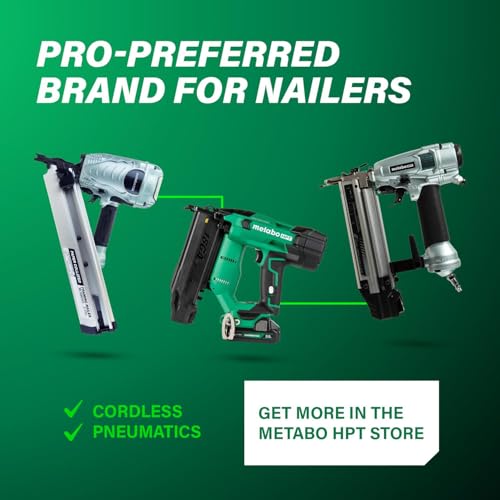
Metabo HPT NR90AES1 Framing Nailer - Pro-Grade 21° Pneumatic
- NAILER: 21 degree plastic collated framing nailer
- APPLICATIONS: Great for flooring and framing, truss build-up, window build-up, sub flooring, roof decking, wall sheathing and housing construction
- LIGHTWEIGHT: At only 7. 5 lbs and well-balanced allowing for ease of maneuverability and less user fatigue
- SELECTIVE ACTUATION: Allows for quick changes between sequential and contact nailing with the flip of a switch
- TOOL-LESS DEPTH ADJUSTMENT: Depth adjustment to countersink or flush drive into a variety of materials
- FASTENERS: Accepts 2-in up to 3-1/2-in plastic collated framing nails
- AWARD: Rated the Pro Preferred Nailer for 7 years running (2014 - 2020) by Builder and Developer Magazine
- WARRANTY: Covered by Metabo HPT's Professional 5-Year Tool Warranty
- COMPLIANT: Safety standards for pneumatic nailers in the United States




As an Amazon Associate we earn from qualifying purchases. Product prices and availability are accurate as of the date/time indicated.
Framing nailers are heavy-duty tools designed for construction work, requiring precise pressure calibration. The PSI you choose depends on several factors: nail gauge, wood density, and your compressor capacity. Most professional framers maintain consistent pressure using an in-line regulator to prevent fluctuations during use. Proper setup saves time, reduces waste, and extends tool lifespan. Understanding pressure requirements is essential for safe, efficient operation on job sites.
How Do You Determine the Correct PSI for Your Framing Nailer?
Every framing nailer manufacturer provides recommended PSI ranges in the operator’s manual. These specifications are developed through rigorous testing with various nail sizes and wood types. Start by locating your tool’s manual—most brands print pressure recommendations on the tool itself or online. The standard range for 16-gauge framing nailers is 90 to 120 PSI. For 15-gauge nailers, you may need slightly higher pressure, around 100 to 130 PSI.
Reading Your Nailer’s Specifications
Manufacturer recommendations are your first reference point. Different nailer models have different pressure requirements based on piston size and spring tension. A pneumatic tool with a larger piston chamber may require different PSI than a compact model. Check the nameplate or user manual for exact specifications. Never assume two framing nailers need identical pressure settings.
- Check the tool’s nameplate or manual for PSI range.
- Note whether specifications vary by nail size.
- Verify pressure requirements for different wood densities.
- Record recommended settings for future reference.
Key Takeaway: Always follow manufacturer specifications as your baseline for safe, effective nailer operation.
Factors That Influence Optimal PSI
Nail gauge significantly affects pressure needs. Smaller gauge nails (like 16-gauge) require less pressure than thicker 15-gauge fasteners. Wood type matters too—hardwoods need higher pressure than softwoods. Ambient temperature also plays a role; cold air reduces compressor output, requiring pressure adjustments. Humidity affects air density and tool performance. Experience helps you fine-tune settings for specific conditions.
- Nail gauge: 16-gauge typically needs 90-120 PSI; 15-gauge needs 100-130 PSI.
- Wood type: Softwoods (pine, spruce) use lower pressure; hardwoods (oak, maple) use higher.
- Temperature: Cold weather reduces available air pressure; adjust upward slightly.
- Humidity: Dry conditions improve air flow; wet conditions may reduce efficiency.
Key Takeaway: Adjust PSI based on nail size, wood density, and environmental conditions for consistent results.
What Are the Risks of Running a Framing Nailer at Incorrect Pressure?
Pressure that’s too low prevents nails from fully penetrating the wood, leaving fasteners exposed or partially driven. This creates structural weakness and safety hazards. Low pressure also causes frequent jams, wasting time and frustrating operators. Conversely, excessive pressure causes several problems: wood splitting, nail bending, ricochet hazards, and accelerated tool wear. Over-pressurizing stresses internal components, shortening the tool’s service life and increasing maintenance costs.
Problems from Insufficient Pressure
When PSI drops below the recommended minimum, the piston lacks force to drive nails completely. Nails stick out above the surface, creating tripping hazards and aesthetic issues. Incomplete penetration compromises structural integrity in framing applications. The tool may jam repeatedly, requiring manual clearing that slows work. Low pressure also causes inconsistent nail depth, making finishing difficult.
- Incomplete nail penetration leaves fasteners exposed.
- Increased jamming stops workflow and frustrates operators.
- Inconsistent nail depth complicates finishing and inspection.
- Structural weakness from shallow fastening creates safety risks.
Dangers of Excessive Pressure
Running above recommended PSI forces nails too deep, damaging wood fibers and reducing holding power. Excessive pressure causes wood splitting, especially in softwoods near edges. Over-pressurized nailers produce dangerous ricochet when nails hit knots or hard spots. The impact force increases recoil, making the tool harder to control. Internal seals and springs wear prematurely under constant high-pressure stress.
- Wood splitting reduces structural integrity and appearance.
- Nail ricochet creates serious injury risks on job sites.
- Excessive recoil reduces operator control and accuracy.
- Premature component wear increases maintenance and replacement costs.
Key Takeaway: Maintaining recommended PSI prevents damage, improves safety, and extends tool lifespan.
How Do You Set Up Your Air Compressor for Optimal Framing Nailer Performance?
Proper compressor setup is critical for consistent nailer performance. Your compressor must deliver adequate CFM (cubic feet per minute) at the recommended PSI. Most framing nailers need 2.5 to 4 CFM at 90 PSI. Install an in-line regulator between the compressor and nailer to maintain stable pressure. A moisture trap removes water that damages internal components. An air filter prevents dust from contaminating the tool. These accessories work together to deliver clean, dry, regulated air.

Essential Compressor Components
An in-line regulator is non-negotiable for framing work. This device maintains constant pressure despite compressor fluctuations. Regulators have a gauge showing current PSI and an adjustment knob for fine-tuning. Position the regulator close to the nailer for immediate pressure response. Quality regulators cost $30 to $80 and last for years. They prevent pressure spikes that damage tools and cause inaccurate fastening.
- In-line regulator: maintains constant PSI during operation.
- Moisture trap: removes water that causes rust and corrosion.
- Air filter: prevents dust and debris from entering the tool.
- Gauge: displays current pressure for easy monitoring.
Compressor Size and CFM Requirements
Your compressor’s tank size and CFM rating determine how long you can operate without pressure drops. Framing nailers typically need 2.5 to 4 CFM at 90 PSI. A 4-gallon compressor with 2.0 CFM can handle light framing work but requires frequent recovery time. A 6-gallon compressor with 3.5 CFM supports continuous framing operations. For professional-grade work, consider a 20-gallon or larger compressor with 4+ CFM. Check our guide on air compressor sizing for nail guns for detailed recommendations.
- 4-gallon compressor: suitable for light, occasional framing work.
- 6-gallon compressor: handles moderate framing projects with breaks.
- 20+ gallon compressor: supports continuous professional framing operations.
- Match CFM to your nailer’s specifications for uninterrupted work.
Key Takeaway: Proper compressor setup with regulator, filter, and moisture trap ensures consistent, safe nailer performance.
What Practical Steps Should You Follow to Set Your Framing Nailer’s PSI?
Setting up your framing nailer correctly takes just a few minutes but makes a huge difference in performance. Start with the manufacturer’s recommended pressure as your baseline. Make small adjustments based on the wood type and nail size you’re using. Test on scrap wood before beginning your project. Keep detailed notes of settings that work best for different conditions. This systematic approach prevents trial-and-error mistakes and saves time on the job.
Step-by-Step Setup Process
- Consult your manual: Locate the recommended PSI range specific to your nailer model.
- Install the regulator: Attach an in-line regulator to the compressor’s air outlet.
- Set initial pressure: Adjust the regulator to the manufacturer’s recommended PSI (typically 100 PSI for standard framing nailers).
- Connect the nailer: Attach the air hose to the nailer’s quick-disconnect coupler.
- Test on scrap: Fire several nails into scrap wood of the same type as your project.
- Evaluate results: Check nail depth, surface finish, and splitting.
- Fine-tune pressure: Adjust PSI in 5-10 PSI increments until results are optimal.
- Record settings: Note the final PSI and conditions for future reference.
Testing and Adjustment Tips
Always test on scrap wood before starting your actual project. This reveals whether your pressure setting works for that specific wood type. Look for consistent nail depth—all nails should sit at the same level below the surface. The nail head should be flush or slightly countersunk without crushing the wood. If nails are too shallow, increase PSI by 5 to 10 PSI and retest. If wood is splitting, decrease pressure slightly. Make one adjustment at a time and retest to isolate the effect.
- Test on scrap wood matching your project material.
- Look for consistent nail depth across multiple fasteners.
- Adjust PSI in small 5-10 PSI increments.
- Make one change at a time to identify what works.
- Document successful settings for future projects.
Key Takeaway: Follow a systematic setup process with testing and documentation to achieve optimal, repeatable results.
How Do Different Nail Sizes Affect PSI Requirements?
Nail gauge directly determines the pressure needed for proper penetration. Larger diameter nails require more force to drive through wood. A 16-gauge nail (smaller diameter) typically needs 90 to 120 PSI. A 15-gauge nail (larger diameter) usually requires 100 to 130 PSI. Some specialty framing nailers handle 14-gauge nails and may need 110 to 140 PSI. Always match your PSI setting to the nail size you’re using. Using the wrong pressure for your fastener size causes poor results and potential damage.
Common Framing Nail Sizes and Pressure Ranges
- 16-gauge nails: 90-120 PSI (most common residential framing).
- 15-gauge nails: 100-130 PSI (heavier-duty applications).
- 14-gauge nails: 110-140 PSI (specialized framing nailers only).
- Consult your nailer’s manual for exact specifications per nail size.
For more details on selecting the right fasteners, see our guide on nail sizes for framing nailers. Different manufacturers may have slightly different pressure recommendations for the same gauge nail. Check your specific tool’s documentation. Mixing nail sizes on the same project requires pressure adjustments between tasks. Professional framers often use one nail size per project to maintain consistent settings.
Key Takeaway: Match PSI precisely to your nail gauge for reliable penetration and optimal results.
What Should You Do If Your Framing Nailer Isn’t Performing Correctly?
Performance issues often trace back to incorrect pressure settings. If nails aren’t penetrating fully, increase PSI gradually and retest. If wood is splitting or nails are going too deep, reduce pressure. Check that your compressor maintains the set PSI throughout operation. A pressure gauge showing fluctuation indicates compressor problems or a faulty regulator. Inspect air hoses for leaks—a small leak wastes pressure and reduces tool performance. Clean or replace the air filter if the tool seems sluggish.
Troubleshooting Common Issues
- Shallow nail penetration: Increase PSI by 10 PSI; check compressor CFM capacity.
- Wood splitting: Decrease PSI by 5-10 PSI; avoid nailing near edges.
- Frequent jamming: Clean the tool; check for bent nails; verify correct PSI.
- Inconsistent results: Check pressure gauge; replace worn regulator; inspect hoses for leaks.
- Tool feels weak: Replace air filter; drain moisture trap; check for blockages.
When to Seek Professional Help
If adjusting PSI doesn’t solve the problem, the tool may need servicing. Worn seals, damaged pistons, or broken springs require professional repair. A compressor that can’t maintain pressure may need a new pump or tank replacement. If you’ve verified settings are correct and the compressor delivers adequate CFM, but the nailer still underperforms, contact the manufacturer or a certified repair technician. Regular maintenance prevents most performance issues.
Key Takeaway: Start troubleshooting by adjusting PSI; if that fails, inspect compressor and hoses before seeking professional repair.
Recommended Products

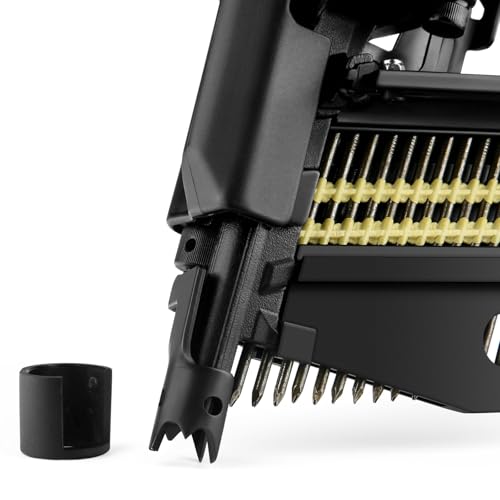
3PLUS H2190SP 21 Degree Full Round Head Framing Nailer
- Uses 21 degree 2 inch to 3-1/2 inch full round head plastic collated framing nails
- Tool-free depth adjustment for precise flush or countersink nailing
- Multi-directional exhaust cover rotates 360° to direct exhaust air away from user; no-mar tip eliminates damage to working surfaces; dry-fire lockout feature extends motor life and prevents missing nails
- Hardened claw tip reduces wear on the nose and minimizes slippage when toe-nailing
- Selective actuation: allows for easy change between sequential and bump fire with the flip of a two-mode switch




As an Amazon Associate we earn from qualifying purchases. Product prices and availability are accurate as of the date/time indicated.

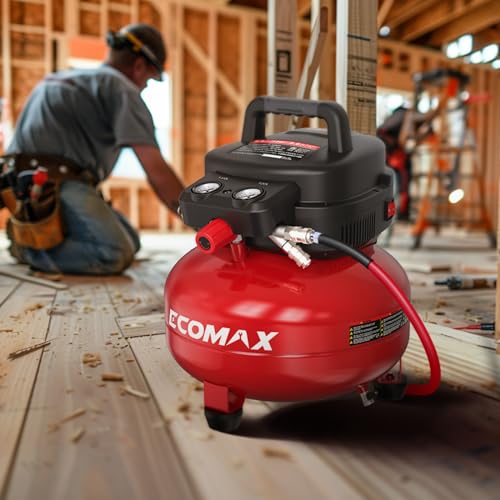
ECOMAX 6 Gallon 150 PSI Oil-Free Pancake Air Compressor
- [Inclusions]: This ECOMAX air compressor come with 1*1/4 in x 25 ft pvc air hose, 1* thread seal tape, 1* 1/4 fntp ball foot air chuck, 1* 1/4 npt auto plug, 1* 1/4 npt auto plug, 1* 1/4 npt auto coupler, 1* tire pressure gauge, 1* nozzle, 1* high performance blow gun and 1* sleeve.
- [Enhanced Efficiency]: With a maximum PSI of 150 and a 6 gallon tank , this ECOMAX 6 gallon 1.5HP pancake air compressor offers high efficiency. The pump delivers 3 cubic inches of air when the pressure is 90 PSI, allowing for extended tool usage and quick recovery.
- [Portability] This air compressor is 34.17 pounds weight only, small size. The convenient flip-up handle allows for easy carrying and storage, making it suitable for inflation jobs and using brad and staplers and easy for transportation and storage.
- [Cost-Effective Maintenance]: Featuring dual gauges for precise pressure measurement, a winding bracket for convenient power cord storage, dual quick couplers for simultaneous use, and an oil-free pump for reduced maintenance needs, this air compressor ensures low-maintenance costs.
- [Versatile Usage]: Equipped with low-voltage and cold-weather start capabilities, this electric gas compressor can be used in various scenarios. It is a multi-purpose product capable of handling any job you require.From industrial manufacturing, building construction, and automotive repair to household and light industrial uses like inflating tires, mattresses, and sculptures, it can handle tasks such as driving spray guns and carving machines.



As an Amazon Associate we earn from qualifying purchases. Product prices and availability are accurate as of the date/time indicated.
Frequently Asked Questions
What is the standard PSI for a 16-gauge framing nailer?
The standard PSI for 16-gauge framing nailers is 90 to 120 PSI, with 100 PSI being the most common target. This pressure range provides consistent nail penetration in most wood types without excessive splitting or recoil. Always verify your specific nailer’s manual, as different manufacturers may have slightly different recommendations. Starting at 100 PSI and adjusting based on test results is the best approach.
Can you run a framing nailer at 150 PSI?
No, running a framing nailer at 150 PSI is dangerous and damaging. Most framing nailers are rated for maximum PSI between 120 and 140 PSI. Exceeding this causes wood splitting, nail ricochet, excessive recoil, and accelerated component wear. Over-pressurization voids warranties and creates serious safety hazards. Always stay within manufacturer specifications to protect yourself and your equipment.
Does wood type affect the PSI needed for framing nailers?
Yes, wood type significantly affects PSI requirements. Softwoods like pine and spruce need lower pressure—typically 90 to 110 PSI for 16-gauge nails. Hardwoods like oak and maple require higher pressure, around 110 to 130 PSI. Always test on scrap material matching your project wood before beginning. Adjusting PSI for wood density prevents splitting and ensures proper fastening.
How do you check if your compressor is delivering the right PSI?
Install a pressure gauge on the regulator and monitor it during operation. The gauge should show stable pressure matching your setting. If pressure drops significantly when the nailer fires, your compressor lacks sufficient CFM. A steady gauge reading indicates proper setup. Check the gauge regularly during work to catch pressure problems early. Replace faulty gauges or regulators that show erratic readings.
What happens if you run a framing nailer at too low PSI?
Low PSI causes nails to penetrate incompletely, leaving fasteners exposed above the wood surface. This creates structural weakness, safety hazards, and aesthetic problems. The nailer will jam frequently, requiring manual clearing. Inconsistent nail depth complicates finishing and inspection. Always maintain PSI within the manufacturer’s recommended range to ensure proper fastening and safe operation.
Should you adjust PSI for different weather conditions?
Yes, cold weather can reduce compressor output, requiring slight PSI increases to maintain performance. Humidity also affects air density and tool efficiency. On very cold days, increase PSI by 5 to 10 PSI and monitor performance. Conversely, hot weather may allow slight pressure reduction. Always test on scrap wood after weather-related adjustments to ensure consistent results.
What Final Recommendations Should Guide Your Framing Nailer PSI Setup?
Running your framing nailer at the correct PSI is fundamental to professional results and job site safety. The 90 to 120 PSI range works for most standard 16-gauge framing nailers, but your specific tool’s manual is the definitive reference. Invest in quality components—a reliable regulator, moisture trap, and filter—to deliver consistent, clean air. Test every setting on scrap wood before starting your project. Keep detailed records of pressure settings that work for different wood types and conditions.
Regular maintenance extends tool life and prevents performance problems. Drain your compressor’s moisture trap weekly to prevent rust and corrosion. Replace air filters when they become clogged. Inspect hoses for leaks or damage. Clean your nailer according to the manufacturer’s schedule. These simple steps keep your equipment running smoothly and reliably. For additional guidance on selecting quality equipment, explore our reviews of the best air nailers and nail guns available in 2026.
Professional framers understand that precision pressure settings separate quality work from mediocre results. Invest time in learning your equipment’s capabilities and requirements. Share knowledge with team members to ensure consistent standards across projects. Stay current with manufacturer updates and safety recommendations. By treating PSI setup as a critical skill rather than a minor detail, you’ll achieve superior results, reduce waste, and maintain a safer job site. Your attention to proper pressure settings directly impacts project quality and your professional reputation.


Write Your Review
No reviews yet. Be the first to share your experience!